• Fri frakt över 249 kr
  • •
  • Snabba leveranser
  • •
  • Billiga böcker
Kundservice

Du är på sajten för privatpersoner.

Företag, bibliotek eller offentlig verksamhet?

Du handlar på classic.bokus.com, där alla dina funktioner finns intakta.
Till classic.bokus.com
Bokus logotyp. Gå till startsidan.
  • Erbjudanden
  • Student
  • Topplistor
  • Barn & ungdom
  • Bokus Play
  • E-böcker
  • Ljudböcker
  • Pocketböcker
  • Spel och pussel

Pocketfynda! Hundratals böcker för 49 kr/st →

Sidfot

Mina sidor

    Hjälp

    • Kundservice
    • Vanliga frågor och svar
    • Frakt och leverans
    • Retur vid ångerrätt
    • Reklamera vara
    • Betalning
    • Köpvillkor
    • Allmänna villkor
    • Information om webbplatsens tillgänglighet

    Om Bokus

    • Om oss
    • Pressrum
    • För studenter
    • För företag
    • För bibliotek och offentlig verksamhet
    • För leverantörer
    • Hållbarhet

    Populärt

    • Aktuella erbjudanden
    • Presentkort
    • Studentlitteratur
    • Nya böcker
    • Topplistor
    • Signerade böcker
    • Engelska böcker

    Inspiration

    • Boktips
    • BookTok
    • Barnbokskaraktärer
    • Populära författare
    Logotyp för Bokus
    Följ oss på Facebook (extern länk)Följ oss på Instagram (extern länk)Följ oss på YouTube (extern länk)Följ oss på TikTok (extern länk)
    bokus @ CookiesAnpassa cookiesIntegritetspolicyKöpvillkor
    Till Citymail hemsida (extern länk)Till Budbee hemsida (extern länk)Till Postnord hemsida (extern länk)Till Schenker hemsida (extern länk)Till Early Bird hemsida (extern länk)Till Walleys hemsida (extern länk)
    1. Ekonomi och Ledarskap
    2. Industrier och branscher
    3. Energiindustri

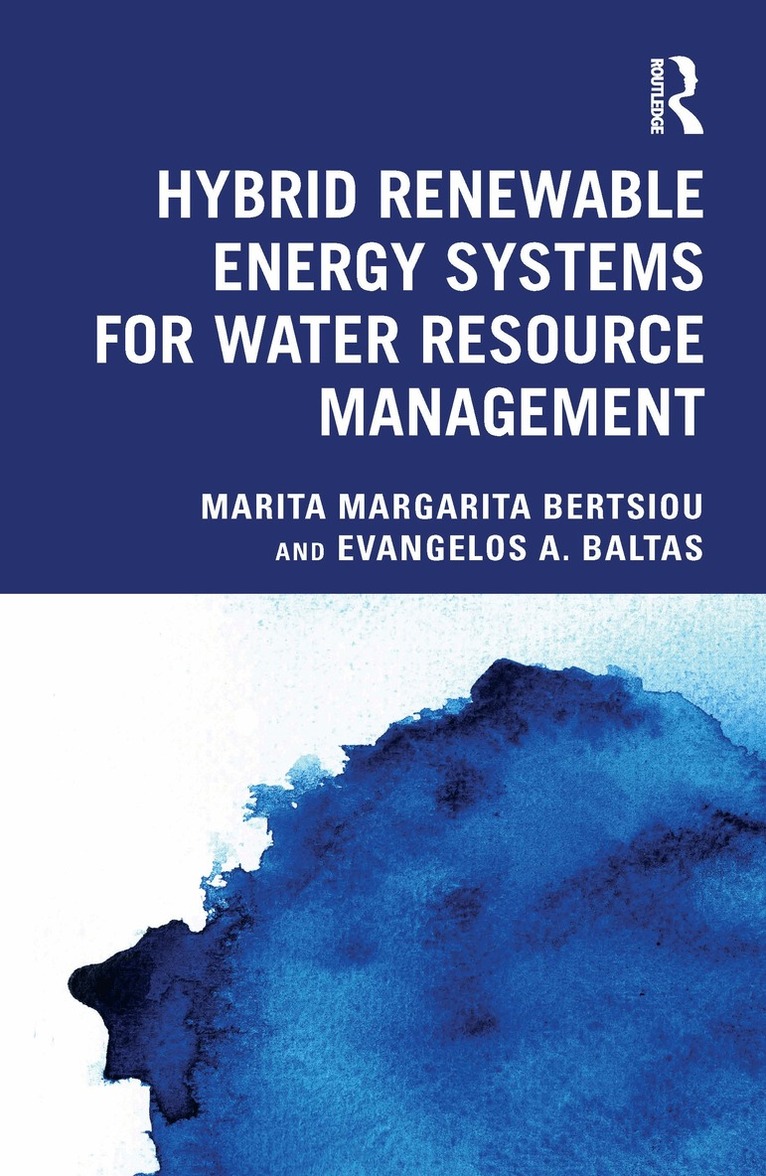
    Hybrid Renewable Energy Systems for Water Resource Management

    AvMarita Margarita Bertsiou,Evangelos A. Baltas

    Inbunden, Engelska, 2026

    1 545 kr

    Kommande

    Beskrivning

    This book presents a comprehensive and contemporary approach to the relationship between water, energy and climate change, highlighting how Hybrid Renewable Source Systems (HRES) can serve as an important foundation for a sustainable future. Starting with the basic forms of energy and the current active landscape with the imperative need for a transition to RES, it proceeds to explore water use, the hydrological cycle and modern challenges in water supply, while at the same time examining the impact of climate change on water and energy resources. RES-based desalination and the various energy storage technologies that comprise the hybrid Renewable Source systems are key aspects of the analysis, which is complemented by examples of real-world applications on off-grid Greek islands that face challenges in meeting their water and energy needs. With a combination of theoretical knowledge, practical solutions, and field study, the book offers a rational framework for energy transition and sustainability.

    Produktinformation

    • Utgivningsdatum:2026-11-25
    • Mått:156 x 234 x undefined mm
    • Vikt:453 g
    • Format:Inbunden
    • Språk:Engelska
    • Antal sidor:280
    • Förlag:Taylor & Francis Ltd
    • ISBN:9781032716916

    Utforska kategorier

    • Energiindustri inom Ekonomi och Ledarskap
    • Hydrologi inom Naturvetenskap och teknik
    • Energiteknik inom Naturvetenskap och teknik

    Mer om författaren

    Marita Margarita Bertsiou is a senior researcher at National Technical University of Athens specializing in hybrid renewable energy systems and sustainable water resources management. Her research work focuses on advancing energy–water independence in arid and non-interconnected islands through the integration of renewable energy, energy and water autonomy and energy storage technologies. She has extensive academic experience, serving as teaching and research staff across multiple undergraduate and postgraduate programs, contributing to courses in hydrology, water resources management, environmental management, hydrodynamic works, renewable energy systems, environmental planning, and energy system optimization. She has participated in research projects on hybrid energy systems, hydrological modelling, flood risk assessment, water–energy management, multi-criteria decision-making tools for the optimal siting of RES units and sustainability in island environments. Her work has been published in leading peer-reviewed journals and presented at major scientific conferences. Beyond academia, she has significant professional experience in environmental impact assessments, and high-level technical consulting. Driven by a commitment to sustainable development, she focuses on delivering innovative solutions, integrating solutions that support energy and water resilience in vulnerable regions.Evangelos A. Baltas is a Professor in the School of Civil Engineering of the National Technical University of Athens and currently is Director of the Hydrology and Water Resources Development Laboratory. He co-established the Center of Hydrology and Informatics (CHI) constituting of the NTUA hydrometeorological network, the database of the hydrological information and the experimental basin. He has more than 35 year’s experience in the areas of environmental issues, water resources management, water resources systems planning and operation, hydrometeorology, hydrological modelling, climate change and land use change at the catchment scale, flood forecasting, risk assessment and mapping analysis. He has written three books and has authored or co-authored more than 150 papers in peer-reviewed scientific journals and more than 200 peer-reviewed publications in national and international conferences, while he has published several scientific technical reports. He has a large academic and non-academic administrative experience. He has also offered engineering consultant services in the fields of his expertise to the EU, Greek Ministries, public organizations and private companies. He has been the principal investigator or researcher in numerous competitive EU and national funded programs related to the integrated water resources management.

    Innehållsförteckning

    • 1. Renewable Energy Sources 2. Water use 3. Climate change 4. Desalination 5. Energy storage 6. Energy and water resources management 7. Case studies 8. Conclusions