Inbunden, Engelska, 2027
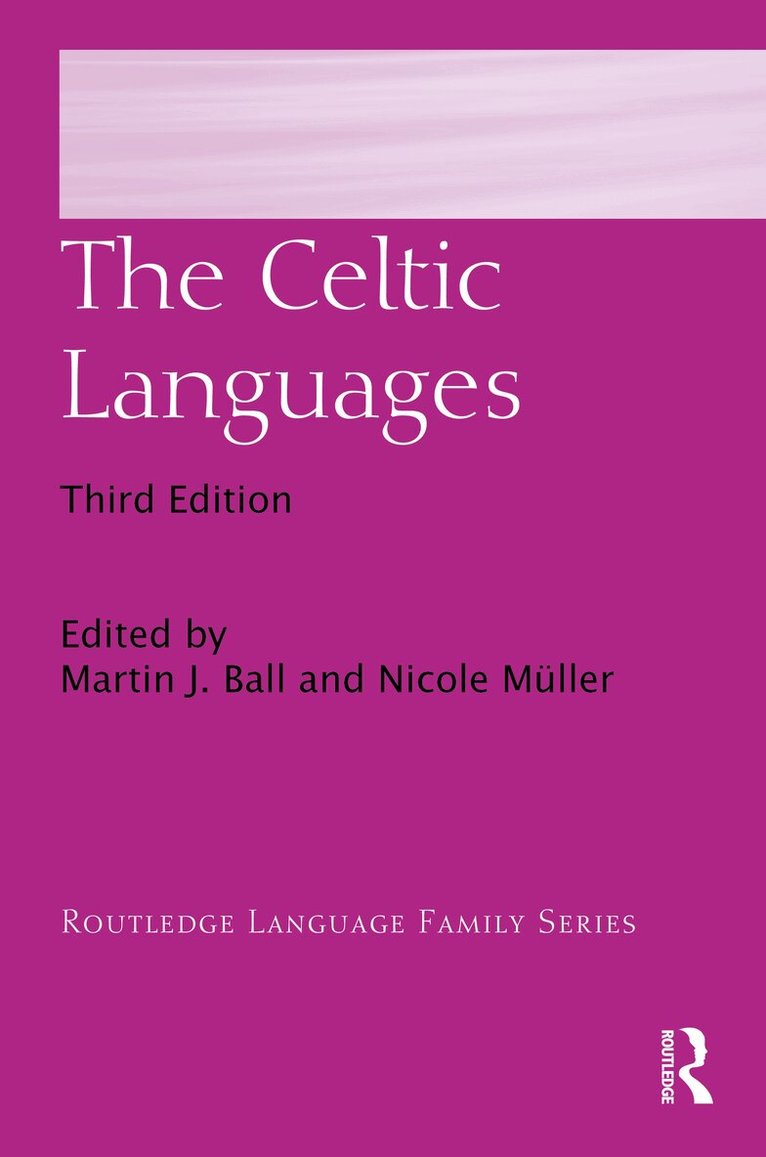
Celtic Languages
Av Martin J. Ball, Nicole Müller
3848 kr
Kommande
Beskrivning
The Celtic Languages describes all the Celtic languages from historical, structural and sociolinguistic perspectives, with individual chapters on Irish, Scottish Gaelic, Manx, Welsh, Breton and Cornish, together with chapters on the historical languages, continental Celtic, and the typology of the Celtic languages.This third edition has been thoroughly revised to provide a comprehensive and up-to-date account of the modern Celtic languages and their current sociolinguistic status along with complete descriptions of the historical languages. New to this edition is the inclusion of innovative chapters on recent sociolinguistic developments in the Celtic languages, namely the emergence of new-speakers / urban varieties which so far have not been systematically surveyed. Arranged across five parts, the volume covers first the history of Celtic languages, followed by the Goidelic (Irish, Scottish Gaelic, and Manx) and then the Brythonic (Welsh, Breton, and Cornish) languages. Part four is devoted to the sociolinguistic situation of the four contemporary Celtic languages, and finally, part five addresses new speaker research and the status of the two revived languages, Manx and Cornish.With contributions from a variety of scholars of the highest reputation, The Celtic Languages continues to be an invaluable tool for both students and teachers of linguistics, especially those with an interest in typology, language universals, and the unique sociolinguistic position which the Celtic languages occupy.
Produktinformation
- Utgivningsdatum: 2027-03-11
- Mått: 156 x 234 x undefined mm
- Format: Inbunden
- Språk: Engelska
- Serie: Routledge Language Family Series
- Antal sidor: 898
- Upplaga: 3
- Förlag: Taylor & Francis Ltd
- ISBN: 9781032974989
Utforska kategorier
Betyg & recensioner
0 recensioner
Inga recensioner tillgängliga.