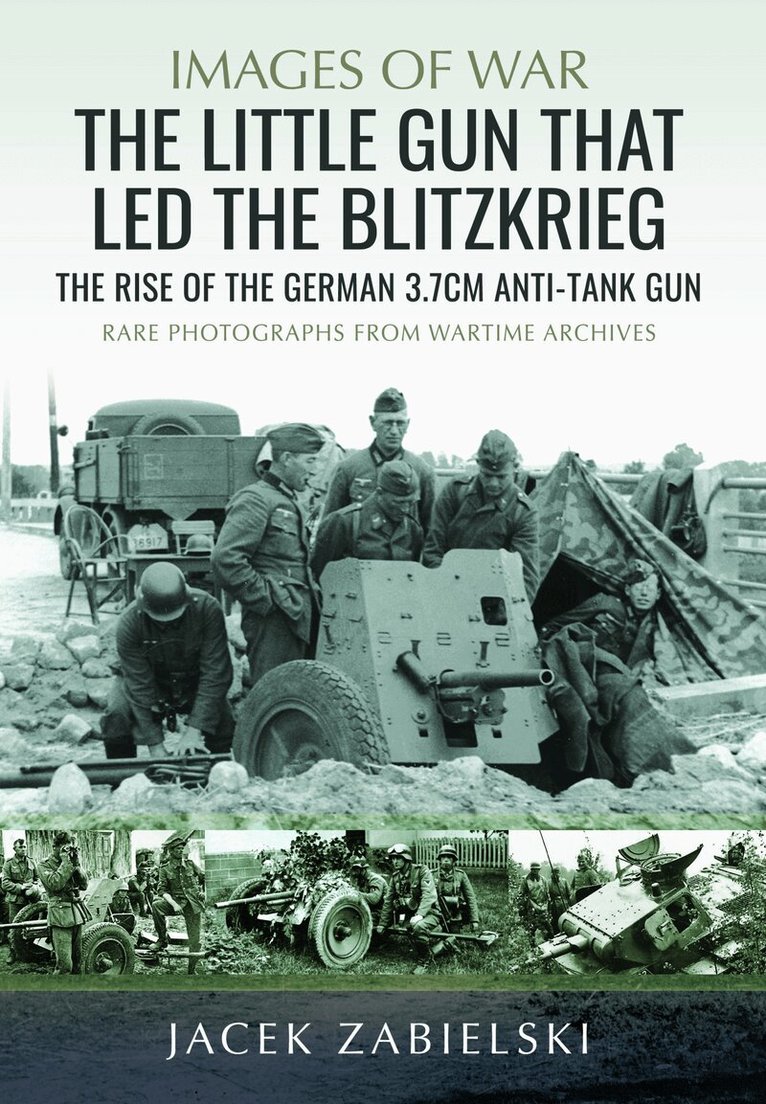
Häftad, Engelska, 2026
Little Gun that Led the Blitzkrieg
192 kr
Kommande
Beskrivning
Long before Germany fielded the legendary Tiger and Panther tanks, one weapon stood at the heart of its revolutionary doctrine of armored warfare: the 3.7 cm Panzerabwehrkanone (Pak). Light, highly mobile, and deceptively effective, it was the Wehrmacht's first purpose-built anti-tank gun and the cornerstone of German anti-tank doctrine during the opening years of the Second World War.The “little gun” story looks beyond the Wehrmacht, tracing the international legacy of the weapon. It examines licensed production and foreign service, from the Soviet Union—where its design influenced several generations of Soviet anti-tank guns—to users as diverse as Japan and Ethiopia also exploring the Kampfwagenkanone (KwK 3.7 cm), the tank-mounted version that armed the early Panzer III. Specifically designed to engage enemy armor, it proved highly effective during the campaigns in the West, and the Balkans, remaining Germany's principal tank gun until the invasion of the Soviet Union exposed the need for greater firepower.Produced in the tens of thousands and issued to virtually every branch of the German armed forces, the Pak 3.7 fought on every major front of the war. It crossed the rivers of Poland, spearheaded the advance through France, served in the Balkans and North Africa, battled across the vast Soviet steppes, and remained in frontline service long after heavier Allied and Soviet tanks had rendered it increasingly obsolete.The Little Gun That Led the Blitzkrieg tells the story of the weapon and the men who served it. Drawing upon extensive archival research, wartime manuals, original documents, battlefield reports, and hundreds of rare historical photographs and technical illustrations, this comprehensive volume examines every aspect of Germany's first dedicated anti-tank gun—from its development during the interwar years to its combat service across Europe and beyond.
Produktinformation
- Utgivningsdatum: 2026-10-30
- Mått: 172 x 246 x undefined mm
- Format: Häftad
- Språk: Engelska
- Antal sidor: 224
- Förlag: Pen & Sword Books Ltd
- ISBN: 9781036196356
Utforska kategorier
Betyg & recensioner
0 recensioner
Inga recensioner tillgängliga.