• Fri frakt över 249 kr
  • •
  • Snabba leveranser
  • •
  • Billiga böcker
Kundservice

Du är på sajten för privatpersoner.

Företag, bibliotek eller offentlig verksamhet?

Du handlar på classic.bokus.com, där alla dina funktioner finns intakta.
Till classic.bokus.com
Bokus logotyp. Gå till startsidan.
  • Erbjudanden
  • Nyheter
  • Student
  • Topplistor
  • Barn & ungdom
  • Bokus Play
  • E-böcker
  • Pocketböcker
  • Spel & pussel

10% rabatt på allt med kod NYSTART10 →

Sidfot

Mina sidor

    Hjälp

    • Kundservice
    • Vanliga frågor och svar
    • Frakt och leverans
    • Retur vid ångerrätt
    • Reklamera vara
    • Betalning
    • Köpvillkor
    • Allmänna villkor
    • Information om webbplatsens tillgänglighet

    Om Bokus

    • Om oss
    • Pressrum
    • För studenter
    • För företag
    • För bibliotek och offentlig verksamhet
    • För leverantörer
    • Hållbarhet

    Populärt

    • Aktuella erbjudanden
    • Presentkort
    • Studentlitteratur
    • Nya böcker
    • Topplistor
    • Signerade böcker
    • Engelska böcker

    Inspiration

    • Boktips
    • BookTok
    • Populära bokserier
    • Barnbokskaraktärer
    • Populära författare
    Logotyp för Bokus
    Följ oss på Facebook (extern länk)Följ oss på Instagram (extern länk)Följ oss på YouTube (extern länk)Följ oss på TikTok (extern länk)
    bokus @ CookiesAnpassa cookiesIntegritetspolicyKöpvillkor
    Till Citymail hemsida (extern länk)Till Budbee hemsida (extern länk)Till Postnord hemsida (extern länk)Till Schenker hemsida (extern länk)Till Early Bird hemsida (extern länk)Till Walleys hemsida (extern länk)
    1. Kultur
    2. Arkitektur

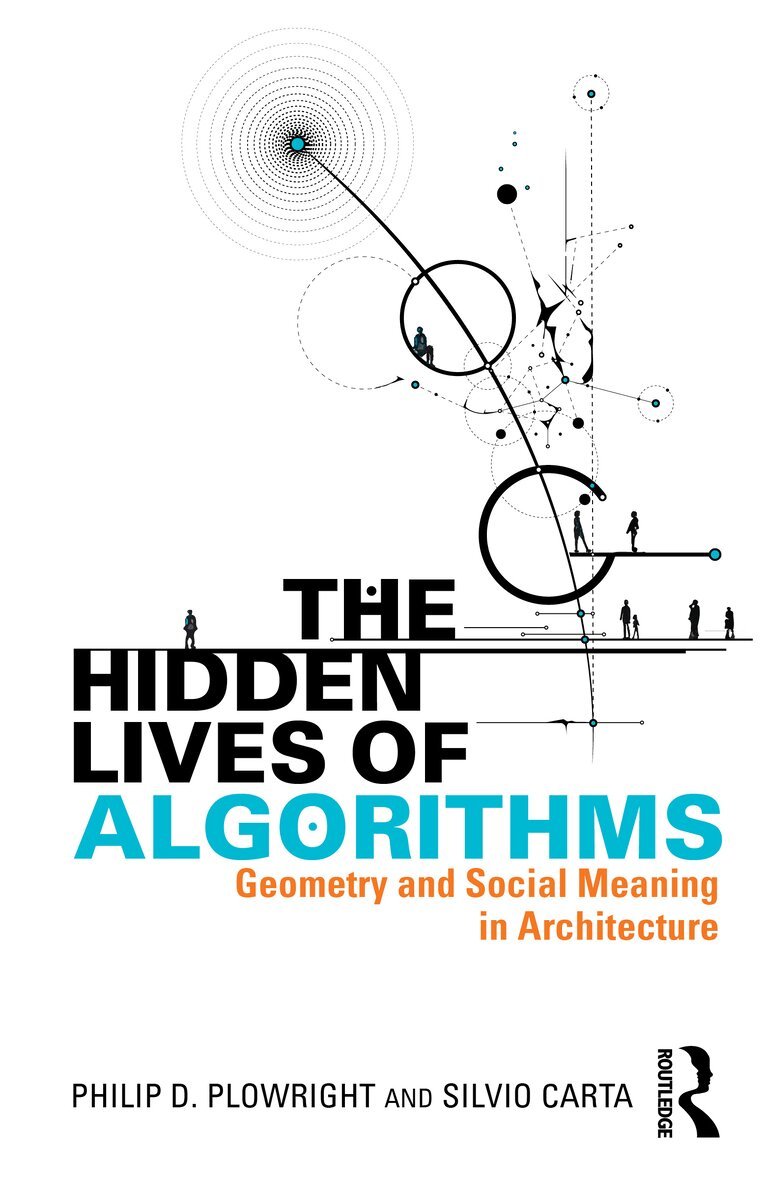
    Hidden Lives of Algorithms

    Geometry and Social Meaning in Architecture

    AvPhilip D. Plowright,Silvio Carta

    Inbunden, Engelska, 2026

    2 495 kr

    Beställningsvara. Skickas inom 10-15 vardagar. Fri frakt över 249 kr.

    Fler format och utgåvor

    Häftad

    383 kr

    Beskrivning

    When we draw basic geometric forms — lines, circles, points — to describe the possible future shape of our buildings and our cities, do we consider what predetermined social interactions are embedded in those forms?Though simple, this question is often overlooked. As generative and analytic algorithms increasingly automate the design of our built environment, the power of basic geometrical notation to affect social meanings becomes both more powerful and more elusive. This book examines how the geometric outcomes of spatialised algorithmic operations influence more complex human experiences of accessibility, belonging, and identity as well as shape the dynamics of equity, connectivity, privacy, and power in architectural and urban spaces.The Hidden Lives of Algorithms draws insights from architecture, urban studies, computer science, design theory, cognitive science, human geography, environmental psychology, and social theory to investigate the intersection of geometry, computation, and social meaning. Grounded in embodied cognition, the book connects fundamental thinking structures to our spatial experience and examines how algorithms operationalise these ideas in real-world design. This book challenges designers to look beyond technical implementation, urging a critical awareness of how computational processes can reinforce or reimagine the social fabric of our shared spaces.

    Produktinformation

    • Utgivningsdatum:2026-01-29
    • Mått:129 x 198 x undefined mm
    • Vikt:610 g
    • Format:Inbunden
    • Språk:Engelska
    • Antal sidor:244
    • Förlag:Taylor & Francis Ltd
    • ISBN:9781041003779

    Utforska kategorier

    • Arkitektur inom Kultur
    • Inredningsarkitektur inom Kultur
    • Byggnadsteknik inom Naturvetenskap och teknik

    Mer om författaren

    Philip D. Plowright, Ph.D. is Professor of Architecture and Chair of Design at Lawrence Technological University, USA. He has been recognized for work at the intersection of cognition and design and explores how human thinking shapes—and is shaped by—our environments. Plowright’s research and writing are distinguished by a drive to reveal the foundational ideas that generate meaning in the built world, focusing on clarity and practical relevance for both practice and teaching. His books, including Urban Design Made by Humans (Routledge, 2023), Making Architecture Through Being Human (Routledge, 2020), and Revealing Architectural Design (Routledge, 2014), offer new frameworks for understanding space, architectural discourse, and design method. An active theorist, educator, and architect (NCARB), Plowright supports a human-centred, evidence-based approach to architecture—one rooted in the shared, embodied knowledge that shapes our built environment.Silvio Carta, Ph.D. was an architect (ARB/RIBA), Chartered Building Engineer (MCABE), and Professor of Architecture at the University of Greenwich, UK. Previously Head of Architecture and Design at the University of Hertfordshire, his research bridged artificial intelligence, machine learning, urban data science, and computational design to explore how digital methods reshape spatial and social systems. He was Section Editor of Computational Sustainability and Design, City and Built Environment (Springer/Nature), contributed to the European Council on Computing in Construction, and was active in SCOSA, AHRA, and ACADIA. Recognized as Senior Fellow of the Higher Education Academy (SFHEA) and Fellow of the Royal Society of Arts (FRSA), Silvio’s books include Big Data, Code and the Discrete City (Routledge, 2019), Machine Learning and the City (Wiley, 2022), and How Computers Create Social Structure – Accidental Collectives (Palgrave Macmillan/SpringerNature, 2024). His work continues to inspire new ways of thinking about algorithms in architecture.

    Recensioner i media

    "Crackerjacks, Plowright and Carta! This is an excellent book! First, the authors remind architects that the paths, circles, and points in architectural design always symbolize objects and experiences in the real world, translating into issues of providing access versus blocking, inclusion versus exclusion, and privacy versus publicness. Second, they demonstrate how metaphors and embodied schemas developed within CMT do not only govern language, but also fundamentally shape our experience of our surroundings. But not just architects and schema aficionados will profit from reading The Hidden Lives of Algorithms. Greater awareness of how theories and algorithms inspire conceptions of reality (think of Gen-AI) but can never replace it, and understanding how the built environment may both facilitate and hinder socio-cultural integration, will benefit all of us."Charles Forceville, Review in Leonardo, June 2026

    Innehållsförteckning

    • 1. How geometry holds social content 2. LINE/Path/Movement 3. CIRCLE/Boundary/Containment 4. POINT/Attention/Importance