Silvio Carta - Böcker
Visar alla böcker från författaren Silvio Carta. Handla med fri frakt och snabb leverans.
12 produkter
12 produkter
663 kr
Skickas inom 10-15 vardagar
Big Data, Code and the Discrete City explores how digital technologies are gradually changing the way in which the public space is designed by architects, managed by policymakers and experienced by individuals. Smart city technologies are superseding the traditional human experience that has characterised the making of the public space until today. This book examines how computers see the public space and the effect of algorithms, artificial intelligences and automated processes on the human experience in public spaces.Divided into three parts, the first part of this book examines the notion of discreteness in its origins and applications to computer sciences. The second section presents a dual perspective: it explores the ways in which public spaces are constructed by the computer-driven logic and then translated into control mechanisms, design strategies and software-aided design. This perspective also describes the way in which individuals perceive this new public space, through its digital logic, and discrete mechanisms (from Wi-Fi coverage to self-tracking). Finally, in the third part, this book scrutinises the discrete logic with which computers operate, and how this is permeating into aspects of city life.This book is valuable for anyone interested in urban studies and digital technologies, and more specifically in big data, urban informatics and public space.
356 kr
Skickas inom 10-15 vardagar
When we draw basic geometric forms — lines, circles, points — to describe the possible future shape of our buildings and our cities, do we consider what predetermined social interactions are embedded in those forms?Though simple, this question is often overlooked. As generative and analytic algorithms increasingly automate the design of our built environment, the power of basic geometrical notation to affect social meanings becomes both more powerful and more elusive. This book examines how the geometric outcomes of spatialised algorithmic operations influence more complex human experiences of accessibility, belonging, and identity as well as shape the dynamics of equity, connectivity, privacy, and power in architectural and urban spaces.The Hidden Lives of Algorithms draws insights from architecture, urban studies, computer science, design theory, cognitive science, human geography, environmental psychology, and social theory to investigate the intersection of geometry, computation, and social meaning. Grounded in embodied cognition, the book connects fundamental thinking structures to our spatial experience and examines how algorithms operationalise these ideas in real-world design. This book challenges designers to look beyond technical implementation, urging a critical awareness of how computational processes can reinforce or reimagine the social fabric of our shared spaces.
2 151 kr
Skickas inom 10-15 vardagar
When we draw basic geometric forms — lines, circles, points — to describe the possible future shape of our buildings and our cities, do we consider what predetermined social interactions are embedded in those forms?Though simple, this question is often overlooked. As generative and analytic algorithms increasingly automate the design of our built environment, the power of basic geometrical notation to affect social meanings becomes both more powerful and more elusive. This book examines how the geometric outcomes of spatialised algorithmic operations influence more complex human experiences of accessibility, belonging, and identity as well as shape the dynamics of equity, connectivity, privacy, and power in architectural and urban spaces.The Hidden Lives of Algorithms draws insights from architecture, urban studies, computer science, design theory, cognitive science, human geography, environmental psychology, and social theory to investigate the intersection of geometry, computation, and social meaning. Grounded in embodied cognition, the book connects fundamental thinking structures to our spatial experience and examines how algorithms operationalise these ideas in real-world design. This book challenges designers to look beyond technical implementation, urging a critical awareness of how computational processes can reinforce or reimagine the social fabric of our shared spaces.
973 kr
Skickas
Machine Learning and the City Explore the applications of machine learning and artificial intelligence to the built environment Machine Learning and the City: Applications in Architecture and Urban Design delivers a robust exploration of machine learning (ML) and artificial intelligence (AI) in the context of the built environment. Relevant contributions from leading scholars in their respective fields describe the ideas and techniques that underpin ML and AI, how to begin using ML and AI in urban design, and the likely impact of ML and AI on the future of city design and planning. Each section couples theoretical and technical chapters, authoritative references, and concrete examples and projects that illustrate the efficacy and power of machine learning in urban design. The book also includes: An introduction to the probabilistic logic that underpins machine learningComprehensive explorations of the applications of machine learning and artificial intelligence to urban environmentsPractical discussions of the consequences of applied machine learning and the future of urban designPerfect for designers approaching machine learning and AI for the first time, Machine Learning and the City: Applications in Architecture and Urban Design will also earn a place in the libraries of urban planners and engineers involved in urban design.
2 151 kr
Skickas inom 10-15 vardagar
Big Data, Code and the Discrete City explores how digital technologies are gradually changing the way in which the public space is designed by architects, managed by policymakers and experienced by individuals. Smart city technologies are superseding the traditional human experience that has characterised the making of the public space until today. This book examines how computers see the public space and the effect of algorithms, artificial intelligences and automated processes on the human experience in public spaces.Divided into three parts, the first part of this book examines the notion of discreteness in its origins and applications to computer sciences. The second section presents a dual perspective: it explores the ways in which public spaces are constructed by the computer-driven logic and then translated into control mechanisms, design strategies and software-aided design. This perspective also describes the way in which individuals perceive this new public space, through its digital logic, and discrete mechanisms (from Wi-Fi coverage to self-tracking). Finally, in the third part, this book scrutinises the discrete logic with which computers operate, and how this is permeating into aspects of city life.This book is valuable for anyone interested in urban studies and digital technologies, and more specifically in big data, urban informatics and public space.
Critica come Studium - Note sulla critica di architettura a servizio del progetto
Häftad, Italienska, 2016
95 kr
Skickas inom 5-8 vardagar
Crafting Luxury
Craftsmanship, Manufacture, Technology and the Retail Environment
Inbunden, Engelska, 2022
1 012 kr
Skickas inom 5-8 vardagar
The idea of luxury has secured a place in contemporary western culture, and the term is now part of common parlance in both established and emerging economies. This book explores the many issues and debates surrounding the idea of luxury. This new research addresses contentious issues surrounding perceptions of luxury, its relationship to contemporary branding as created by the marketers, and the impact this has on the consumer and their purchasing habits.Crafting Luxury considers work within the field of luxury and luxury brands, encompassing established companies with a long heritage: from conglomerates and small independents to 'new' luxury and emerging models with innovative practices. It examines the industry structures with respect to production, as well as the hierarchies that exist, and the impact these have on both internal and external perceptions of luxury, from the makers to the sellers and consumers alike. Attention is also given to the working structures of the ateliers, production facilities, origin of materials, manufacture and the impact of technology on consumption, the retail environment and sales, all providing a true insider’s view of this complex world.The authors – a designer of product and jewellery, a brand strategist and a fashion designer, an architect, and a sociologist and specialist in business management – are practitioners and academics. Their approach to dissecting the complex world of luxury brings distinct viewpoints to the debate, offering different perspectives, thoughts and interpretations of luxury.Crafting Luxury will appeal to academics and educators, industry specialists and anyone interested in luxury as a concept. It will appeal to those in a variety of academic and industry disciplines: art history, history, social sciences and humanities with an interest in luxury, fashion studies, design, business, cultural studies and textiles. It will also be valuable to students and researchers in social sciences, humanities, business, design, branding, consumption, retail, architecture, cultural studies, fashion studies and textiles.May also appeal to industry practitioners in retail, design, technology, marketing, the supply chain and manufacture, as well as design professions including architecture, fashion and interior design.
Crafting Luxury
Craftsmanship, Manufacture, Technology and the Retail Environment
Häftad, Engelska, 2022
497 kr
Skickas inom 5-8 vardagar
The idea of luxury has secured a place in contemporary western culture, and the term is now part of common parlance in both established and emerging economies. This book explores the many issues and debates surrounding the idea of luxury. This new research addresses contentious issues surrounding perceptions of luxury, its relationship to contemporary branding as created by the marketers, and the impact this has on the consumer and their purchasing habits.Crafting Luxury considers work within the field of luxury and luxury brands, encompassing established companies with a long heritage: from conglomerates and small independents to 'new' luxury and emerging models with innovative practices. It examines the industry structures with respect to production, as well as the hierarchies that exist, and the impact these have on both internal and external perceptions of luxury, from the makers to the sellers and consumers alike. Attention is also given to the working structures of the ateliers, production facilities, origin of materials, manufacture and the impact of technology on consumption, the retail environment and sales, all providing a true insider’s view of this complex world.The authors – a designer of product and jewellery, a brand strategist and a fashion designer, an architect, and a sociologist and specialist in business management – are practitioners and academics. Their approach to dissecting the complex world of luxury brings distinct viewpoints to the debate, offering different perspectives, thoughts and interpretations of luxury.Crafting Luxury will appeal to academics and educators, industry specialists and anyone interested in luxury as a concept. It will appeal to those in a variety of academic and industry disciplines: art history, history, social sciences and humanities with an interest in luxury, fashion studies, design, business, cultural studies and textiles. It will also be valuable to students and researchers in social sciences, humanities, business, design, branding, consumption, retail, architecture, cultural studies, fashion studies and textiles.May also appeal to industry practitioners in retail, design, technology, marketing, the supply chain and manufacture, as well as design professions including architecture, fashion and interior design.
1 402 kr
Skickas
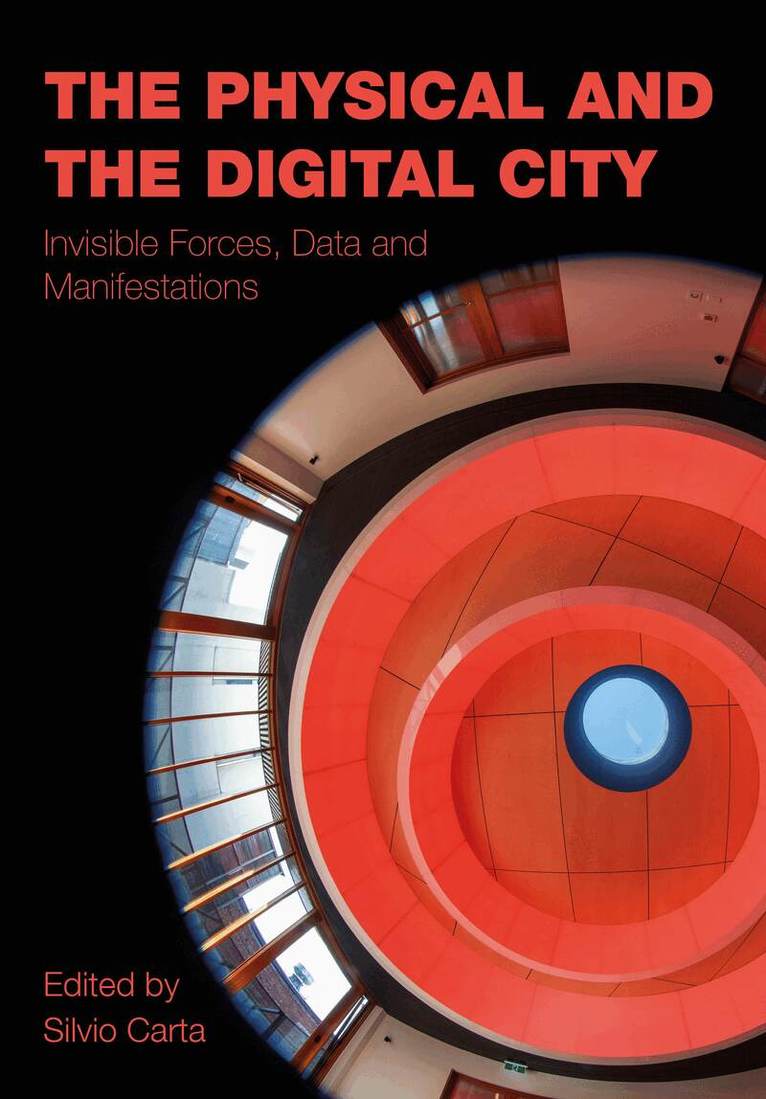
The Physical and the Digital City is a unique collection of projects where researchers and designers show how the theories of technology underpinning the digital urban environment are applied in practical and spatial terms. The authors are experts in their respective fields, who pursue cutting edge solutions for city-making and consider the theoretical premise critically. It is designed to be a self-contained and interdisciplinary reference text to introduce students, designers and scholars to the idea of physical/digital and its urban application.The book will help students and designers to develop a clear understanding of the physical and digital principles underpinning urban assemblages and a solid set of references to start working within this topic with confidence. Of interest to all students and scholars interested in urban studies (geography, planning, urban design, social sciences and humanities) and human-computer interaction (media studies, computer science, social sciences, cognitive sciences, anthropology and psychology). The book will clarify the role of digital technologies within the city, along with its possible implications for people and communities.It is oriented to the academic and professional communities interested in architectural, urban and digital design from different angles. This includes those interested in computational architecture, for example, eCAADe Education and Research in Computer Aided Architectural Design in Europe, ACADIA Association of Computer Aided Design in Architecture, CAADRIA Computer Aided Architectural Design Research in Asia, SIGraDi Sociedad Iberoamericana de Grafica Digital, CAAD Futures Foundation as well as those interested in the human-computer interaction.
482 kr
Skickas inom 7-10 vardagar
This book introduces the idea of accidental collectives: the grouping of people that occurs as a by-product of the automated work of computers. Once grouped by the invisible agency of software, people interact and establish new relationships, generating new collectives and communities.
482 kr
Skickas inom 10-15 vardagar
This book introduces the idea of accidental collectives: the grouping of people that occurs as a by-product of the automated work of computers. Software has a growing influence in our lives automating and optimising mundane, time-consuming and repetitive tasks. In doing this, groups of people are automatically created as the result of classification and data analysis. Once grouped by the invisible agency of software, people interact and establish new relationships, generating new collectives and communities. With the support of case studies and real-life examples, this work explores the accidental nature of the generation of new social groups and questions the role of software in social interactions.
1 562 kr
Skickas inom 3-6 vardagar
Visual Anthropology in Sardinia explores the technique, style and methodology of documentary films about Sardinia, investigating how such films construct different experiences and identities, and reflecting on the advantages of the medium of documentary film over written ethnographic texts.Following a discussion of theoretical developments in the area of visual anthropology in the twentieth century, the author turns to case studies of documentary filmmaking related to Sardinia from the fascist era onwards, offering a survey of the particular and somewhat peculiar filmic ethnographic discourse established in relation to Sardinia, which has been constructed to a large extent as an ‘Other’ to peninsular Italy. The subject is a complex one, ranging across the fields of film studies, anthropology, literary and cultural studies and, to some extent, philosophy. The book enriches scholarship not only on the cultural construction of Sardinia in the popular, political and intellectual imaginary and in its relation to Italy, but also on visual epistemologies and the ethics and practice of ethnographic filmmaking.