• Fri frakt över 249 kr
  • •
  • Snabba leveranser
  • •
  • Billiga böcker
Kundservice

Du är på sajten för privatpersoner.

Företag, bibliotek eller offentlig verksamhet?

Du handlar på classic.bokus.com, där alla dina funktioner finns intakta.
Till classic.bokus.com
Bokus logotyp. Gå till startsidan.
  • Erbjudanden
  • Nyheter
  • Student
  • Topplistor
  • Barn & ungdom
  • Bokus Play
  • E-böcker
  • Pocketböcker
  • Spel & pussel

10% rabatt på allt med kod NYSTART10 →

Sidfot

Mina sidor

    Hjälp

    • Kundservice
    • Vanliga frågor och svar
    • Frakt och leverans
    • Retur vid ångerrätt
    • Reklamera vara
    • Betalning
    • Köpvillkor
    • Allmänna villkor
    • Information om webbplatsens tillgänglighet

    Om Bokus

    • Om oss
    • Pressrum
    • För studenter
    • För företag
    • För bibliotek och offentlig verksamhet
    • För leverantörer
    • Hållbarhet

    Populärt

    • Aktuella erbjudanden
    • Presentkort
    • Studentlitteratur
    • Nya böcker
    • Topplistor
    • Signerade böcker
    • Engelska böcker

    Inspiration

    • Boktips
    • BookTok
    • Populära bokserier
    • Barnbokskaraktärer
    • Populära författare
    Logotyp för Bokus
    Följ oss på Facebook (extern länk)Följ oss på Instagram (extern länk)Följ oss på YouTube (extern länk)Följ oss på TikTok (extern länk)
    bokus @ CookiesAnpassa cookiesIntegritetspolicyKöpvillkor
    Till Citymail hemsida (extern länk)Till Budbee hemsida (extern länk)Till Postnord hemsida (extern länk)Till Schenker hemsida (extern länk)Till Early Bird hemsida (extern länk)Till Walleys hemsida (extern länk)
    1. Ekonomi och Ledarskap
    2. Ledarskapsböcker
    3. Projektledning

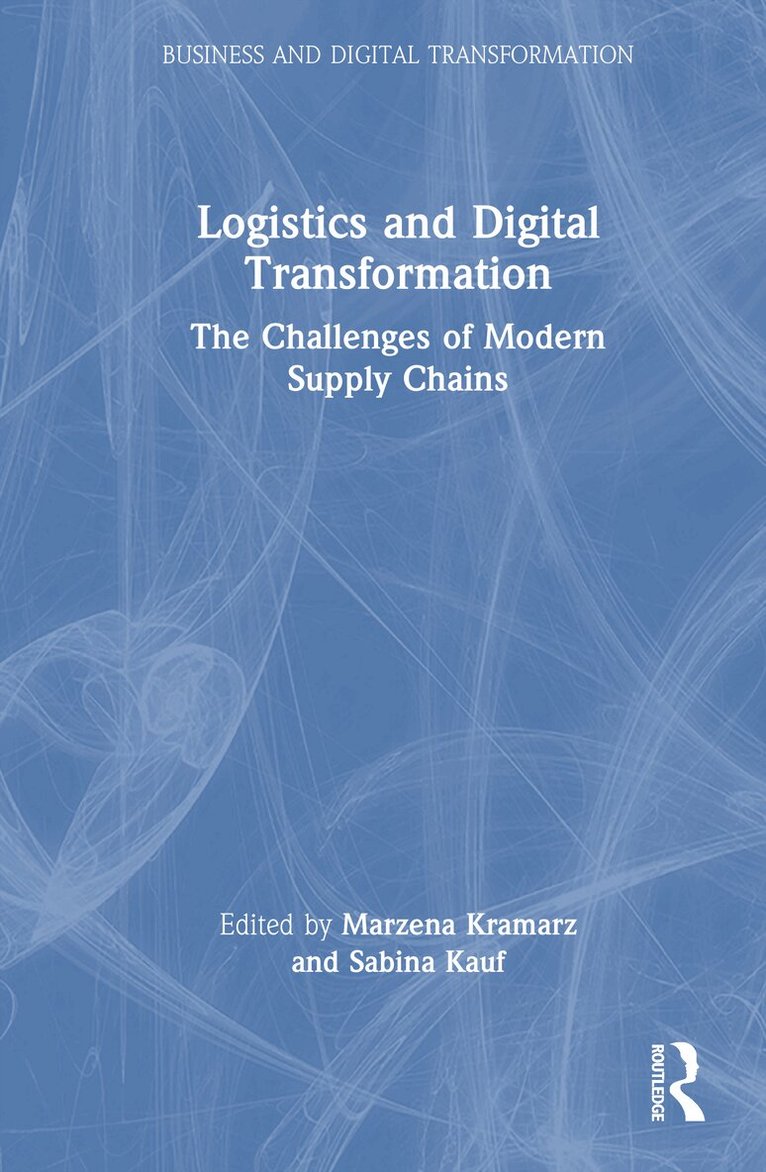
    Logistics and Digital Transformation

    The Challenges of Modern Supply Chains

    AvMarzena Kramarz,Sabina Kauf

    Inbunden, Engelska, 2025

    Del i serien Business and Digital Transformation

    2 495 kr

    Beställningsvara. Skickas inom 10-15 vardagar. Fri frakt över 249 kr.

    Beskrivning

    This comprehensive textbook examines the digital maturity of modern supply chains, presenting innovative frameworks for assessing and enhancing digital capabilities across procurement, production, distribution, and city logistics while offering forward-looking scenarios for supply chain evolution.Logistics and Digital Transformation: The Challenges of Modern Supply Chains leads the reader through the various applications of information and communication technology (ICT) in logistics and suggests how digital logistics systems may develop in the future. These concepts present research conducted at the scale of the entire supply chain, as well as at the scale of individual logistics subsystems (supply logistics, production logistics, distribution logistics), and in the area of city (urban) logistics, which is closely related to the development of modern distribution systems. Unique to this book is its description of the relationship between the digital development of individual subsystems and entire supply chains, to identify the determinants of this development and challenges – this approach has not yet been addressed in the literature.This book will find an appreciative audience amongst advanced students, researchers, practitioners in logistics, supply chain management, manufacturing, trading, IT companies, and policymakers interested in logistics innovation and digital maturity.

    Produktinformation

    • Utgivningsdatum:2025-12-05
    • Mått:156 x 234 x 17 mm
    • Vikt:600 g
    • Format:Inbunden
    • Språk:Engelska
    • Serie:Business and Digital Transformation
    • Antal sidor:222
    • Förlag:Taylor & Francis Ltd
    • ISBN:9781041014980

    Utforska kategorier

    • Projektledning inom Ekonomi och Ledarskap

    Mer om författaren

    Marzena Kramarz is Deputy Head of the Department of Logistics at the Faculty of Organization and Management at the Silesian University of Technology, Poland.Sabina Kauf is Head of the Department of Marketing and Supply Chain Management at the Faculty of Economics, University of Opole, Poland.

    Recensioner i media

    "The book tackles a key issue related to using information and communication technologies in supply chain management. Although technological tools have been extensively studied over the past twenty years, their importance has grown significantly today with the adoption of cloud platforms, blockchains, consensus mechanisms, and rapid advances in artificial intelligence. This book aims to address these challenges in supply chain management by presenting the underlying theory, discussing practical examples, and exploring ways for supply chains to implement various tools to enhance efficiency and competitiveness. This makes the book especially valuable for researchers seeking new inspiration, students needing a comprehensive foundation of knowledge, and managers looking for innovative solutions and insights on how to solve decision-making problems."Professor Artur Świerczek, Professor, University of Economics in Katowice"This book offers a rare yet crucially needed systemic perspective on the digital transformation of logistics. It provides a comprehensive analysis of the impact of digital technologies on relevant links in modern supply chains – from procurement and production logistics, through distribution, to urban logistics. The authors combine theoretical reflection with practical tools: a proprietary digital maturity model and development scenarios, making the publication a valuable resource for researchers, managers, and decision-makers. This book not only summarizes the current state of knowledge but also outlines directions for further research and implementation."Professor Günter Prockl, Associate Professor, Copenhagen Business School

    Innehållsförteckning

    • Introduction 1. Digital Transformation of Supply Chains 2. ICT Systems in Logistics Services 3. ICT Systems in Procurement and Production Logistics 4. ICT Systems in Logistics Distribution 5. ICT Systems in Last-Mile Delivery 6. Digital Supply Chain Maturity Model 7. Digital Future of Logistics and Supply Chains Summary and Conclusions