Inbunden, Engelska, 2026
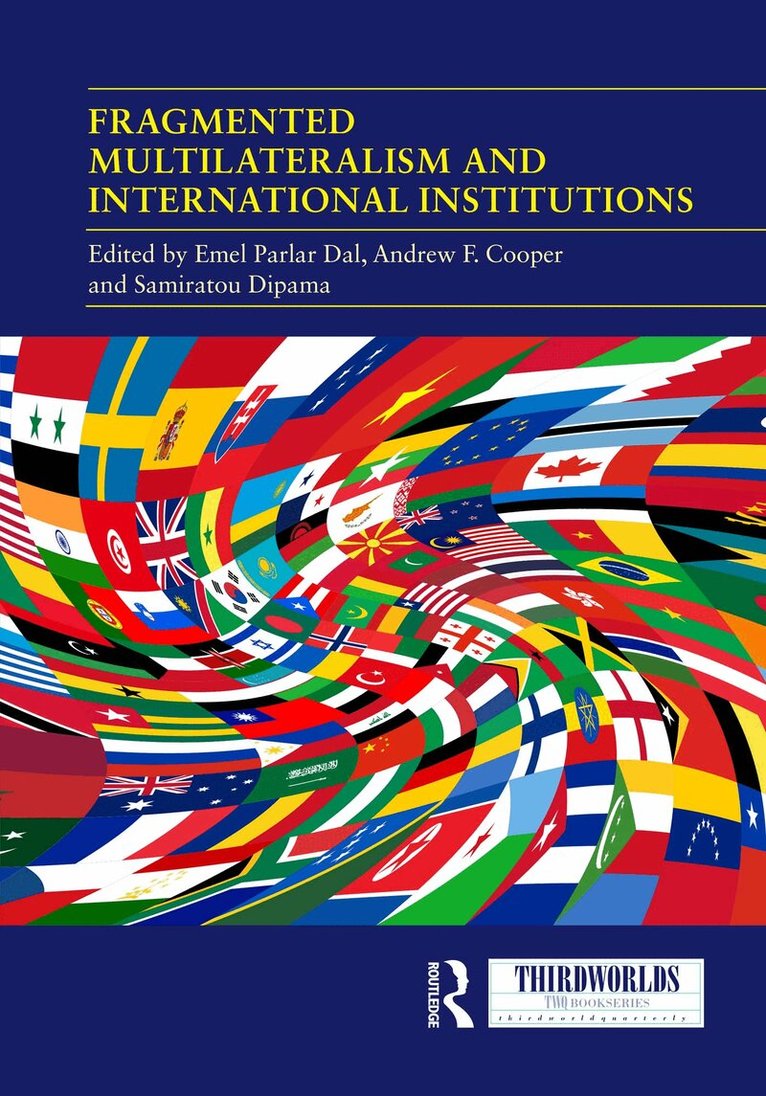
Fragmented Multilateralism and International Institutions
Av Emel Parlar Dal, Andrew F. Cooper, Samiratou Dipama
2510 kr
Beställningsvara. Skickas inom 10-15 vardagar. Fri frakt över 249 kr.
Beskrivning
This book aims to unpack how different actors— notably ascendant powers like China and India, established actors like the European Union (EU) and the U.S., or historically overlooked regions such as Latin America—navigate, contest, and reconfigure multilateralism in response to shifting global power constellations.It examines the impact of the fragmentation of multilateralism on Informal International Governmental Organisations (IIGOs) and Formal International Governmental Organisations (FIGOs) through the lens of Global North–Global South relations. The first part presents a short literature review on multilateralism and its crisis. In the second part of the cluster, focusing on ‘Multilateralism and International Institutions’, contributors explore how China and India contest the current form and meaning of multilateralism, and how US policies towards institutions like the United Nations (UN) shift with presidential politics, as well as the roles of United Nations Conference on Trade and Development (UNCTAD) and The United Nations Commission on International Trade Law (UNCITRAL). The third part, on ‘Multilateralism, Informality and IOs’, addresses the intersection of informal governance, multilateralism and the Global South. It includes studies on the European Union’s (EU’s) informal engagement with IIGOs, states’ use of ad hoc coalitions, hybrid practices in The Association of Southeast Asian Nations (ASEAN), the Quad, and the China–Japan–Korea Trilateral Summit. The fourth and final part, on ‘Geopolitics, Multilateralism and International organisations (IOs)’, explores the interplay among geopolitics, multilateralism and IOs and engages with key themes such as the EU’s challenges in FIGOs led by authoritarian regimes favouring instrumental over normative cooperation, and the early emergence of Latin American IIGOs in the nineteenth century, predating formal IOs.This book will be of interest to scholars and researchers of Geopolitics, International Relations, and Global Policy. The chapters were first published in a special issue of the Third World Quarterly.
Produktinformation
- Utgivningsdatum: 2026-09-21
- Mått: 174 x 246 x 13 mm
- Vikt: 520 g
- Format: Inbunden
- Språk: Engelska
- Serie: ThirdWorlds
- Antal sidor: 182
- Förlag: Taylor & Francis Ltd
- ISBN: 9781041368007
Utforska kategorier
Betyg & recensioner
0 recensioner
Inga recensioner tillgängliga.