• Fri frakt över 249 kr
  • •
  • Snabba leveranser
  • •
  • Billiga böcker
Kundservice

Du är på sajten för privatpersoner.

Företag, bibliotek eller offentlig verksamhet?

Du handlar på classic.bokus.com, där alla dina funktioner finns intakta.
Till classic.bokus.com
Bokus logotyp. Gå till startsidan.
  • Erbjudanden
  • Nyheter
  • Student
  • Topplistor
  • Barn & ungdom
  • Bokus Play
  • E-böcker
  • Pocketböcker
  • Spel & pussel

10% rabatt på allt med kod NYSTART10 →

Sidfot

Mina sidor

    Hjälp

    • Kundservice
    • Vanliga frågor och svar
    • Frakt och leverans
    • Retur vid ångerrätt
    • Reklamera vara
    • Betalning
    • Köpvillkor
    • Allmänna villkor
    • Information om webbplatsens tillgänglighet

    Om Bokus

    • Om oss
    • Pressrum
    • För studenter
    • För företag
    • För bibliotek och offentlig verksamhet
    • För leverantörer
    • Hållbarhet

    Populärt

    • Aktuella erbjudanden
    • Presentkort
    • Studentlitteratur
    • Nya böcker
    • Topplistor
    • Signerade böcker
    • Engelska böcker

    Inspiration

    • Boktips
    • BookTok
    • Populära bokserier
    • Barnbokskaraktärer
    • Populära författare
    Logotyp för Bokus
    Följ oss på Facebook (extern länk)Följ oss på Instagram (extern länk)Följ oss på YouTube (extern länk)Följ oss på TikTok (extern länk)
    bokus @ CookiesAnpassa cookiesIntegritetspolicyKöpvillkor
    Till Citymail hemsida (extern länk)Till Budbee hemsida (extern länk)Till Postnord hemsida (extern länk)Till Schenker hemsida (extern länk)Till Early Bird hemsida (extern länk)Till Walleys hemsida (extern länk)
    1. Språk och ordböcker
    2. Språkvetenskap och lingvistik

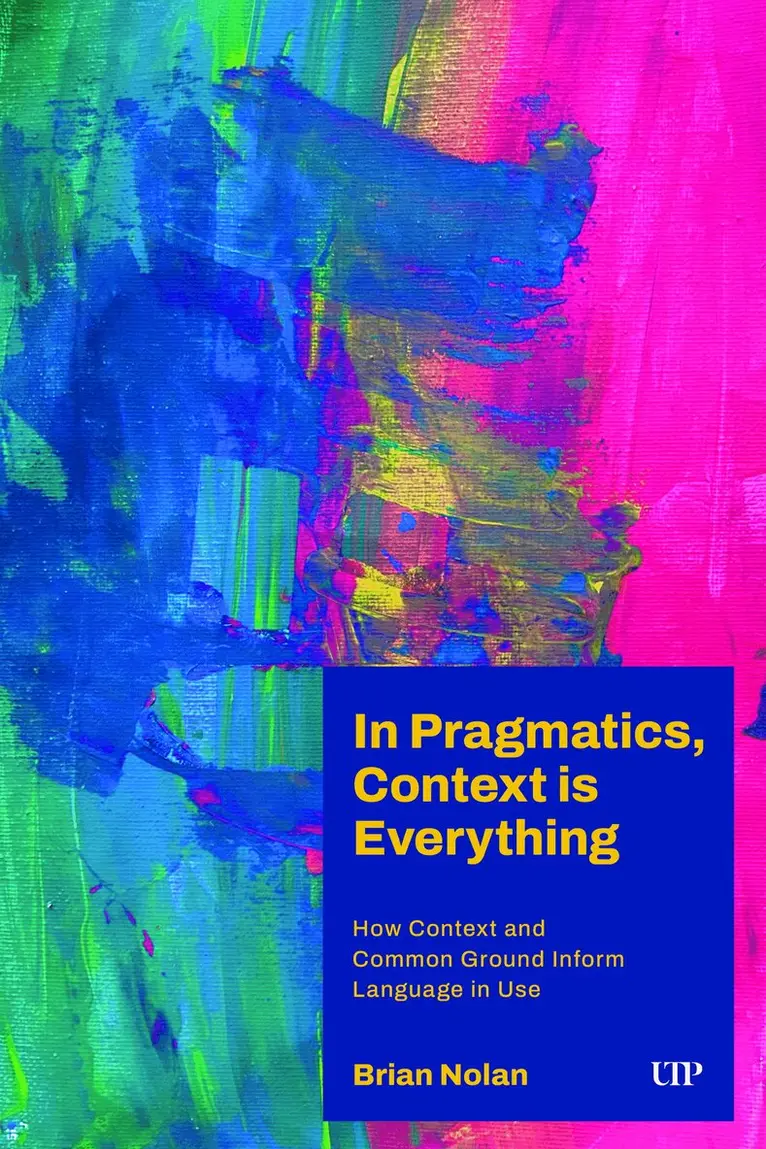
    In Pragmatics, Context Is Everything

    How Context and Common Ground Inform Language in Use

    AvBrian Nolan

    Inbunden, Engelska, 2027

    712 kr

    Slutsåld

    Beskrivning

    This study is concerned with the interrelationship of context, common ground, and situation in pragmatics and how contextual content lends itself to resolving meaning in underspecified utterances. In this book, linguist Brian Nolan examines three primary concerns occupying the study of pragmatics. First, he seeks to interpret what constitutes context and its contribution to language in use, which is one of the core unsolved questions in the literature of the discipline. Next, he gauges the deep relationship between interlocutors' common ground and context, and lastly, he analyses the incorporation of the situation as a cognitive framing device, where context meets common ground. A key component of this investigation is understanding how the pragmatic processing of the situation in real time, via its construal, involves the appropriate and relevant selection of content from context. As the interlocutors advance a discourse, a common ground is established between them, and the subsequent emergent common ground updated, as the dialogue continues. Nolan further defines what we mean by a context and determines how interlocutors communicate felicitously while dynamically leveraging context. A key issue of this book is the delineation of context. Delimiting context delivers the important benefit of avoiding the dizzying effect of the apparent unboundedness of context. This dynamic book is designed for the next generation of scholars who need a sophisticated toolkit to advance the boundaries of pragmatics as a cognitive-functional and computational science.

    Produktinformation

    • Utgivningsdatum:2027-02-23
    • Mått:152 x 229 x undefined mm
    • Vikt:1 g
    • Format:Inbunden
    • Språk:Engelska
    • Antal sidor:208
    • Förlag:University of Toronto Press
    • ISBN:9781049809557

    Utforska kategorier

    • Språkvetenskap och lingvistik inom Språk och ordböcker

    Mer om författaren

    Brian Nolan is (retired) head of informatics and creative digital media at the Technological University, Dublin, and the author of several books on linguistics.

    Innehållsförteckning

    • 1. Context and Pragmatics2. The Problem of Context3. The Contribution of Common Ground4. The Situation of a Speech Act and Meaning Resolution5. The Speech Act in a Pragmatic Situation Model6. Guiding the Selection of Contextual Knowledge in a Situation7. Concluding RemarksReferencesIndex