E-bok, Engelska, 2020
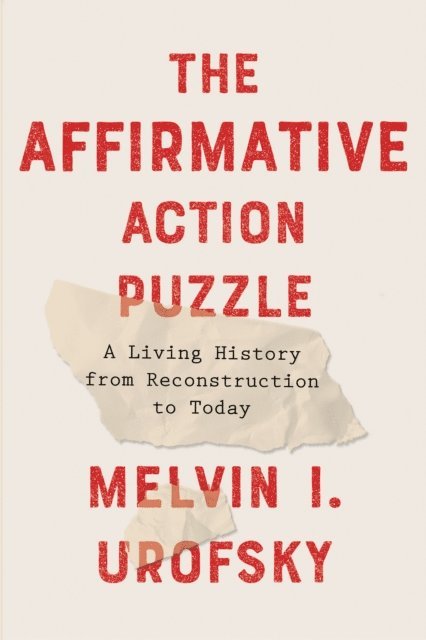
Affirmative Action Puzzle
168 kr
Skickas tisdag 13/10
Beskrivning
A rich, multifaceted history of affirmative action from the Civil Rights Act of 1866 through today’s tumultuous times
From acclaimed legal historian, author of a biography of Louis Brandeis (“Remarkable” —Anthony Lewis, The New York Review of Books, “Definitive”—Jeffrey Rosen, The New Republic) and Dissent and the Supreme Court (“Riveting”—Dahlia Lithwick, The New York Times Book Review), a history of affirmative action from its beginning with the Civil Rights Act of 1866 to the first use of the term in 1935 with the enactment of the National Labor Relations Act (the Wagner Act) to 1961 and John F. Kennedy’s Executive Order 10925, mandating that federal contractors take “affirmative action” to ensure that there be no discrimination by “race, creed, color, or national origin” down to today’s American society.
Melvin Urofsky traces the evolution of affirmative action through labor and the struggle for racial equality, writing of World War I and the exodus that began when some six million African Americans moved northward between 1910 and 1960, one of the greatest internal migrations in the country’s history.
The author also writes of World War II, when women replaced men in factories and the issue of equal pay arose, and of Franklin Delano Roosevelt signing into law his last great New Deal measure for returning veterans—the Servicemen’s Readjustment Act (the GI Bill), the most massive affirmative action program in American history.
Urofsky tells the story of the struggles of blacks through the 1930s and 1940s, and how the southern states had to live up to the “equal” parts of the “separate but equal” formula. He writes as well about Brown v. Board of Education of Topeka, the passage of the 1964 Civil Rights Act, and the 1965 Voting Rights Act.
He describes how Harry Truman, after becoming president in 1945, fought for Roosevelt’s Fair Employment Practice Act and, surprising everyone, appointed a distinguished panel to serve as the President’s Commission on Civil Rights, as well as appointing the first black judge on a federal appeals court in 1948 and, by executive order later that year, ordering full racial integration in the armed forces.
We see Dwight Eisenhower sending in one thousand U.S. Army paratroopers and federalizing ten thousand Arkansas national guardsmen to protect black students trying to go to school; John F. Kennedy establishing the President’s Committee on Equal Employment Opportunity and naming Lyndon Johnson as its chair, with Kennedy understanding, as did civil rights leaders, that no matter how the government tried to eradicate racial discrimination, the key to progress involved private sector employment with decent paying jobs, which would pull black America out of poverty.
Urofsky explores affirmative action in relation to sex, gender, and education and shows that nearly every public university in the country has at one time or another instituted some form of affirmative action plan—some successful, others not.
In this important, ambitious, far-reaching book, Urofsky writes about the affirmative action cases decided by the Supreme Court: cases that either upheld or struck down particular plans that affected both governmental and private entities. We come to fully understand the societal impact of affirmative action: how and why it has helped, and inflamed, people of all walks of life; how it has evolved; and how, and why, it is still needed.
From acclaimed legal historian, author of a biography of Louis Brandeis (“Remarkable” —Anthony Lewis, The New York Review of Books, “Definitive”—Jeffrey Rosen, The New Republic) and Dissent and the Supreme Court (“Riveting”—Dahlia Lithwick, The New York Times Book Review), a history of affirmative action from its beginning with the Civil Rights Act of 1866 to the first use of the term in 1935 with the enactment of the National Labor Relations Act (the Wagner Act) to 1961 and John F. Kennedy’s Executive Order 10925, mandating that federal contractors take “affirmative action” to ensure that there be no discrimination by “race, creed, color, or national origin” down to today’s American society.
Melvin Urofsky traces the evolution of affirmative action through labor and the struggle for racial equality, writing of World War I and the exodus that began when some six million African Americans moved northward between 1910 and 1960, one of the greatest internal migrations in the country’s history.
The author also writes of World War II, when women replaced men in factories and the issue of equal pay arose, and of Franklin Delano Roosevelt signing into law his last great New Deal measure for returning veterans—the Servicemen’s Readjustment Act (the GI Bill), the most massive affirmative action program in American history.
Urofsky tells the story of the struggles of blacks through the 1930s and 1940s, and how the southern states had to live up to the “equal” parts of the “separate but equal” formula. He writes as well about Brown v. Board of Education of Topeka, the passage of the 1964 Civil Rights Act, and the 1965 Voting Rights Act.
He describes how Harry Truman, after becoming president in 1945, fought for Roosevelt’s Fair Employment Practice Act and, surprising everyone, appointed a distinguished panel to serve as the President’s Commission on Civil Rights, as well as appointing the first black judge on a federal appeals court in 1948 and, by executive order later that year, ordering full racial integration in the armed forces.
We see Dwight Eisenhower sending in one thousand U.S. Army paratroopers and federalizing ten thousand Arkansas national guardsmen to protect black students trying to go to school; John F. Kennedy establishing the President’s Committee on Equal Employment Opportunity and naming Lyndon Johnson as its chair, with Kennedy understanding, as did civil rights leaders, that no matter how the government tried to eradicate racial discrimination, the key to progress involved private sector employment with decent paying jobs, which would pull black America out of poverty.
Urofsky explores affirmative action in relation to sex, gender, and education and shows that nearly every public university in the country has at one time or another instituted some form of affirmative action plan—some successful, others not.
In this important, ambitious, far-reaching book, Urofsky writes about the affirmative action cases decided by the Supreme Court: cases that either upheld or struck down particular plans that affected both governmental and private entities. We come to fully understand the societal impact of affirmative action: how and why it has helped, and inflamed, people of all walks of life; how it has evolved; and how, and why, it is still needed.
Produktinformation
- Utgivningsdatum: 2020-01-28
- Format: E-bok
- Språk: Engelska
- Förlag: Knopf Doubleday Publishing Group
- ISBN: 9781101870884
Utforska kategorier
Betyg & recensioner
0 recensioner
Inga recensioner tillgängliga.