• Fri frakt över 249 kr
  • •
  • Snabba leveranser
  • •
  • Billiga böcker
Kundservice

Du är på sajten för privatpersoner.

Företag, bibliotek eller offentlig verksamhet?

Du handlar på classic.bokus.com, där alla dina funktioner finns intakta.
Till classic.bokus.com
Bokus logotyp. Gå till startsidan.
  • Erbjudanden
  • Student
  • Topplistor
  • Barn & ungdom
  • Bokus Play
  • E-böcker
  • Ljudböcker
  • Pocketböcker
  • Spel & pussel

Upp till 25% på utvalda nyheter →

Sidfot

Mina sidor

    Hjälp

    • Kundservice
    • Vanliga frågor och svar
    • Frakt och leverans
    • Retur vid ångerrätt
    • Reklamera vara
    • Betalning
    • Köpvillkor
    • Allmänna villkor
    • Information om webbplatsens tillgänglighet

    Om Bokus

    • Om oss
    • Pressrum
    • För studenter
    • För företag
    • För bibliotek och offentlig verksamhet
    • För leverantörer
    • Hållbarhet

    Populärt

    • Aktuella erbjudanden
    • Presentkort
    • Studentlitteratur
    • Nya böcker
    • Topplistor
    • Signerade böcker
    • Engelska böcker

    Inspiration

    • Boktips
    • BookTok
    • Populära bokserier
    • Barnbokskaraktärer
    • Populära författare
    Logotyp för Bokus
    Följ oss på Facebook (extern länk)Följ oss på Instagram (extern länk)Följ oss på YouTube (extern länk)Följ oss på TikTok (extern länk)
    bokus @ CookiesAnpassa cookiesIntegritetspolicyKöpvillkor
    Till Citymail hemsida (extern länk)Till Budbee hemsida (extern länk)Till Postnord hemsida (extern länk)Till Schenker hemsida (extern länk)Till Early Bird hemsida (extern länk)Till Walleys hemsida (extern länk)
    1. Psykologi och pedagogik
    2. Psykologi

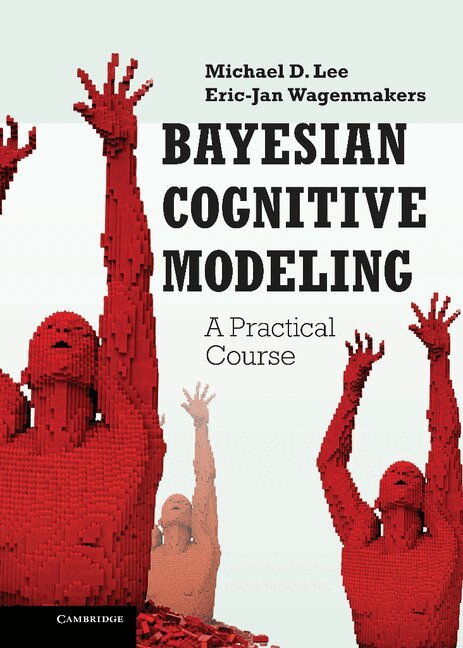
    Bayesian Cognitive Modeling

    A Practical Course

    AvMichael D. Lee,Eric-Jan Wagenmakers

    Inbunden, Engelska, 2014

    1 362 kr

    Beställningsvara. Skickas inom 7-10 vardagar. Fri frakt över 249 kr.

    Fler format och utgåvor

    Häftad

    543 kr

    Beskrivning

    Bayesian inference has become a standard method of analysis in many fields of science. Students and researchers in experimental psychology and cognitive science, however, have failed to take full advantage of the new and exciting possibilities that the Bayesian approach affords. Ideal for teaching and self study, this book demonstrates how to do Bayesian modeling. Short, to-the-point chapters offer examples, exercises, and computer code (using WinBUGS or JAGS, and supported by Matlab and R), with additional support available online. No advance knowledge of statistics is required and, from the very start, readers are encouraged to apply and adjust Bayesian analyses by themselves. The book contains a series of chapters on parameter estimation and model selection, followed by detailed case studies from cognitive science. After working through this book, readers should be able to build their own Bayesian models, apply the models to their own data, and draw their own conclusions.

    Produktinformation

    • Utgivningsdatum:2014-04-03
    • Mått:178 x 254 x 17 mm
    • Vikt:700 g
    • Format:Inbunden
    • Språk:Engelska
    • Antal sidor:280
    • Förlag:Cambridge University Press
    • ISBN:9781107018457

    Utforska kategorier

    • Psykologi inom Psykologi och pedagogik

    Mer om författaren

    Michael D. Lee is a professor in the Department of Cognitive Sciences at the University of California, Irvine. Eric-Jan Wagenmakers is a professor in the Department of Psychological Methods at the University of Amsterdam.

    Recensioner i media

    'This book provides the best practical guide to date on how to do Bayesian modeling in cognitive science.' Jay Myung, Ohio State University

    Innehållsförteckning

    • Part I. Getting Started: 1. The basics of Bayesian analysis; 2. Getting started with WinBUGS; Part II. Parameter Estimation: 3. Inferences with binomials; 4. Inferences with Gaussians; 5. Some examples of data analysis; 6. Latent mixture models; Part III. Model Selection: 7. Bayesian model comparison; 8. Comparing Gaussian means; 9. Comparing binomial rates; Part IV. Case Studies: 10. Memory retention; 11. Signal detection theory; 12. Psychophysical functions; 13. Extrasensory perception; 14. Multinomial processing trees; 15. The SIMPLE model of memory; 16. The BART model of risk taking; 17. The GCM model of categorization; 18. Heuristic decision-making; 19. Number concept development.