• Fri frakt över 249 kr
  • •
  • Snabba leveranser
  • •
  • Billiga böcker
Kundservice

Du är på sajten för privatpersoner.

Företag, bibliotek eller offentlig verksamhet?

Du handlar på classic.bokus.com, där alla dina funktioner finns intakta.
Till classic.bokus.com
Bokus logotyp. Gå till startsidan.
  • Erbjudanden
  • Nyheter
  • Student
  • Topplistor
  • Barn & ungdom
  • Bokus Play
  • E-böcker
  • Pocketböcker
  • Spel & pussel

Må bättre, för mindre! Upp till 50% rabatt på hälsoböcker

Sidfot

Mina sidor

    Hjälp

    • Kundservice
    • Vanliga frågor och svar
    • Frakt och leverans
    • Retur vid ångerrätt
    • Reklamera vara
    • Betalning
    • Köpvillkor
    • Allmänna villkor
    • Information om webbplatsens tillgänglighet

    Om Bokus

    • Om oss
    • Pressrum
    • För studenter
    • För företag
    • För bibliotek och offentlig verksamhet
    • För leverantörer
    • Hållbarhet

    Populärt

    • Aktuella erbjudanden
    • Presentkort
    • Studentlitteratur
    • Nya böcker
    • Topplistor
    • Signerade böcker
    • Engelska böcker

    Inspiration

    • Boktips
    • BookTok
    • Populära bokserier
    • Barnbokskaraktärer
    • Populära författare
    Logotyp för Bokus
    Följ oss på Facebook (extern länk)Följ oss på Instagram (extern länk)Följ oss på YouTube (extern länk)Följ oss på TikTok (extern länk)
    bokus @ CookiesAnpassa cookiesIntegritetspolicyKöpvillkor
    Till Citymail hemsida (extern länk)Till Budbee hemsida (extern länk)Till Postnord hemsida (extern länk)Till Schenker hemsida (extern länk)Till Early Bird hemsida (extern länk)Till Walleys hemsida (extern länk)
    1. Språk och ordböcker
    2. Språkvetenskap och lingvistik

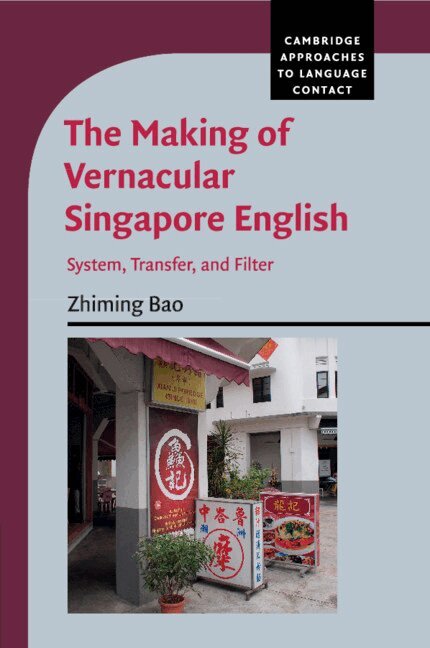
    The Making of Vernacular Singapore English

    System, Transfer, and Filter

    AvZhiming Bao

    Inbunden, Engelska, 2015

    Del i serien Cambridge Approaches to Language Contact

    1 389 kr

    Beställningsvara. Skickas inom 10-15 vardagar. Fri frakt över 249 kr.

    Fler format och utgåvor

    Häftad

    477 kr

    Beskrivning

    Singapore English is a focal point across the many subfields of linguistics, as its semantic, syntactic and phonetic/phonological qualities tell us a great deal about what happens when very different types of language come together. Sociolinguists are also interested in the relative status of Singapore English compared to other languages in the country. This book charts the history of Singapore English and explores the linguistic, historical and social factors that have influenced the variety as it is spoken today. It identifies novel grammatical features of the language, discusses their structure and function, and traces their origins to the local languages of Singapore. It places grammatical system and usage at the core of the analysis, and shows that introspective and corpus data are complementary. This study will be of interest to scholars and advanced students working on language contact, world varieties of English, historical linguistics and sociolinguistics.

    Produktinformation

    • Utgivningsdatum:2015-08-14
    • Mått:160 x 236 x 18 mm
    • Vikt:500 g
    • Format:Inbunden
    • Språk:Engelska
    • Serie:Cambridge Approaches to Language Contact
    • Antal sidor:232
    • Förlag:Cambridge University Press
    • ISBN:9781107022089

    Utforska kategorier

    • Språkvetenskap och lingvistik inom Språk och ordböcker

    Mer om författaren

    Zhiming Bao is a Professor in the Department of English Language and Literature at the National University of Singapore.

    Recensioner i media

    'Bao offers a nuanced and novel take on the role of Chinese grammar in the formation of Singapore English. He clearly shows that this continuously evolving language holds important lessons for our understanding of language creation and New English varieties.' Umberto Ansaldo, University of Hong Kong

    Innehållsförteckning

    • 1. Introduction; 2. The ecology of Singapore English; 3. Grammatical system and substratum transfer; 4. Topic prominence, empty categories and the bare conditional; 5. Substratum, lexifier and typological universals; 6. Frequency, usage and the circumscriptive role of the lexifier; 7. Convergence-to-substratum; 8. Epilogue.