• Fri frakt över 249 kr
  • •
  • Snabba leveranser
  • •
  • Billiga böcker
Kundservice

Du är på sajten för privatpersoner.

Företag, bibliotek eller offentlig verksamhet?

Du handlar på classic.bokus.com, där alla dina funktioner finns intakta.
Till classic.bokus.com
Bokus logotyp. Gå till startsidan.
  • Erbjudanden
  • Nyheter
  • Student
  • Topplistor
  • Barn & ungdom
  • Bokus Play
  • E-böcker
  • Pocketböcker
  • Spel & pussel

10% rabatt på allt med kod NYSTART10 →

Sidfot

Mina sidor

    Hjälp

    • Kundservice
    • Vanliga frågor och svar
    • Frakt och leverans
    • Retur vid ångerrätt
    • Reklamera vara
    • Betalning
    • Köpvillkor
    • Allmänna villkor
    • Information om webbplatsens tillgänglighet

    Om Bokus

    • Om oss
    • Pressrum
    • För studenter
    • För företag
    • För bibliotek och offentlig verksamhet
    • För leverantörer
    • Hållbarhet

    Populärt

    • Aktuella erbjudanden
    • Presentkort
    • Studentlitteratur
    • Nya böcker
    • Topplistor
    • Signerade böcker
    • Engelska böcker

    Inspiration

    • Boktips
    • BookTok
    • Populära bokserier
    • Barnbokskaraktärer
    • Populära författare
    Logotyp för Bokus
    Följ oss på Facebook (extern länk)Följ oss på Instagram (extern länk)Följ oss på YouTube (extern länk)Följ oss på TikTok (extern länk)
    bokus @ CookiesAnpassa cookiesIntegritetspolicyKöpvillkor
    Till Citymail hemsida (extern länk)Till Budbee hemsida (extern länk)Till Postnord hemsida (extern länk)Till Schenker hemsida (extern länk)Till Early Bird hemsida (extern länk)Till Walleys hemsida (extern länk)
    1. Data och IT
    2. Systemvetenskap och AI

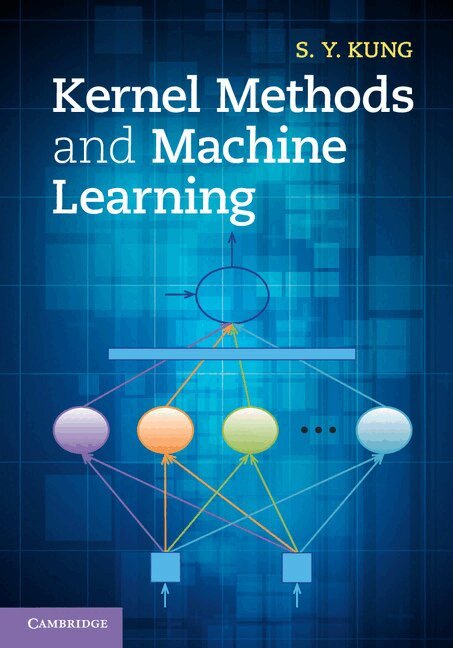
    Kernel Methods and Machine Learning

    AvS. Y. Kung

    Inbunden, Engelska, 2014

    1 250 kr

    Beställningsvara. Skickas inom 10-15 vardagar. Fri frakt över 249 kr.

    Fler format och utgåvor

    E-bok

    1 463 kr

    E-bok

    1 467 kr

    Beskrivning

    Offering a fundamental basis in kernel-based learning theory, this book covers both statistical and algebraic principles. It provides over 30 major theorems for kernel-based supervised and unsupervised learning models. The first of the theorems establishes a condition, arguably necessary and sufficient, for the kernelization of learning models. In addition, several other theorems are devoted to proving mathematical equivalence between seemingly unrelated models. With over 25 closed-form and iterative algorithms, the book provides a step-by-step guide to algorithmic procedures and analysing which factors to consider in tackling a given problem, enabling readers to improve specifically designed learning algorithms, build models for new applications and develop efficient techniques suitable for green machine learning technologies. Numerous real-world examples and over 200 problems, several of which are Matlab-based simulation exercises, make this an essential resource for graduate students and professionals in computer science, electrical and biomedical engineering. Solutions to problems are provided online for instructors.

    Produktinformation

    • Utgivningsdatum:2014-04-17
    • Mått:176 x 252 x 29 mm
    • Vikt:1 350 g
    • Format:Inbunden
    • Språk:Engelska
    • Antal sidor:572
    • Förlag:Cambridge University Press
    • ISBN:9781107024960

    Utforska kategorier

    • Systemvetenskap och AI inom Data och IT

    Mer om författaren

    S. Y. Kung is a Professor in the Department of Electrical Engineering at Princeton University. His research areas include VLSI array/parallel processors, system modeling and identification, wireless communication, statistical signal processing, multimedia processing, sensor networks, bioinformatics, data mining and machine learning.

    Innehållsförteckning

    • Part I. Machine Learning and Kernel Vector Spaces: 1. Fundamentals of machine learning; 2. Kernel-induced vector spaces; Part II. Dimension-Reduction: Feature Selection and PCA/KPCA: 3. Feature selection; 4. PCA and Kernel-PCA; Part III. Unsupervised Learning Models for Cluster Analysis: 5. Unsupervised learning for cluster discovery; 6. Kernel methods for cluster discovery; Part IV. Kernel Ridge Regressors and Variants: 7. Kernel-based regression and regularization analysis; 8. Linear regression and discriminant analysis for supervised classification; 9. Kernel ridge regression for supervised classification; Part V. Support Vector Machines and Variants: 10. Support vector machines; 11. Support vector learning models for outlier detection; 12. Ridge-SVM learning models; Part VI. Kernel Methods for Green Machine Learning Technologies: 13. Efficient kernel methods for learning and classifcation; Part VII. Kernel Methods and Statistical Estimation Theory: 14. Statistical regression analysis and errors-in-variables models; 15: Kernel methods for estimation, prediction, and system identification; Part VIII. Appendices: Appendix A. Validation and test of learning models; Appendix B. kNN, PNN, and Bayes classifiers; References; Index.