• Fri frakt över 249 kr
  • •
  • Snabba leveranser
  • •
  • Billiga böcker
Kundservice

Du är på sajten för privatpersoner.

Företag, bibliotek eller offentlig verksamhet?

Du handlar på classic.bokus.com, där alla dina funktioner finns intakta.
Till classic.bokus.com
Bokus logotyp. Gå till startsidan.
  • Erbjudanden
  • Nyheter
  • Student
  • Topplistor
  • Barn & ungdom
  • Bokus Play
  • E-böcker
  • Pocketböcker
  • Spel & pussel

Må bättre, för mindre! Upp till 50% rabatt på hälsoböcker

Sidfot

Mina sidor

    Hjälp

    • Kundservice
    • Vanliga frågor och svar
    • Frakt och leverans
    • Retur vid ångerrätt
    • Reklamera vara
    • Betalning
    • Köpvillkor
    • Allmänna villkor
    • Information om webbplatsens tillgänglighet

    Om Bokus

    • Om oss
    • Pressrum
    • För studenter
    • För företag
    • För bibliotek och offentlig verksamhet
    • För leverantörer
    • Hållbarhet

    Populärt

    • Aktuella erbjudanden
    • Presentkort
    • Studentlitteratur
    • Nya böcker
    • Topplistor
    • Signerade böcker
    • Engelska böcker

    Inspiration

    • Boktips
    • BookTok
    • Populära bokserier
    • Barnbokskaraktärer
    • Populära författare
    Logotyp för Bokus
    Följ oss på Facebook (extern länk)Följ oss på Instagram (extern länk)Följ oss på YouTube (extern länk)Följ oss på TikTok (extern länk)
    bokus @ CookiesAnpassa cookiesIntegritetspolicyKöpvillkor
    Till Citymail hemsida (extern länk)Till Budbee hemsida (extern länk)Till Postnord hemsida (extern länk)Till Schenker hemsida (extern länk)Till Early Bird hemsida (extern länk)Till Walleys hemsida (extern länk)
    1. Historia och arkeologi
    2. Historia

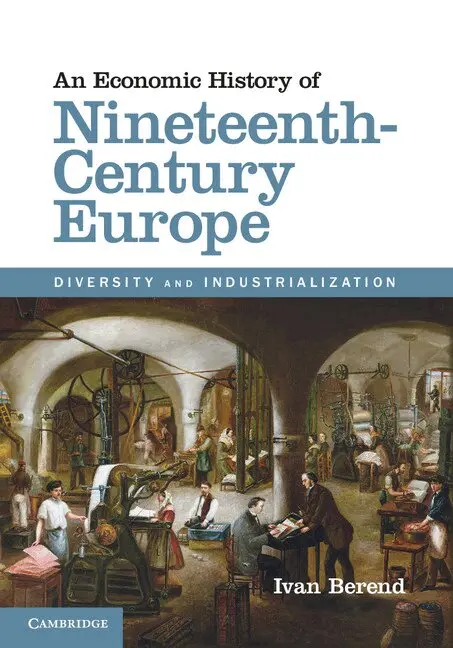
    An Economic History of Nineteenth-Century Europe

    Diversity and Industrialization

    AvIvan Berend

    Inbunden, Engelska, 2012

    1 126 kr

    Beställningsvara. Skickas inom 10-15 vardagar. Fri frakt över 249 kr.

    Fler format och utgåvor

    Häftad

    375 kr

    Beskrivning

    Why did some countries and regions of Europe reach high levels of economic advancement in the nineteenth century, while others were left behind? This new transnational survey of the continent's economic development highlights the role of regional differences in shaping each country's economic path and outcome. Presenting a clear and cogent explanation of the historical causes of advancement and backwardness, Ivan Berend integrates social, political, institutional and cultural factors as well as engaging in debates about the relative roles of knowledge, the state and institutions. Featuring boxed essays on key personalities including Adam Smith, Friedrich List, Gustave Eiffel and the Krupp family, as well as brief histories of innovations such as the steam engine, vaccinations and the co-operative system, the book helps to explain the theories and macro-economic trends that dominated the century and their impact on the subsequent development of the European economy right up to the present day.

    Produktinformation

    • Utgivningsdatum:2012-11-15
    • Mått:180 x 253 x 30 mm
    • Vikt:1 200 g
    • Format:Inbunden
    • Språk:Engelska
    • Antal sidor:566
    • Förlag:Cambridge University Press
    • ISBN:9781107030701
    • Utmärkelser:Choice Outstanding Academic Title 2013

    Utforska kategorier

    • Historia inom Historia och arkeologi

    Mer om författaren

    Ivan T. Berend is Distinguished Professor in the Department of History at the University of California, Los Angeles. His publications include An Economic History of Twentieth-Century Europe: Economic Regimes from Laissez-Faire to Globalization (Cambridge University Press, 2006) and Europe Since 1980 (Cambridge University Press, 2010).

    Recensioner i media

    'A masterful survey that puts the history back in economic history. It will make an outstanding textbook for undergraduate courses in nineteenth-century European economic history.' George Grantham, McGill University

    Innehållsförteckning

    • Introduction; Part I. Gradual Revolution: 1. From merchant to industrial capitalism in Northwestern Europe; Part II. Successful Industrial Transformation of the West: 2. Knowledge and the entrepreneurial state; 3. Agriculture, transportation, and communication; 4. The organisation of business and finance; 5. Three versions of successful industrialization; 6. The miracle of knowledge and the state: Scandinavia; 7. Demographic revolution, transformation of life and standard of living; 8. The Europeanization of Europe; Part III. The Peripheries: Semi-Success or Failure of Modern Transformation: 9. The 'sleeping' peripheries, traditional institutions and values; 10. The Western sparks that ignite modernization; 11. Advantage from dependence: Central Europe, the Baltic Area, Finland and Ireland; 12. Profiting from foreign interests: the Mediterranean and Russia; 13. The predator Leviathan in peasant societies: the Balkans and the borderlands of Austria-Hungary; Epilogue: economic disparity – and alternative postwar economic regimes; References.