• Fri frakt över 249 kr
  • •
  • Snabba leveranser
  • •
  • Billiga böcker
Kundservice

Du är på sajten för privatpersoner.

Företag, bibliotek eller offentlig verksamhet?

Du handlar på classic.bokus.com, där alla dina funktioner finns intakta.
Till classic.bokus.com
Bokus logotyp. Gå till startsidan.
  • Erbjudanden
  • Student
  • Topplistor
  • Barn & ungdom
  • Bokus Play
  • E-böcker
  • Ljudböcker
  • Pocketböcker
  • Spel och pussel

5% studentrabatt – använd koden KURSBOK27 →

Sidfot

Mina sidor

    Hjälp

    • Kundservice
    • Vanliga frågor och svar
    • Frakt och leverans
    • Retur vid ångerrätt
    • Reklamera vara
    • Betalning
    • Köpvillkor
    • Allmänna villkor
    • Information om webbplatsens tillgänglighet

    Om Bokus

    • Om oss
    • Pressrum
    • För studenter
    • För företag
    • För bibliotek och offentlig verksamhet
    • För leverantörer
    • Hållbarhet

    Populärt

    • Aktuella erbjudanden
    • Presentkort
    • Studentlitteratur
    • Nya böcker
    • Topplistor
    • Signerade böcker
    • Engelska böcker

    Inspiration

    • Boktips
    • BookTok
    • Barnbokskaraktärer
    • Populära författare
    Logotyp för Bokus
    Följ oss på Facebook (extern länk)Följ oss på Instagram (extern länk)Följ oss på YouTube (extern länk)Följ oss på TikTok (extern länk)
    bokus @ CookiesAnpassa cookiesIntegritetspolicyKöpvillkor
    Till Citymail hemsida (extern länk)Till Budbee hemsida (extern länk)Till Postnord hemsida (extern länk)Till Schenker hemsida (extern länk)Till Early Bird hemsida (extern länk)Till Walleys hemsida (extern länk)
    1. Språk och ordböcker
    2. Språkvetenskap och lingvistik

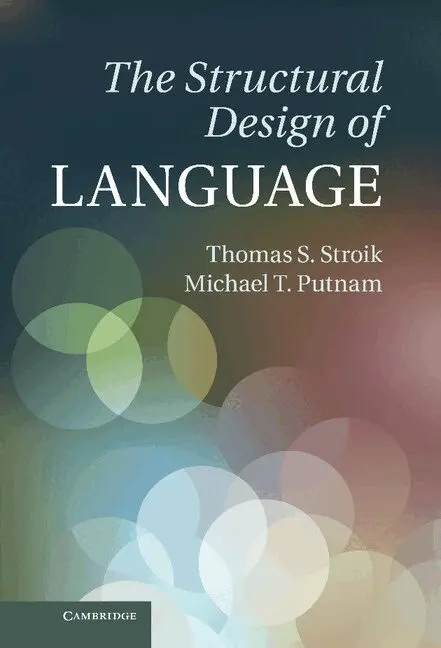
    The Structural Design of Language

    AvThomas S. Stroik,Michael T. Putnam

    Inbunden, Engelska, 2013

    1 513 kr

    Beställningsvara. Skickas inom 7-10 vardagar. Fri frakt över 249 kr.

    Fler format och utgåvor

    Häftad

    367 kr

    Beskrivning

    Although there have been numerous investigations of biolinguistics within the Minimalist Program over the last ten years, many of which appeal to the importance of Turing's Thesis (that the structural design of systems must obey physical and mathematical laws), these studies have by and large ignored the question of the structural design of language. They have paid significant attention to identifying the components of language - settling on a lexicon, a computational system, a sensorimotor performance system and a conceptual-intentional performance system; however, they have not examined how these components must be inter-structured to meet thresholds of simplicity, generality, naturalness and beauty, as well as of biological and conceptual necessity. In this book, Stroik and Putnam take on Turing's challenge. They argue that the narrow syntax - the lexicon, the Numeration, and the computational system - must reside, for reasons of conceptual necessity, within the performance systems. As simple as this novel design is, it provides, as Stroik and Putnam demonstrate, radical new insights into what the human language faculty is, how language emerged in the species, and how language is acquired by children.

    Produktinformation

    • Utgivningsdatum:2013-04-25
    • Mått:152 x 229 x 13 mm
    • Vikt:430 g
    • Format:Inbunden
    • Språk:Engelska
    • Antal sidor:210
    • Förlag:Cambridge University Press
    • ISBN:9781107034839

    Utforska kategorier

    • Språkvetenskap och lingvistik inom Språk och ordböcker

    Mer om författaren

    Thomas S. Stroik is Professor of English Linguistics at the University of Missouri, Kansas City. His previous publications include Locality in Minimalist Syntax (2009). Michael T. Putnam is Assistant Professor of German and Linguistics at Pennsylvania State University. He is the author of Scrambling and the Survive Principle (2007) and has edited three books including Exploring Crash-Proof Grammars (2010).

    Innehållsförteckning

    • 1. The biolinguistic turn; 2. The structure of the lexicon; 3. Constructing the numeration; 4. Copy and the computational system; 5. Some structural consequences for derivations; 6. Observations on performance system interpretations; 7. Conclusions and challenges.