• Fri frakt över 249 kr
  • •
  • Snabba leveranser
  • •
  • Billiga böcker
Kundservice

Du är på sajten för privatpersoner.

Företag, bibliotek eller offentlig verksamhet?

Du handlar på classic.bokus.com, där alla dina funktioner finns intakta.
Till classic.bokus.com
Bokus logotyp. Gå till startsidan.
  • Erbjudanden
  • Nyheter
  • Student
  • Topplistor
  • Barn & ungdom
  • Bokus Play
  • E-böcker
  • Pocketböcker
  • Spel & pussel

10% studentrabatt med kod TERM26

Sidfot

Mina sidor

    Hjälp

    • Kundservice
    • Vanliga frågor och svar
    • Frakt och leverans
    • Retur vid ångerrätt
    • Reklamera vara
    • Betalning
    • Köpvillkor
    • Allmänna villkor
    • Information om webbplatsens tillgänglighet

    Om Bokus

    • Om oss
    • Pressrum
    • För studenter
    • För företag
    • För bibliotek och offentlig verksamhet
    • För leverantörer
    • Hållbarhet

    Populärt

    • Aktuella erbjudanden
    • Presentkort
    • Studentlitteratur
    • Nya böcker
    • Topplistor
    • Signerade böcker
    • Engelska böcker

    Inspiration

    • Boktips
    • BookTok
    • Populära bokserier
    • Barnbokskaraktärer
    • Populära författare
    Logotyp för Bokus
    Följ oss på Facebook (extern länk)Följ oss på Instagram (extern länk)Följ oss på YouTube (extern länk)Följ oss på TikTok (extern länk)
    bokus @ CookiesAnpassa cookiesIntegritetspolicyKöpvillkor
    Till Citymail hemsida (extern länk)Till Budbee hemsida (extern länk)Till Postnord hemsida (extern länk)Till Schenker hemsida (extern länk)Till Early Bird hemsida (extern länk)Till Walleys hemsida (extern länk)
    1. Skönlitteratur
    2. Litteraturvetenskap
    3. Litteraturvetenskap

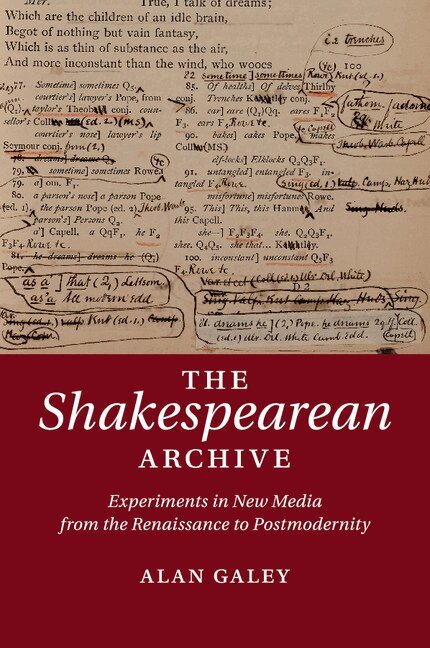
    The Shakespearean Archive

    Experiments in New Media from the Renaissance to Postmodernity

    AvAlan Galey

    Inbunden, Engelska, 2014

    1 473 kr

    Beställningsvara. Skickas inom 10-15 vardagar. Fri frakt över 249 kr.

    Fler format och utgåvor

    Häftad

    533 kr

    Beskrivning

    Why is Shakespeare so often associated with information technologies and with the idea of archiving itself? Alan Galey explores this question through the entwined histories of Shakespearean texts and archival technologies over the past four centuries. In chapters dealing with the archive, the book, photography, sound, information, and data, Galey analyzes how Shakespeare became prototypical material for publishing experiments, and new media projects, as well as for theories of archiving and computing. Analyzing examples of the Shakespearean archive from the seventeenth century to today, he takes an original approach to Shakespeare and new media that will be of interest to scholars of the digital humanities, Shakespeare studies, archives, and media history. Rejecting the idea that current forms of computing are the result of technical forces beyond the scope of humanist inquiry, this book instead offers a critical prehistory of digitization read through the afterlives of Shakespeare's texts.

    Produktinformation

    • Utgivningsdatum:2014-10-23
    • Mått:155 x 229 x 18 mm
    • Vikt:640 g
    • Format:Inbunden
    • Språk:Engelska
    • Antal sidor:348
    • Förlag:Cambridge University Press
    • ISBN:9781107040649

    Utforska kategorier

    • Litteraturvetenskap inom Skönlitteratur

    Mer om författaren

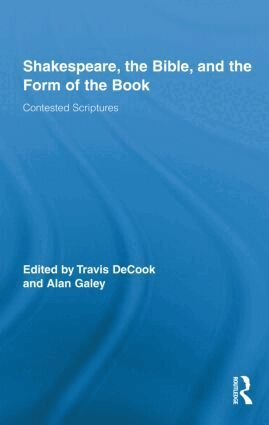
    Alan Galey is Associate Professor in the Faculty of Information at the University of Toronto. His research focuses on intersections between textual scholarship and digital technologies. He has published in journals such as Shakespeare Quarterly and Archival Science, and his article 'The Enkindling Reciter: E-Books in the Bibliographical Imagination', in Book History (2012), was awarded the Fredson Bowers Prize by the Society for Textual Scholarship. He is also the co-editor of Shakespeare, the Bible, and the Form of the Book: Contested Scriptures (2011).

    Innehållsförteckning

    • 1. Introduction: scenes from the prehistory of digitization; 2. Leaves of brass: Shakespeare and the idea of the archive; 3. The archive and the book: information architectures from Folio to variorum; 4. The counterfeit presentments of Victorian photography; 5. Inventing Shakespeare's voice: early sound transmission and recording; 6. Networks of deep impression: Shakespeare and the modern invention of information; 7. Data and the ghosts of materiality; 8. Conclusion: sites of Shakespearean memory.