• Fri frakt över 249 kr
  • •
  • Snabba leveranser
  • •
  • Billiga böcker
Kundservice

Du är på sajten för privatpersoner.

Företag, bibliotek eller offentlig verksamhet?

Du handlar på classic.bokus.com, där alla dina funktioner finns intakta.
Till classic.bokus.com
Bokus logotyp. Gå till startsidan.
  • Erbjudanden
  • Nyheter
  • Student
  • Topplistor
  • Barn & ungdom
  • Bokus Play
  • E-böcker
  • Pocketböcker
  • Spel & pussel

10% rabatt på allt med kod: NYSTART10 →

Sidfot

Mina sidor

    Hjälp

    • Kundservice
    • Vanliga frågor och svar
    • Frakt och leverans
    • Retur vid ångerrätt
    • Reklamera vara
    • Betalning
    • Köpvillkor
    • Allmänna villkor
    • Information om webbplatsens tillgänglighet

    Om Bokus

    • Om oss
    • Pressrum
    • För studenter
    • För företag
    • För bibliotek och offentlig verksamhet
    • För leverantörer
    • Hållbarhet

    Populärt

    • Aktuella erbjudanden
    • Presentkort
    • Studentlitteratur
    • Nya böcker
    • Topplistor
    • Signerade böcker
    • Engelska böcker

    Inspiration

    • Boktips
    • BookTok
    • Populära bokserier
    • Barnbokskaraktärer
    • Populära författare
    Logotyp för Bokus
    Följ oss på Facebook (extern länk)Följ oss på Instagram (extern länk)Följ oss på YouTube (extern länk)Följ oss på TikTok (extern länk)
    bokus @ CookiesAnpassa cookiesIntegritetspolicyKöpvillkor
    Till Citymail hemsida (extern länk)Till Budbee hemsida (extern länk)Till Postnord hemsida (extern länk)Till Schenker hemsida (extern länk)Till Early Bird hemsida (extern länk)Till Walleys hemsida (extern länk)
    1. Ekonomi och Ledarskap
    2. Nationalekonomi
    3. Internationell ekonomi

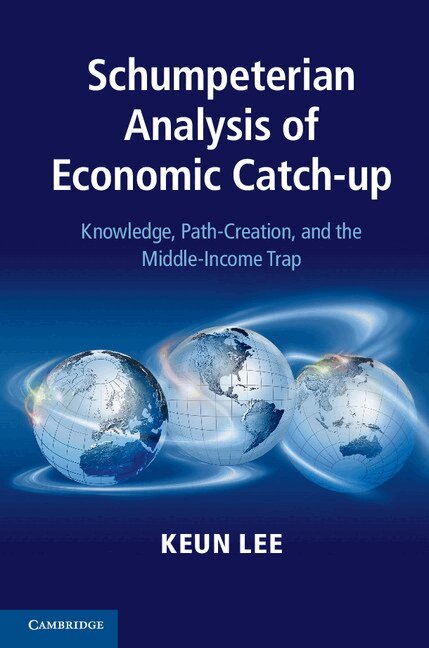
    Schumpeterian Analysis of Economic Catch-up

    Knowledge, Path-Creation, and the Middle-Income Trap

    AvKeun Lee

    Inbunden, Engelska, 2013

    781 kr

    Beställningsvara. Skickas inom 10-15 vardagar. Fri frakt över 249 kr.

    Fler format och utgåvor

    E-bok

    910 kr

    E-bok

    910 kr

    Beskrivning

    One of the puzzles about why some countries have stronger economic growth than others revolves around the so-called 'middle-income trap', the situation in which a country that has grown strongly gets stuck at a certain level. In this book, Keun Lee explores the reasons why examples of successful catching-up are limited and in particular, why the Asian economies, including China, have managed to move, or are moving, beyond middle-income status but economic growth has stalled in some Latin American countries. This is one of the first studies to demonstrate using patent analysis that the secret lies in innovative systems at the firm, sector and country levels which promote investment in what the author calls 'short-cycle' technologies and thereby create a new path different from that of forerunning countries. With its comprehensive policy framework for development as well as useful quantitative methods, this is essential reading for academic researchers and practitioners.

    Produktinformation

    • Utgivningsdatum:2013-10-31
    • Mått:150 x 229 x 20 mm
    • Vikt:560 g
    • Format:Inbunden
    • Språk:Engelska
    • Antal sidor:298
    • Förlag:Cambridge University Press
    • ISBN:9781107042681
    • Utmärkelser:14th Schumpeter Prize 2014

    Utforska kategorier

    • Internationell ekonomi inom Ekonomi och Ledarskap

    Mer om författaren

    Keun Lee is a Professor of Economics at the Seoul National University and Director of the Center for Economic Catch-up. He is a globally recognized expert on the economics of catch-up and Asian economies. Professor Lee is also a member of the UN's Committee for Development Policy, a co-editor of the journal Research Policy and a member of the governing board of Globelics, as well as Asia-Pacific Innovation Network.

    Recensioner i media

    'Based on convincing theoretical and empirical analyses, Professor Lee argues that Korea and Taiwan's success hinges on their shift, after reaching middle-income status in the 1980s, to specialize on shorter cycle technology-based sectors, which rely less on existing technologies, allow their economies to leverage the greater opportunities that arise from the emergence of new technologies, and enable them to continue the catching up process. This book is original, makes important contributions to the development literature, and should be read by anyone concerned about how to help a country overcome the middle-income trap.' Justin Yifu Lin, Peking University and former Chief Economist, The World Bank

    Innehållsförteckning

    • Foreword John A. Mathews; Preface; Part I. Introduction and Perspectives: 1. Introduction; 2. Knowledge as a key factor for economic catch-up; Part II. Empirical Analysis at Three Levels: 3. Knowledge and country-level catch-up; 4. Knowledge and sector-level catch-up: Asia versus Latin America; 5. Knowledge and firm-level catch-up: Korean versus US firms; Part III. Toward a Theory and How to Escape the Trap: 6. Toward a knowledge-based theory of economic catch-up; 7. How to build up technological capabilities to enter short-cycle technology sectors; 8. Catching-up and leapfrogging in China and India; Part IV. Technological Turning Points and Conclusion: 9. Hypothesizing a theory of technological turning points; 10. Summary and concluding remarks; Appendix tables; Notes; Bibliography; Index.