• Fri frakt över 249 kr
  • •
  • Snabba leveranser
  • •
  • Billiga böcker
Kundservice

Du är på sajten för privatpersoner.

Företag, bibliotek eller offentlig verksamhet?

Du handlar på classic.bokus.com, där alla dina funktioner finns intakta.
Till classic.bokus.com
Bokus logotyp. Gå till startsidan.
  • Erbjudanden
  • Nyheter
  • Student
  • Topplistor
  • Barn & ungdom
  • Bokus Play
  • E-böcker
  • Pocketböcker
  • Spel & pussel

10% studentrabatt med kod TERM26

Sidfot

Mina sidor

    Hjälp

    • Kundservice
    • Vanliga frågor och svar
    • Frakt och leverans
    • Retur vid ångerrätt
    • Reklamera vara
    • Betalning
    • Köpvillkor
    • Allmänna villkor
    • Information om webbplatsens tillgänglighet

    Om Bokus

    • Om oss
    • Pressrum
    • För studenter
    • För företag
    • För bibliotek och offentlig verksamhet
    • För leverantörer
    • Hållbarhet

    Populärt

    • Aktuella erbjudanden
    • Presentkort
    • Studentlitteratur
    • Nya böcker
    • Topplistor
    • Signerade böcker
    • Engelska böcker

    Inspiration

    • Boktips
    • BookTok
    • Populära bokserier
    • Barnbokskaraktärer
    • Populära författare
    Logotyp för Bokus
    Följ oss på Facebook (extern länk)Följ oss på Instagram (extern länk)Följ oss på YouTube (extern länk)Följ oss på TikTok (extern länk)
    bokus @ CookiesAnpassa cookiesIntegritetspolicyKöpvillkor
    Till Citymail hemsida (extern länk)Till Budbee hemsida (extern länk)Till Postnord hemsida (extern länk)Till Schenker hemsida (extern länk)Till Early Bird hemsida (extern länk)Till Walleys hemsida (extern länk)
    1. Kultur
    2. Musikböcker

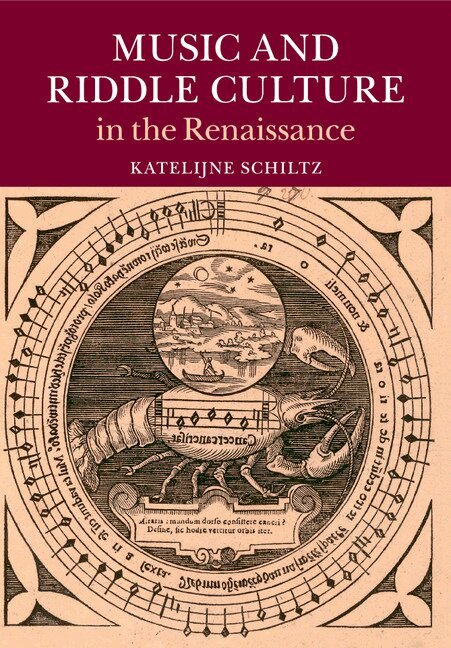
    Music and Riddle Culture in the Renaissance

    AvKatelijne Schiltz

    Inbunden, Engelska, 2015

    1 817 kr

    Beställningsvara. Skickas inom 10-15 vardagar. Fri frakt över 249 kr.

    Fler format och utgåvor

    Häftad

    532 kr

    Beskrivning

    Throughout the Renaissance, composers often expressed themselves in a language of riddles and puzzles, which they embedded within the music and lyrics of their compositions. This is the first book on the theory, practice and cultural context of musical riddles during the period. Katelijne Schiltz focuses on the compositional, notational, practical, social and theoretical aspects of musical riddle culture c.1450-1620, from the works of Antoine Busnoys, Jacob Obrecht and Josquin des Prez to Lodovico Zacconi's manuscript collection of Canoni musicali. Schiltz reveals how the riddle both invites and resists interpretation, the ways in which riddles imply a process of transformation and the consequences of these aspects for the riddle's conception, performance and reception. Lavishly illustrated and including a comprehensive catalogue by Bonnie J. Blackburn of enigmatic inscriptions, this book will be of interest to scholars of music, literature, art history, theology and the history of ideas.

    Produktinformation

    • Utgivningsdatum:2015-04-23
    • Mått:170 x 249 x 33 mm
    • Vikt:1 220 g
    • Format:Inbunden
    • Språk:Engelska
    • Antal sidor:548
    • Förlag:Cambridge University Press
    • ISBN:9781107082298

    Utforska kategorier

    • Musikböcker inom Kultur

    Mer om författaren

    Katelijne Schiltz is a professor at the University of Regensburg. The author of a book on the motets of Adrian Willaert (2003), her articles have appeared in a number of journals, including Early Music, Early Music History, Rivista italiana di musicologia, Archiv für Musikwissenschaft and the Tijdschrift van de Koninklijke Vereniging voor Nederlandse Muziekgeschiedenis. She is general editor (together with David J. Burn) of the Journal of the Alamire Foundation and a member of the editorial board of Analysis in Context. A Laureate of the Royal Flemish Academy of Belgium for Science and the Arts, she has won prizes from the Society for Music Theory and from the Lyrica Society for Word-Music Relations.

    Innehållsförteckning

    • Introduction; 1. The culture of the enigmatic from classical antiquity to the Renaissance; 2. Devising musical riddles in the Renaissance; 3. The reception of the enigmatic in music theory; 4. Riddles visualised; Conclusion; Appendix 1. A brief introduction to mensural notation; Appendix 2. Catalogue of enigmatic canonic inscriptions Bonnie J. Blackburn.