• Fri frakt över 249 kr
  • •
  • Snabba leveranser
  • •
  • Billiga böcker
Kundservice

Du är på sajten för privatpersoner.

Företag, bibliotek eller offentlig verksamhet?

Du handlar på classic.bokus.com, där alla dina funktioner finns intakta.
Till classic.bokus.com
Bokus logotyp. Gå till startsidan.
  • Erbjudanden
  • Nyheter
  • Student
  • Topplistor
  • Barn & ungdom
  • Bokus Play
  • E-böcker
  • Pocketböcker
  • Spel & pussel

10% rabatt på allt med kod NYSTART10 →

Sidfot

Mina sidor

    Hjälp

    • Kundservice
    • Vanliga frågor och svar
    • Frakt och leverans
    • Retur vid ångerrätt
    • Reklamera vara
    • Betalning
    • Köpvillkor
    • Allmänna villkor
    • Information om webbplatsens tillgänglighet

    Om Bokus

    • Om oss
    • Pressrum
    • För studenter
    • För företag
    • För bibliotek och offentlig verksamhet
    • För leverantörer
    • Hållbarhet

    Populärt

    • Aktuella erbjudanden
    • Presentkort
    • Studentlitteratur
    • Nya böcker
    • Topplistor
    • Signerade böcker
    • Engelska böcker

    Inspiration

    • Boktips
    • BookTok
    • Populära bokserier
    • Barnbokskaraktärer
    • Populära författare
    Logotyp för Bokus
    Följ oss på Facebook (extern länk)Följ oss på Instagram (extern länk)Följ oss på YouTube (extern länk)Följ oss på TikTok (extern länk)
    bokus @ CookiesAnpassa cookiesIntegritetspolicyKöpvillkor
    Till Citymail hemsida (extern länk)Till Budbee hemsida (extern länk)Till Postnord hemsida (extern länk)Till Schenker hemsida (extern länk)Till Early Bird hemsida (extern länk)Till Walleys hemsida (extern länk)
    1. Djur och Natur
    2. Naturböcker
    3. Växtböcker

    Australian Vegetation

    AvDavid A. Keith

    Inbunden, Engelska, 2017

    1 137 kr

    Beställningsvara. Skickas inom 10-15 vardagar. Fri frakt över 249 kr.

    Beskrivning

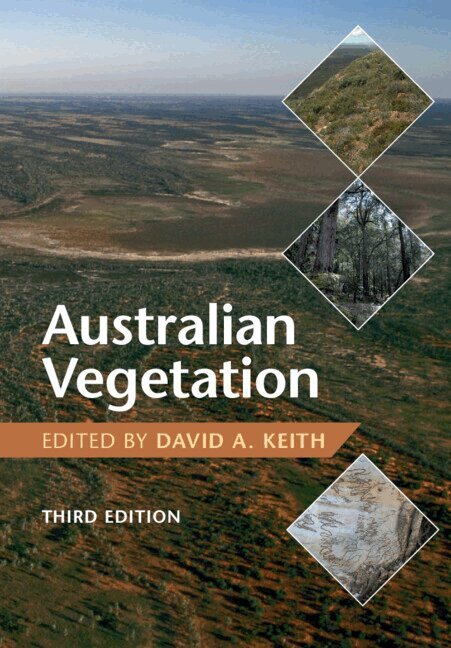
    Australian Vegetation has been an essential reference for students and researchers in botany, ecology and natural resource management for over 35 years. Now fully updated and with a new team of authors, the third edition presents the latest insights on the patterns and processes that shaped the vegetation of Australia. The first part of the book provides a synthesis of ecological processes that influence vegetation traits throughout the continent, using a new classification of vegetation. New chapters examine the influences of climate, soils, fire regimes, herbivores and aboriginal people on vegetation, in addition to completely revised chapters on evolutionary biogeography, quaternary vegetation history and alien plants. The book's second half presents detailed ecological portraits for each major vegetation type and offers data-rich perspectives and comparative analysis presented in tables, graphs, maps and colour illustrations. This authoritative book will inspire readers to learn and explore first-hand the vegetation of Australia.

    Produktinformation

    • Utgivningsdatum:2017-06-15
    • Mått:194 x 253 x 40 mm
    • Vikt:1 850 g
    • Format:Inbunden
    • Språk:Engelska
    • Antal sidor:766
    • Upplaga:3
    • Förlag:Cambridge University Press
    • ISBN:9781107118430

    Utforska kategorier

    • Växtböcker inom Djur och Natur
    • Botanik inom Naturvetenskap och teknik

    Mer om författaren

    David A. Keith is Professor of Botany in the Centre for Ecosystem Science at the University of New South Wales, Australia and he also works at the NSW Office of Environment and Heritage. He won the Australian Ecology Research Award in 2013 and led the team who were awarded the 2015 Eureka Prize for Environmental Research. He is the author of the award-winning book Ocean Shores to Desert Dunes: The Native Vegetation of New South Wales and the ACT (2004).

    Recensioner i media

    'This book is a landmark of Australian science. It is one of the fundamental elements on which research, planning and policy development are built. David A. Keith leads a group of Australia's foremost plant ecologists to produce the new edition. It is an outstanding achievement. It provides a clarity of writing and level of scientific rigour that equals or exceeds any equivalent endeavour internationally. Part I explains the origins of and the forces acting on the Australian vegetation. Part II describes the sixteen primary vegetation types and subtypes, and includes their interactions, conservation challenges and practical management. Quite simply, this is a great book.' Mark Burgman, Imperial College London

    Innehållsförteckning

    • Foreword Richard A. Groves; 1. Girt: a continental synthesis of Australian vegetation David A. Keith and Mark G. Tozer; 2. Evolutionary biogeography of the Australian flora in the Cenozoic era Peter H. Weston and Gregory J. Jordan; 3. Quaternary vegetation in Australia Scott D. Mooney, Kale Sniderman, A. Peter Kershaw, Simon Haberle and Jessica Roe; 4. Aboriginal people and Australia's vegetation: uses and ecological influences Emilie Ens, Fiona Walsh and Philip Clarke; 5. Fire and Australian vegetation Ben P. Miller and Brett P. Murphy; 6. Direct and indirect effects of herbivore activity on Australian vegetation David J. Eldridge, Samantha K. Travers, Adrian D. Manning and Philip Barton; 7. Soils and the below-ground interactions that shape Australian vegetation Mark Brundrett, Pauline F. Grierson, Lauren T. Bennett and Christopher J. Weston; 8. Climatic influence over vegetation pattern and process Mark K. J. Ooi, Tony D. Auld, Linda J. Beaumont and Ross A. Bradstock; 9. Invasive plants and pathogens in Australia Michelle R. Leishman, Rachael V. Gallagher, Jane A. Catford, Tony Grice, John W. Morgan and Samantha Setterfield; 10. Plant life cycles above and below ground Tony D. Auld and Mark K. J. Ooi; 11. Rainforests and vine thickets Daniel J. Metcalfe and Peter T. Green; 12. Wet sclerophyll forests Grant Wardell-Johnson, John Neldner and Jayne Balmer; 13. Biogeography of Australia's dry sclerophyll forests: drought, nutrients and fire Mark G. Tozer, Christopher C. Simpson, Isaac B. Jansens and David A. Keith; 14. Heathlands and associated shrublands Byron B. Lamont and David A. Keith; 15. Australia's tropical savannas: vast, ancient and rich landscapes Richard J. Williams, Garry D. Cook, Adam C. Liedloff and William J. Bond; 16. Brigalow forests and associated eucalypt woodlands of subtropical eastern Australia Rod J. Fensham, Andrew Biggs, Don W. Butler and Harry J. MacDermott; 17. Temperate eucalypt woodlands Suzanne M. Prober, Carl R. Gosper, Louise Gilfedder, Tom D. Harwood, Kevin R. Thiele, Kristen J. Williams and Colin J. Yates; 18. Australian tussock grasslands John W. Morgan, Rod J. Fensham, Robert Godfree and Paul W. Foreman; 19. Alpine, sub-alpine and sub-Antarctic vegetation of Australia Susanna Venn, Jamie Kirkpatrick, Keith McDougall, Neville Walsh, Jennie Whinam and Richard J. Williams; 20. Wetland vegetation of inland Australia Jane A. Catford, Jane Roberts, Samantha J. Capon, Ray H. Froend, Saras M. Windecker and Michael M. Douglas; 21. Forests and woodlands of Australia's rivers and floodplains Megan Good, Rhiannon Smith and Neil Pettit; 22. Coastal halophytic vegetation Kerrylee Rogers, Paul Boon, Catherine Lovelock and Neil Saintilan; 23. Mallee woodlands and shrublands – the mallee, muruk/muert and maalok vegetation of southern Australia Colin J. Yates, Carl R. Gosper, Stephen D. Hopper, David A. Keith, Suzanne M. Prober and Mark G. Tozer; 24. The chenopod shrublands David J. Eldridge, Samantha K. Travers, Agustín F. Facelli, José M. Facelli and David A. Keith; 25. Arid shrublands and open woodlands of inland Australia Catherine Nano, Peter Jobson and Glenda M. Wardle; 26. Hummock grasslands – Triodia-dominated grasslands in arid Australia Glenda M. Wardle and Catherine Nano; 27. Conservation of Australian vegetation David A. Keith and Tony D. Auld.