• Fri frakt över 249 kr
  • •
  • Snabba leveranser
  • •
  • Billiga böcker
Kundservice

Du är på sajten för privatpersoner.

Företag, bibliotek eller offentlig verksamhet?

Du handlar på classic.bokus.com, där alla dina funktioner finns intakta.
Till classic.bokus.com
Bokus logotyp. Gå till startsidan.
  • Erbjudanden
  • Nyheter
  • Student
  • Topplistor
  • Barn & ungdom
  • Bokus Play
  • E-böcker
  • Pocketböcker
  • Spel & pussel

10% rabatt på allt med kod NYSTART10 →

Sidfot

Mina sidor

    Hjälp

    • Kundservice
    • Vanliga frågor och svar
    • Frakt och leverans
    • Retur vid ångerrätt
    • Reklamera vara
    • Betalning
    • Köpvillkor
    • Allmänna villkor
    • Information om webbplatsens tillgänglighet

    Om Bokus

    • Om oss
    • Pressrum
    • För studenter
    • För företag
    • För bibliotek och offentlig verksamhet
    • För leverantörer
    • Hållbarhet

    Populärt

    • Aktuella erbjudanden
    • Presentkort
    • Studentlitteratur
    • Nya böcker
    • Topplistor
    • Signerade böcker
    • Engelska böcker

    Inspiration

    • Boktips
    • BookTok
    • Populära bokserier
    • Barnbokskaraktärer
    • Populära författare
    Logotyp för Bokus
    Följ oss på Facebook (extern länk)Följ oss på Instagram (extern länk)Följ oss på YouTube (extern länk)Följ oss på TikTok (extern länk)
    bokus @ CookiesAnpassa cookiesIntegritetspolicyKöpvillkor
    Till Citymail hemsida (extern länk)Till Budbee hemsida (extern länk)Till Postnord hemsida (extern länk)Till Schenker hemsida (extern länk)Till Early Bird hemsida (extern länk)Till Walleys hemsida (extern länk)
    1. Historia och arkeologi
    2. Historia
    3. Allmän historia och världshistoria

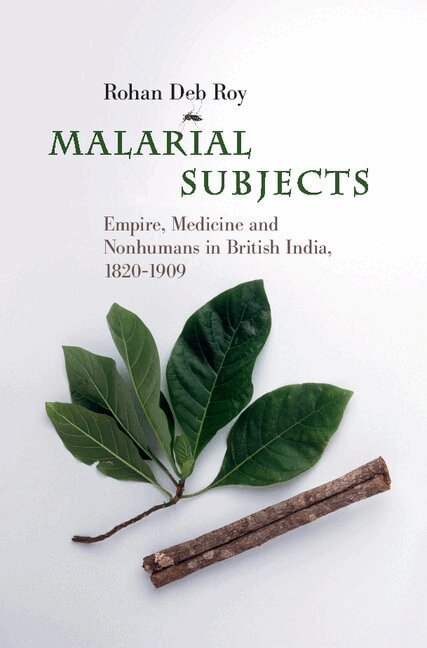
    Malarial Subjects

    Empire, Medicine and Nonhumans in British India, 1820-1909

    AvRohan Deb Roy

    Inbunden, Engelska, 2017

    Del i serien Science in History

    1 416 kr

    Beställningsvara. Skickas inom 10-15 vardagar. Fri frakt över 249 kr.

    Fler format och utgåvor

    Häftad

    477 kr

    E-bok

    553 kr

    E-bok

    553 kr

    Beskrivning

    Malaria was considered one of the most widespread disease-causing entities in the nineteenth century. It was associated with a variety of frailties far beyond fevers, ranging from idiocy to impotence. And yet, it was not a self-contained category. The reconsolidation of malaria as a diagnostic category during this period happened within a wider context in which cinchona plants and their most valuable extract, quinine, were reinforced as objects of natural knowledge and social control. In India, the exigencies and apparatuses of British imperial rule occasioned the close interactions between these histories. In the process, British imperial rule became entangled with a network of nonhumans that included, apart from cinchona plants and the drug quinine, a range of objects described as malarial, as well as mosquitoes. Malarial Subjects explores this history of the co-constitution of a cure and disease, of British colonial rule and nonhumans, and of science, medicine and empire. This title is also available as Open Access.

    Produktinformation

    • Utgivningsdatum:2017-09-14
    • Mått:158 x 235 x 21 mm
    • Vikt:700 g
    • Format:Inbunden
    • Språk:Engelska
    • Serie:Science in History
    • Antal sidor:346
    • Förlag:Cambridge University Press
    • ISBN:9781107172364

    Utforska kategorier

    • Allmän historia och världshistoria inom Historia och arkeologi

    Mer om författaren

    Rohan Deb Roy is Lecturer in South Asian History at the University of Reading. He received his Ph.D. from University College London, and has held postdoctoral fellowships at the Centre for Studies in Social Sciences Calcutta, at the University of Cambridge, and at the Max Planck Institute for the History of Science in Berlin. He has been a Barnard-Columbia Weiss International Visiting Scholar in the History of Science.

    Recensioner i media

    'Just when we thought there was nothing more to say about medicine and colonialism, Rohan Deb Roy opens up a completely new conversation, reorienting us. In Malarial Subjects, the postcolonial history of medicine comes face to face with posthuman science studies, and a wonderfully illuminating interchange ensues, evoking entanglements of humans, parasites, mosquitoes, cinchona plants, and quinine. Thus we learn how cinchona plants could cultivate their own impossibly modern colonial space; and mosquitoes might weave imperial nets, capturing colonisers and the colonised within them.' Warwick Anderson, University of Sydney

    Innehållsförteckning

    • Introduction: side-effects of empire; 1. 'Fairest of Peruvian maids': planting cinchonas in British India; 2. 'An imponderable poison': shifting geographies of a diagnostic category; 3. 'A cinchona disease': making Burdwan fever; 4. 'Beating about the bush': manufacturing quinine in a colonial factory; 5. Of 'losses gladly borne': feeding quinine, warring mosquitoes; Epilogue.