• Fri frakt över 249 kr
  • •
  • Snabba leveranser
  • •
  • Billiga böcker
Kundservice

Du är på sajten för privatpersoner.

Företag, bibliotek eller offentlig verksamhet?

Du handlar på classic.bokus.com, där alla dina funktioner finns intakta.
Till classic.bokus.com
Bokus logotyp. Gå till startsidan.
  • Erbjudanden
  • Nyheter
  • Student
  • Topplistor
  • Barn & ungdom
  • Bokus Play
  • E-böcker
  • Pocketböcker
  • Spel & pussel

10% rabatt på allt med kod NYSTART10 →

Sidfot

Mina sidor

    Hjälp

    • Kundservice
    • Vanliga frågor och svar
    • Frakt och leverans
    • Retur vid ångerrätt
    • Reklamera vara
    • Betalning
    • Köpvillkor
    • Allmänna villkor
    • Information om webbplatsens tillgänglighet

    Om Bokus

    • Om oss
    • Pressrum
    • För studenter
    • För företag
    • För bibliotek och offentlig verksamhet
    • För leverantörer
    • Hållbarhet

    Populärt

    • Aktuella erbjudanden
    • Presentkort
    • Studentlitteratur
    • Nya böcker
    • Topplistor
    • Signerade böcker
    • Engelska böcker

    Inspiration

    • Boktips
    • BookTok
    • Populära bokserier
    • Barnbokskaraktärer
    • Populära författare
    Logotyp för Bokus
    Följ oss på Facebook (extern länk)Följ oss på Instagram (extern länk)Följ oss på YouTube (extern länk)Följ oss på TikTok (extern länk)
    bokus @ CookiesAnpassa cookiesIntegritetspolicyKöpvillkor
    Till Citymail hemsida (extern länk)Till Budbee hemsida (extern länk)Till Postnord hemsida (extern länk)Till Schenker hemsida (extern länk)Till Early Bird hemsida (extern länk)Till Walleys hemsida (extern länk)
    1. Psykologi och pedagogik
    2. Pedagogik
    3. Pedagogisk psykologi

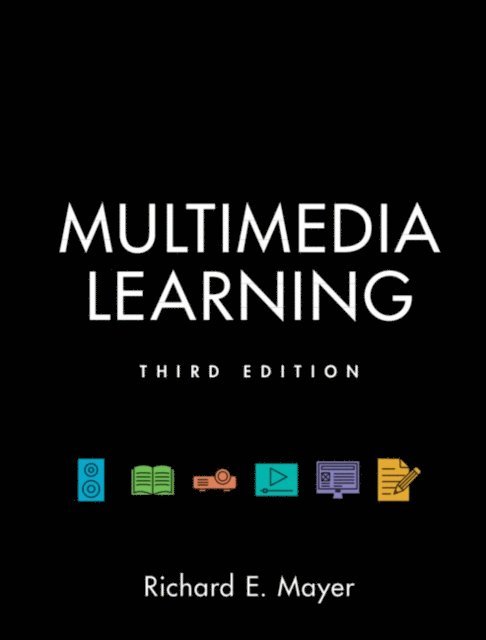
    Multimedia Learning

    AvRichard E. Mayer

    Inbunden, Engelska, 2020

    1 343 kr

    Beställningsvara. Skickas inom 10-15 vardagar. Fri frakt över 249 kr.

    Fler format och utgåvor

    Häftad

    469 kr

    E-bok

    625 kr

    E-bok

    554 kr

    Beskrivning

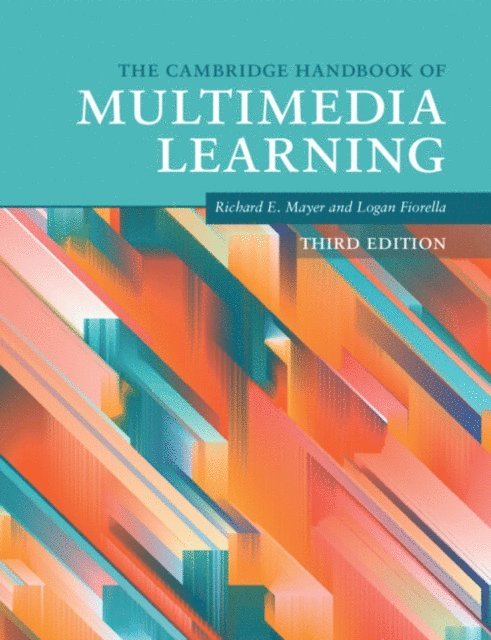
    Advances in computer graphic technologies have inspired new efforts to understand the potential of multimedia instruction as a means of promoting human learning. In Multimedia Learning, Third Edition, Richard E. Mayer takes an evidence-based approach to improving education using well-designed multimedia instruction. He reviews 15 principles of multimedia instructional design that are based on more than 200 experimental research studies and grounded in a cognitive theory of how people learn from words and graphics. The result is the latest instalment of what Mayer calls the Cognitive Theory of Multimedia Learning, a theory introduced in previous editions of Multimedia Learning and in The Cambridge Handbook of Multimedia Learning, Second Edition. This edition provides an up-to-date and systematic summary of research studies on multimedia learning, supplemented with complementary evidence from around the globe. It is well-suited to graduate and undergraduate courses in psychology, education, computer science, communication, instructional design, and game design.

    Produktinformation

    • Utgivningsdatum:2020-07-09
    • Mått:193 x 252 x 26 mm
    • Vikt:1 140 g
    • Format:Inbunden
    • Språk:Engelska
    • Antal sidor:450
    • Upplaga:3
    • Förlag:Cambridge University Press
    • ISBN:9781107187504

    Utforska kategorier

    • Pedagogisk psykologi inom Psykologi och pedagogik

    Mer om författaren

    Richard E. Mayer is Distinguished Professor of Psychological and Brain Sciences at the University of California, Santa Barbara, USA. He served as President of the Division of Educational Psychology of the American Psychological Association and Vice President of the American Educational Research Association for the Division of Learning and Instruction.

    Recensioner i media

    'Richard E. Mayer's Multimedia Learning has influenced generations of students worldwide. Written in his signature accessible style, this updated third edition provides a state-of-the-art overview on current knowledge of how (not) to design multimedia learning materials. It will be an invaluable resource for students, educators, and researchers alike.' Tamara van Gog, Professor of Educational Sciences, Utrecht University, The Netherlands

    Innehållsförteckning

    • Part I. Introduction to Multimedia Learning: 1. The promise of multimedia learning; 2. The science of learning: determining how multimedia works; 3. The science of instruction: determining what works in multimedia learning; 4. The science assessment: determining what is learned; 5. Multimedia principle; Part II. Principles for Reducing Extraneous Processing in Multimedia Learning: 6. Coherence principle; 7. Signaling principle; 8. Redundancy principle; 9. Spatial contiguity principle; 10. Temporal contiguity principle; Part III. Principles for Managing Essential Processing in Multimedia Learning: 11. Segmenting principle; 12. Pre-training principle; 13. Modality principle; Part IV. Principles for Fostering Generative Processing in Multimedia Learning: 14. Personalization principle; 15. Voice principle; 16. Image principle; 17. Embodiment principle; 18. Immersion principle; 19. Generative activity principle; Part V. Conclusion: 20. Principles of multimedia design.