• Fri frakt över 249 kr
  • •
  • Snabba leveranser
  • •
  • Billiga böcker
Kundservice

Du är på sajten för privatpersoner.

Företag, bibliotek eller offentlig verksamhet?

Du handlar på classic.bokus.com, där alla dina funktioner finns intakta.
Till classic.bokus.com
Bokus logotyp. Gå till startsidan.
  • Erbjudanden
  • Nyheter
  • Student
  • Topplistor
  • Barn & ungdom
  • Bokus Play
  • E-böcker
  • Pocketböcker
  • Spel & pussel

10% studentrabatt med kod TERM26

Sidfot

Mina sidor

    Hjälp

    • Kundservice
    • Vanliga frågor och svar
    • Frakt och leverans
    • Retur vid ångerrätt
    • Reklamera vara
    • Betalning
    • Köpvillkor
    • Allmänna villkor
    • Information om webbplatsens tillgänglighet

    Om Bokus

    • Om oss
    • Pressrum
    • För studenter
    • För företag
    • För bibliotek och offentlig verksamhet
    • För leverantörer
    • Hållbarhet

    Populärt

    • Aktuella erbjudanden
    • Presentkort
    • Studentlitteratur
    • Nya böcker
    • Topplistor
    • Signerade böcker
    • Engelska böcker

    Inspiration

    • Boktips
    • BookTok
    • Populära bokserier
    • Barnbokskaraktärer
    • Populära författare
    Logotyp för Bokus
    Följ oss på Facebook (extern länk)Följ oss på Instagram (extern länk)Följ oss på YouTube (extern länk)Följ oss på TikTok (extern länk)
    bokus @ CookiesAnpassa cookiesIntegritetspolicyKöpvillkor
    Till Citymail hemsida (extern länk)Till Budbee hemsida (extern länk)Till Postnord hemsida (extern länk)Till Schenker hemsida (extern länk)Till Early Bird hemsida (extern länk)Till Walleys hemsida (extern länk)
    1. Skönlitteratur
    2. Litteraturvetenskap

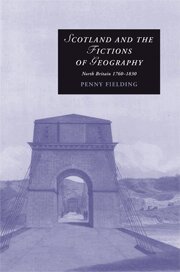
    Scotland and the Fictions of Geography

    North Britain 1760-1830

    AvPenny Fielding

    Häftad, Engelska, 2011

    Del 78 i serien Cambridge Studies in Romanticism

    671 kr

    Beställningsvara. Skickas inom 10-15 vardagar. Fri frakt över 249 kr.

    Fler format och utgåvor

    Inbunden

    1 458 kr

    Beskrivning

    Focusing on the relationship between England and Scotland and the interaction between history and geography, Penny Fielding explores how Scottish literature in the Romantic period was shaped by the understanding of place and space. This book examines geography as a form of regional, national and global definition, addressing national surveys, local stories, place-names and travel writing, and argues that the case of Scotland complicates the identification of Romanticism with the local. Fielding considers Scotland as 'North Britain' in a period when the North of Europe was becoming a strong cultural and political identity, and explores ways in which Scotland was both formative and disruptive of British national consciousness. Containing studies of Robert Burns, Walter Scott and James Hogg, as well as the lesser-known figures of Anne Grant and Margaret Chalmers, this study discusses an exceptionally broad range of historical, geographical, scientific, linguistic, antiquarian and political writing from throughout North Britain.

    Produktinformation

    • Utgivningsdatum:2011-08-11
    • Mått:152 x 229 x 13 mm
    • Vikt:340 g
    • Format:Häftad
    • Språk:Engelska
    • Serie:Cambridge Studies in Romanticism
    • Antal sidor:250
    • Förlag:Cambridge University Press
    • ISBN:9781107402782

    Utforska kategorier

    • Litteraturvetenskap inom Skönlitteratur

    Recensioner i media

    'The book's strength lies as much in lovely, nuanced readings such as this demonstrating the continuing interest and appeal of an almost forgotten writer, as it does in the larger arguments about enlightenment historiography. Both qualities, however, make Fielding's work an important contribution to the growing field of late eighteenth- and early nineteenth-century Scottish studies.' Scottish Literary Review

    Innehållsförteckning

    • Introduction; 1. North Britain; 2. Burns, place, and language; 3. Great North Roads: the geometries of the nation; 4. Antiquarianism and the inscription of the nation; 5. Ultima Thule: the limits of the North; 6. Norths: James Hogg and post-Enlightenment space.