• Fri frakt över 249 kr
  • •
  • Snabba leveranser
  • •
  • Billiga böcker
Kundservice

Du är på sajten för privatpersoner.

Företag, bibliotek eller offentlig verksamhet?

Du handlar på classic.bokus.com, där alla dina funktioner finns intakta.
Till classic.bokus.com
Bokus logotyp. Gå till startsidan.
  • Erbjudanden
  • Nyheter
  • Student
  • Topplistor
  • Barn & ungdom
  • Bokus Play
  • E-böcker
  • Pocketböcker
  • Spel & pussel

Må bättre, för mindre! Upp till 50% rabatt på hälsoböcker

Sidfot

Mina sidor

    Hjälp

    • Kundservice
    • Vanliga frågor och svar
    • Frakt och leverans
    • Retur vid ångerrätt
    • Reklamera vara
    • Betalning
    • Köpvillkor
    • Allmänna villkor
    • Information om webbplatsens tillgänglighet

    Om Bokus

    • Om oss
    • Pressrum
    • För studenter
    • För företag
    • För bibliotek och offentlig verksamhet
    • För leverantörer
    • Hållbarhet

    Populärt

    • Aktuella erbjudanden
    • Presentkort
    • Studentlitteratur
    • Nya böcker
    • Topplistor
    • Signerade böcker
    • Engelska böcker

    Inspiration

    • Boktips
    • BookTok
    • Populära bokserier
    • Barnbokskaraktärer
    • Populära författare
    Logotyp för Bokus
    Följ oss på Facebook (extern länk)Följ oss på Instagram (extern länk)Följ oss på YouTube (extern länk)Följ oss på TikTok (extern länk)
    bokus @ CookiesAnpassa cookiesIntegritetspolicyKöpvillkor
    Till Citymail hemsida (extern länk)Till Budbee hemsida (extern länk)Till Postnord hemsida (extern länk)Till Schenker hemsida (extern länk)Till Early Bird hemsida (extern länk)Till Walleys hemsida (extern länk)
    1. Historia och arkeologi
    2. Arkeologi
    3. Arkeologiska perioder och områden

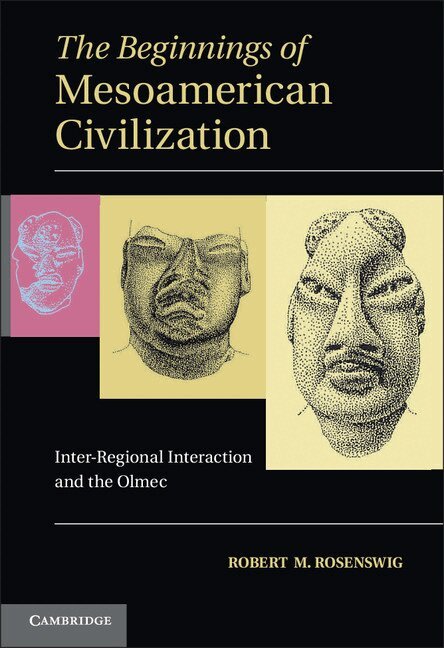
    The Beginnings of Mesoamerican Civilization

    Inter-Regional Interaction and the Olmec

    AvRobert M. Rosenswig

    Häftad, Engelska, 2014

    601 kr

    Beställningsvara. Skickas inom 10-15 vardagar. Fri frakt över 249 kr.

    Fler format och utgåvor

    Inbunden

    1 582 kr

    Beskrivning

    Mesoamerica is one of several cradles of civilization in the world. In this book, Robert M. Rosenswig proposes that we understand Early Formative Mesoamerica as an archipelago of complex societies that interacted with one another over long distances and that were separated by less sedentary peoples. These early 'islands' of culture shared an Olmec artistic aesthetic, beginning approximately 1250 BCE (uncalibrated), that first defined Mesoamerica as a culture area. Rosenswig frames the Olmec world from the perspective of the Soconusco area on Pacifica Chiapas and Guatemala. The disagreements about Early Formative society that have raged over the past thirty years focus on the nature of inter-regional interaction between San Lorenzo and other Early Formative regions. He evaluates these debates from a fresh theoretical perspective and integrates new data into an assessment of Soconusco society before, during, and after the apogee of the San Lorenzo polity.

    Produktinformation

    • Utgivningsdatum:2014-10-06
    • Mått:170 x 246 x 20 mm
    • Vikt:700 g
    • Format:Häftad
    • Språk:Engelska
    • Antal sidor:398
    • Förlag:Cambridge University Press
    • ISBN:9781107428973

    Utforska kategorier

    • Arkeologiska perioder och områden inom Historia och arkeologi

    Mer om författaren

    Robert M. Rosenswig is Assistant Professor of Anthropology at the State University of New York, Albany. He has directed archaeological fieldwork in Mexico, Belize, and Costa Rica and has published numerous articles on the origins of agriculture and the development of socio-political complexity in Mesoamerica.

    Recensioner i media

    'Rosenswig documents his refreshing approach with important studies of ceramics, figurines, obsidian, and iconography … His compelling, innovative assessment is distinct from other significant works.' Choice

    Innehållsförteckning

    • Part I. An Early Formative Mesoamerican Problem: 1. Introduction; 2. Knowledge in an archipelago of complexity; 3. Mesoamerica's first style horizons and the 'Olmec problem'; Part II. Archaeological Data: 4. Settlement patterns and architecture; 5. Diet, food processing and feasting; 6. Representations and aesthetics; 7. Inter-regional exchange patterns; Part III. Deriving Meaning from the Archaeological Record: 8. Data and expectations; 9. Conclusions.