Häftad, Engelska, 2017
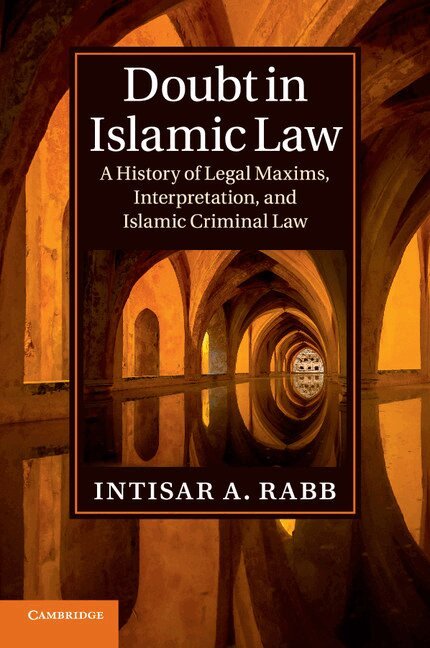
Doubt in Islamic Law
A History of Legal Maxims, Interpretation, and Islamic Criminal Law
574 kr
Beställningsvara. Skickas inom 5-8 vardagar. Fri frakt över 249 kr.
Fler format och utgåvor
Beskrivning
Produktinformation
- Utgivningsdatum: 2017-11-02
- Mått: 153 x 230 x 25 mm
- Vikt: 600 g
- Format: Häftad
- Språk: Engelska
- Serie: Cambridge Studies in Islamic Civilization
- Antal sidor: 432
- Förlag: Cambridge University Press
- ISBN: 9781107440517
Utforska kategorier
Mer om författaren
Intisar A. Rabb is Professor of Law at Harvard Law School and the director of its Islamic Legal Studies Program. She also holds an appointment as a Professor of History and as Susan S. and Kenneth L. Wallach Professor at the Radcliffe Institute for Advanced Study at Harvard University, Massachusetts.
Recensioner i media
'In her extremely detailed book, Intisar A. Rabb traces the formation of the legal maxim of doubt in Islamic criminal law from the seventh until the eleventh century (CE) within both the Sunni and Shi'i legal traditions … Rabb's book offers an important contribution to the study of Islamic law. She has shown how the Muslim legal elite, even the eponymous Sunni jurists and their immediate successors, were individual human agents with a pragmatic bent, and as such their juridical thinking was shaped by complex and diverse goals such that they never arrived at a uniform definition of doubt. Neither did they limit themselves to a specific canon of 'texts' in order to develop an increasingly sophisticated jurisprudence of doubt by the eleventh century.' Nurfadzilah Yahaya, Society for Contemporary Thought and the Islamicate World Review
Betyg & recensioner
0 recensioner
Inga recensioner tillgängliga.