• Fri frakt över 249 kr
  • •
  • Snabba leveranser
  • •
  • Billiga böcker
Kundservice

Du är på sajten för privatpersoner.

Företag, bibliotek eller offentlig verksamhet?

Du handlar på classic.bokus.com, där alla dina funktioner finns intakta.
Till classic.bokus.com
Bokus logotyp. Gå till startsidan.
  • Erbjudanden
  • Nyheter
  • Student
  • Topplistor
  • Barn & ungdom
  • Bokus Play
  • E-böcker
  • Pocketböcker
  • Spel & pussel

10% studentrabatt med kod TERM26

Sidfot

Mina sidor

    Hjälp

    • Kundservice
    • Vanliga frågor och svar
    • Frakt och leverans
    • Retur vid ångerrätt
    • Reklamera vara
    • Betalning
    • Köpvillkor
    • Allmänna villkor
    • Information om webbplatsens tillgänglighet

    Om Bokus

    • Om oss
    • Pressrum
    • För studenter
    • För företag
    • För bibliotek och offentlig verksamhet
    • För leverantörer
    • Hållbarhet

    Populärt

    • Aktuella erbjudanden
    • Presentkort
    • Studentlitteratur
    • Nya böcker
    • Topplistor
    • Signerade böcker
    • Engelska böcker

    Inspiration

    • Boktips
    • BookTok
    • Populära bokserier
    • Barnbokskaraktärer
    • Populära författare
    Logotyp för Bokus
    Följ oss på Facebook (extern länk)Följ oss på Instagram (extern länk)Följ oss på YouTube (extern länk)Följ oss på TikTok (extern länk)
    bokus @ CookiesAnpassa cookiesIntegritetspolicyKöpvillkor
    Till Citymail hemsida (extern länk)Till Budbee hemsida (extern länk)Till Postnord hemsida (extern länk)Till Schenker hemsida (extern länk)Till Early Bird hemsida (extern länk)Till Walleys hemsida (extern länk)
    1. Ekonomi och Ledarskap
    2. Industrier och branscher
    3. Media och underhållning

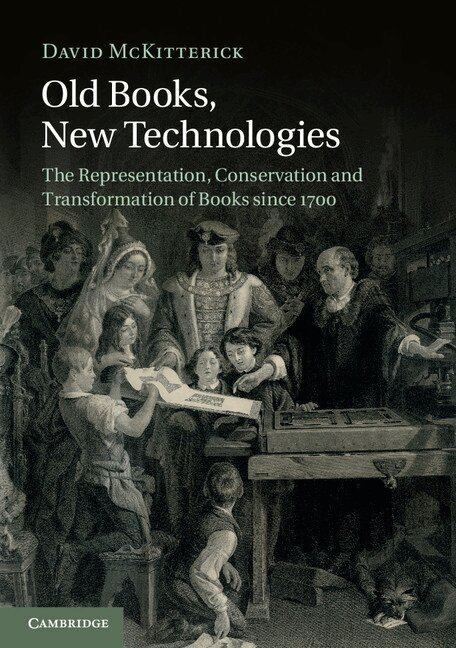
    Old Books, New Technologies

    The Representation, Conservation and Transformation of Books since 1700

    AvDavid McKitterick

    Häftad, Engelska, 2014

    560 kr

    Beställningsvara. Skickas inom 10-15 vardagar. Fri frakt över 249 kr.

    Fler format och utgåvor

    Inbunden

    1 375 kr

    Beskrivning

    As we rely increasingly on digital resources, and libraries discard large parts of their older collections, what is our responsibility to preserve 'old books' for the future? David McKitterick's lively and wide-ranging study explores how old books have been represented and interpreted from the eighteenth century to the present day. Conservation of these texts has taken many forms, from early methods of counterfeiting, imitation and rebinding to modern practices of microfilming, digitisation and photography. Using a comprehensive range of examples, McKitterick reveals these practices and their effects to address wider questions surrounding the value of printed books, both in terms of their content and their status as historical objects. Creating a link between historical approaches and the emerging technologies of the future, this book furthers our understanding of old books and their significance in a world of emerging digital technology.

    Produktinformation

    • Utgivningsdatum:2014-09-18
    • Mått:175 x 247 x 14 mm
    • Vikt:590 g
    • Format:Häftad
    • Språk:Engelska
    • Antal sidor:294
    • Förlag:Cambridge University Press
    • ISBN:9781107470392

    Utforska kategorier

    • Media och underhållning inom Ekonomi och Ledarskap

    Mer om författaren

    David McKitterick is Librarian and Fellow of Trinity College, Cambridge. His books include A History of Cambridge University Press (three volumes, 1992-2004) and Print, Manuscript and the Search for Order, 1450-1830 (Cambridge University Press, 2003). He is also a general editor of The Cambridge History of the Book in Britain series.

    Recensioner i media

    'A learned, sensible and well-written piece of historical scholarship.' The Times Literary Supplement

    Innehållsförteckning

    • 1. The past in pixels; 2. Restoration and invention; 3. Conservation, counterfeiting and bookbinding; 4. Representation and imitation; 5. From copying to facsimile; 6. The arrival of photography; 7. Public exhibition; 8. The Caxton exhibition of 1877; 9. A bibliographical and public revolution; 10. Conclusion.