• Fri frakt över 249 kr
  • •
  • Snabba leveranser
  • •
  • Billiga böcker
Kundservice

Du är på sajten för privatpersoner.

Företag, bibliotek eller offentlig verksamhet?

Du handlar på classic.bokus.com, där alla dina funktioner finns intakta.
Till classic.bokus.com
Bokus logotyp. Gå till startsidan.
  • Erbjudanden
  • Nyheter
  • Student
  • Topplistor
  • Barn & ungdom
  • Bokus Play
  • E-böcker
  • Pocketböcker
  • Spel & pussel

10% rabatt på allt med kod: NYSTART10 →

Sidfot

Mina sidor

    Hjälp

    • Kundservice
    • Vanliga frågor och svar
    • Frakt och leverans
    • Retur vid ångerrätt
    • Reklamera vara
    • Betalning
    • Köpvillkor
    • Allmänna villkor
    • Information om webbplatsens tillgänglighet

    Om Bokus

    • Om oss
    • Pressrum
    • För studenter
    • För företag
    • För bibliotek och offentlig verksamhet
    • För leverantörer
    • Hållbarhet

    Populärt

    • Aktuella erbjudanden
    • Presentkort
    • Studentlitteratur
    • Nya böcker
    • Topplistor
    • Signerade böcker
    • Engelska böcker

    Inspiration

    • Boktips
    • BookTok
    • Populära bokserier
    • Barnbokskaraktärer
    • Populära författare
    Logotyp för Bokus
    Följ oss på Facebook (extern länk)Följ oss på Instagram (extern länk)Följ oss på YouTube (extern länk)Följ oss på TikTok (extern länk)
    bokus @ CookiesAnpassa cookiesIntegritetspolicyKöpvillkor
    Till Citymail hemsida (extern länk)Till Budbee hemsida (extern länk)Till Postnord hemsida (extern länk)Till Schenker hemsida (extern länk)Till Early Bird hemsida (extern länk)Till Walleys hemsida (extern länk)
    1. Historia och arkeologi
    2. Historia

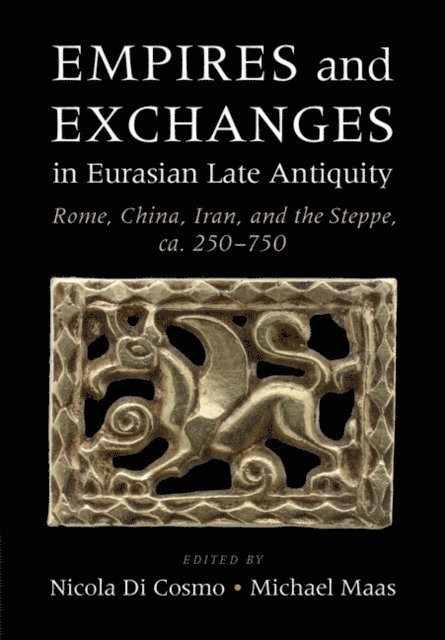
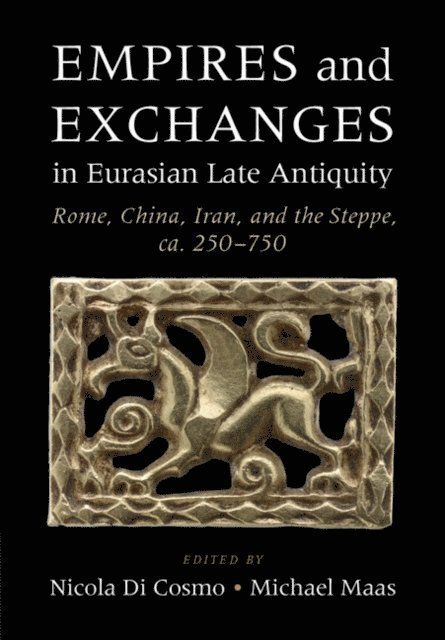
    Empires and Exchanges in Eurasian Late Antiquity

    Rome, China, Iran, and the Steppe, ca. 250-750

    AvNicola Di Cosmo,Michael Maas

    Häftad, Engelska, 2020

    420 kr

    Beställningsvara. Skickas inom 10-15 vardagar. Fri frakt över 249 kr.

    Beskrivning

    Empires and Exchanges in Eurasian Late Antiquity offers an integrated picture of Rome, China, Iran, and the Steppes during a formative period of world history. In the half millennium between 250 and 750 CE, settled empires underwent deep structural changes, while various nomadic peoples of the steppes (Huns, Avars, Turks, and others) experienced significant interactions and movements that changed their societies, cultures, and economies. This was a transformational era, a time when Roman, Persian, and Chinese monarchs were mutually aware of court practices, and when Christians and Buddhists criss-crossed the Eurasian lands together with merchants and armies. It was a time of greater circulation of ideas as well as material goods. This volume provides a conceptual frame for locating these developments in the same space and time. Without arguing for uniformity, it illuminates the interconnections and networks that tied countless local cultural expressions to far-reaching inter-regional ones.

    Produktinformation

    • Utgivningsdatum:2020-08-20
    • Mått:180 x 256 x 30 mm
    • Vikt:1 000 g
    • Format:Häftad
    • Språk:Engelska
    • Antal sidor:544
    • Förlag:Cambridge University Press
    • ISBN:9781107476127

    Utforska kategorier

    • Historia inom Historia och arkeologi

    Mer om författaren

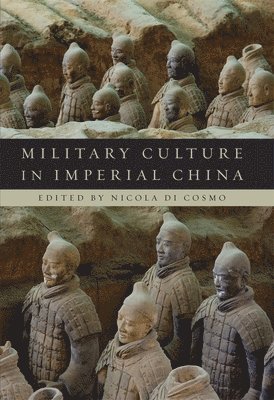
    Nicola Di Cosmo is the Henry Luce Foundation Professor of East Asian History at the Institute for Advanced Study, Princeton, New Jersey. He has held positions at the University of Cambridge, Harvard University, and Canterbury University in New Zealand. His publications include Ancient China and Its Enemies: The Rise of Nomadic Power in East Asian History (Cambridge, 2002), Manchu-Mongol Relations on the Eve of the Quing Conquest (2003), The Cambridge History of Inner Asia: The Chinggisid Age (Cambridge, 2009), Warfare in Inner Asian History (500–1800) (2002), and Military Culture in Imperial China (2011). Michael Maas is the William Gaines Twyman Professor of History at Rice University, Houston, where he also directs the Program in Ancient Mediterranean Civilizations. A former Director in Byzantine Studies at Dumbarton Oaks, he has published widely in late antique history, including Exegesis and Empire in the Early Byzantine Mediterranean. Junillus Africanus and the Instituta  Regularia Divinae Legis (2003) and The Cambridge Companion to the Age of Attila (Cambridge, 2014).

    Recensioner i media

    'It is difficult in a brief review to do justice to such a rich variety of contributions, but enough has been said to give a flavor of the riches before us. This is an inspiring book. It establishes Eurasian Late Antiquity as a cohesive area of study at the same time as it demonstrates the sheer excitement of the subject. The editors have done us a great service in bringing together such a thought provoking volume.' Barry Cunliffe, Asian Perspectives

    Innehållsförteckning

    • Part I. Historical Thresholds: 1. How the steppes became Byzantine: Rome and the Eurasian Nomads in historical perspective Michael Maas; 2. The relations between China and the steppe from the Xiongnu to the Türk Empire Nicola Di Cosmo; 3. Sasanian Iran and the projection of power in Late Antique Eurasia: competing cosmologies and topographies of power Matthew P. Canepa; 4. Trade and exchanges along the silk and steppe routes in Late Antique Eurasia Richard Lim; 5. Sogdian merchants and Sogdian culture on the silk road Rong Xinjiang; 6. 'Charismatic' goods: commerce, diplomacy, and cultural contacts along the silk road in Late Antiquity Peter Brown; 7. The synthesis of the Tang Dynasty: the culmination of China's contacts and communication with Eurasia Valerie Hansen; 8. Central Asia in the Late Roman mental map, second to sixth centuries Giusto Traina; Part II. Movements, Contacts, and Exchanges: 9. Genetic history and migrations in Western Eurasia Patrick Geary; 10. Northern invaders: migration and conquest as scholarly topos in Eurasian history Michael Kulikowski; 11. Chinese and inner Asian perspectives on the history of the Northern dynasties (386–589 CE) in Chinese historiography Luo Xin; 12. Xiongnu and Huns: archaeological perspectives on a centuries-old debate about identity and migration Ursula Brosseder; 13. Ethnicity and empire in the Western Eurasian Steppes Walter Pohl; 14. The languages of Christianity on the silk roads and the transmission of Mediterranean culture into central Asia Scott Fitzgerald Johnson; 15. The spread of Buddhist culture to China between the third and seventh century Max Deeg; 16. The circulation of astrological lore and its political use between the Roman East, Sasanian Iran, Central Asia, and the Türks Frantz Grenet; 17. Luminous markers: pearls and royal authority in Late Antique Iran and Eurasia Joel Walker; Part III. Empires, Diplomacy, and Frontiers: 18. Byzantium's Eurasian policy in the age of the Türk Empire Mark Whittow; 19. Sasanian Iran and its northeastern frontier: offense, defense, and diplomatic Daniel T. Potts; 20. Infrastructures of legitimacy in inner Asia: the Early Türk Empires Michael R. Drompp; 21. The stateless Nomads of Central Eurasia Peter B. Golden; 22. Aspects of elite representation among the sixth- to seventh-century Türks Sören Stark; 23. Patterns of Roman diplomacy with Iran and the steppe peoples Ekaterina Nechaeva; 24. Collapse of a Eurasian hybrid: the case of the northern Wei Andrew Eisenberg; 25. Ideological interweaving in Eastern Eurasia: simultaneous kingship and dynastic competition Jonathan Karam Skaff; 26. Followers and leaders in northeastern Eurasia, ca. seventh to tenth centuries Naomi Standen; Epilogue Averil Cameron.