• Fri frakt över 249 kr
  • •
  • Snabba leveranser
  • •
  • Billiga böcker
Kundservice

Du är på sajten för privatpersoner.

Företag, bibliotek eller offentlig verksamhet?

Du handlar på classic.bokus.com, där alla dina funktioner finns intakta.
Till classic.bokus.com
Bokus logotyp. Gå till startsidan.
  • Erbjudanden
  • Nyheter
  • Student
  • Topplistor
  • Barn & ungdom
  • Bokus Play
  • E-böcker
  • Pocketböcker
  • Spel & pussel

10% rabatt på allt med kod NYSTART10 →

Sidfot

Mina sidor

    Hjälp

    • Kundservice
    • Vanliga frågor och svar
    • Frakt och leverans
    • Retur vid ångerrätt
    • Reklamera vara
    • Betalning
    • Köpvillkor
    • Allmänna villkor
    • Information om webbplatsens tillgänglighet

    Om Bokus

    • Om oss
    • Pressrum
    • För studenter
    • För företag
    • För bibliotek och offentlig verksamhet
    • För leverantörer
    • Hållbarhet

    Populärt

    • Aktuella erbjudanden
    • Presentkort
    • Studentlitteratur
    • Nya böcker
    • Topplistor
    • Signerade böcker
    • Engelska böcker

    Inspiration

    • Boktips
    • BookTok
    • Populära bokserier
    • Barnbokskaraktärer
    • Populära författare
    Logotyp för Bokus
    Följ oss på Facebook (extern länk)Följ oss på Instagram (extern länk)Följ oss på YouTube (extern länk)Följ oss på TikTok (extern länk)
    bokus @ CookiesAnpassa cookiesIntegritetspolicyKöpvillkor
    Till Citymail hemsida (extern länk)Till Budbee hemsida (extern länk)Till Postnord hemsida (extern länk)Till Schenker hemsida (extern länk)Till Early Bird hemsida (extern länk)Till Walleys hemsida (extern länk)
    1. Filosofi och religion
    2. Filosofi

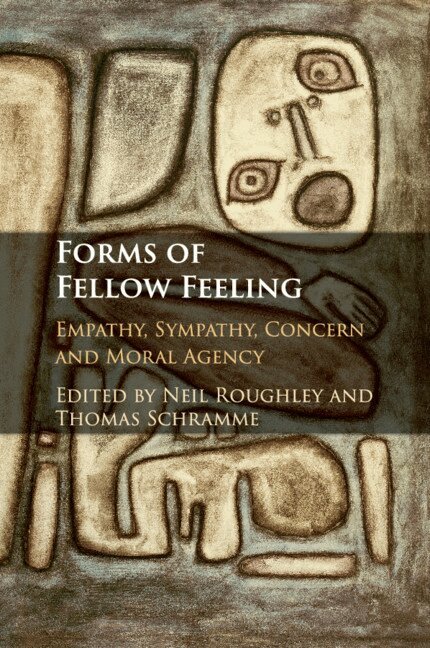
    Forms of Fellow Feeling

    Empathy, Sympathy, Concern and Moral Agency

    AvNeil Roughley,Thomas Schramme

    Häftad, Engelska, 2020

    463 kr

    Beställningsvara. Skickas inom 10-15 vardagar. Fri frakt över 249 kr.

    Beskrivning

    What is the basis of our capacity to act morally? This is a question that has been discussed for millennia, with philosophical debate typically distinguishing two sources of morality: reason and sentiment. This collection aims to shed light on whether the human capacity to feel for others really is central for morality and, if so, in what way. To tackle these questions, the authors discuss how fellow feeling is to be understood: its structure, content and empirical conditions. Also discussed are the exact roles that relevant psychological features - specifically: empathy, sympathy and concern - may play within morality. The collection is unique in bringing together the key participants in the various discussions of the relation of fellow feeling to moral norms, moral concepts and moral agency. By integrating conceptually sophisticated and empirically informed perspectives, Forms of Fellow Feeling will appeal to readers from philosophy, psychology, sociology and cultural studies.

    Produktinformation

    • Utgivningsdatum:2020-01-23
    • Mått:152 x 230 x 17 mm
    • Vikt:500 g
    • Format:Häftad
    • Språk:Engelska
    • Antal sidor:344
    • Förlag:Cambridge University Press
    • ISBN:9781107521636

    Utforska kategorier

    • Filosofi inom Filosofi och religion

    Mer om författaren

    Neil Roughley is Chair for Philosophical Anthropology and Ethics at the University of Duisburg–Essen. His systematic areas of specialisation lie in ethics, action theory, philosophical psychology and the theory of human nature. His historical interests concern the classical figures of ethical sentimentalism, particularly Adam Smith and David Hume, as well as the history of action theory. He is the author of Wanting and Intending. Elements of a Philosophy of Practical Mind (2015) and co-editor of the German-language volume Wollen. Seine Bedeutung, seine Grenzen (2015). Roughley also co-edited On Moral Sentimentalism (2015) with Thomas Schramme. Thomas Schramme is Chair in Philosophy at the University of Liverpool. His background is in philosophy, but he has often worked in interdisciplinary projects. He has published widely in the philosophy of medicine and psychiatry, mainly on the concepts of health and disease. He also specialises in moral psychology and political philosophy. Most recently he has published the Handbook of the Philosophy of Medicine (co-edited with Steven Edwards, 2017). He has edited several collections of essays, for instance Being Amoral: Psychopathy and Moral Incapacity (2014). Schramme also co-edited On Moral Sentimentalism (2015) with Neil Roughley.

    Recensioner i media

    'The essays in this impressive collection challenge some of the received wisdom about empathy in philosophy and psychology. Their cumulative effect is to introduce much needed nuance into the occasionally heated discussion about the importance of fellow feeling for morality and prosocial behaviour.' Antti Kauppinen, University of Helsinki

    Innehållsförteckning

    • Part I: 1. Introduction: empathy, sympathy, concern and moral agency Neil Roughley and Thomas Schramme; Part II. Empathy, Sympathy and Concern: 2. Empathy, altruism, and helping: conceptual distinctions, empirical relations Dan Batson; 3. Self-recognition, empathy and concern for others in toddlers Doris Bischof-Köhler and Norbert Bischof; Part III. Understanding Empathy: 4. Self-simulation and empathy Heidi Maibom; 5. Empathy as an instinct Michael Slote; 6. A moral account of empathy and fellow feeling Lawrence Blum; Part IV. Fellow Feeling and the Development of Pro Sociality: 7. Empathy-related responding and its relations to positive development Nancy Eisenberg; 8. An interdisciplinary perspective on the origins of concern for others: contributions from psychology, neuroscience, philosophy, and sociobiology Carolyn Zahn-Waxler, Andrew Schoen and Jean Decety; 9. Sophisticated concern in early childhood Amrisha Vaish; Part V. Empathy and Morality: 10. Is empathy required for making moral judgements? John Deigh; 11. The empathy in moral obligation. An exercise in creature construction Neil Roughley; 12. Empathy and reciprocating attitudes Stephen Darwall; 13. The role of empathy in an agential account of morality: lessons from autism and psychopathy Thomas Schramme.