• Fri frakt över 249 kr
  • •
  • Snabba leveranser
  • •
  • Billiga böcker
Kundservice

Du är på sajten för privatpersoner.

Företag, bibliotek eller offentlig verksamhet?

Du handlar på classic.bokus.com, där alla dina funktioner finns intakta.
Till classic.bokus.com
Bokus logotyp. Gå till startsidan.
  • Erbjudanden
  • Nyheter
  • Student
  • Topplistor
  • Barn & ungdom
  • Bokus Play
  • E-böcker
  • Pocketböcker
  • Spel & pussel

10% rabatt på allt med kod NYSTART10 →

Sidfot

Mina sidor

    Hjälp

    • Kundservice
    • Vanliga frågor och svar
    • Frakt och leverans
    • Retur vid ångerrätt
    • Reklamera vara
    • Betalning
    • Köpvillkor
    • Allmänna villkor
    • Information om webbplatsens tillgänglighet

    Om Bokus

    • Om oss
    • Pressrum
    • För studenter
    • För företag
    • För bibliotek och offentlig verksamhet
    • För leverantörer
    • Hållbarhet

    Populärt

    • Aktuella erbjudanden
    • Presentkort
    • Studentlitteratur
    • Nya böcker
    • Topplistor
    • Signerade böcker
    • Engelska böcker

    Inspiration

    • Boktips
    • BookTok
    • Populära bokserier
    • Barnbokskaraktärer
    • Populära författare
    Logotyp för Bokus
    Följ oss på Facebook (extern länk)Följ oss på Instagram (extern länk)Följ oss på YouTube (extern länk)Följ oss på TikTok (extern länk)
    bokus @ CookiesAnpassa cookiesIntegritetspolicyKöpvillkor
    Till Citymail hemsida (extern länk)Till Budbee hemsida (extern länk)Till Postnord hemsida (extern länk)Till Schenker hemsida (extern länk)Till Early Bird hemsida (extern länk)Till Walleys hemsida (extern länk)
    1. Språk och ordböcker
    2. Språkvetenskap och lingvistik

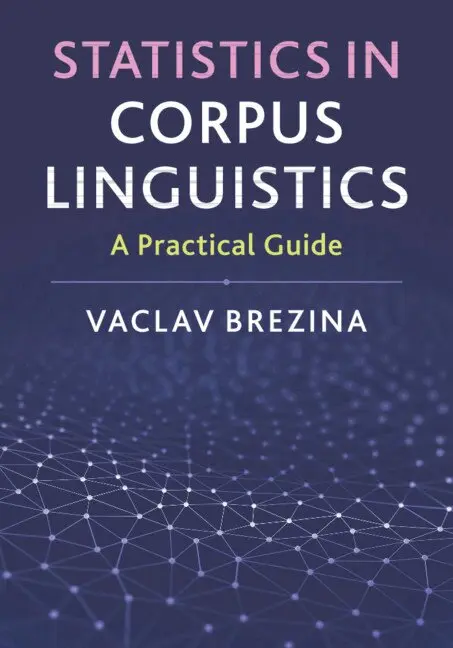
    Statistics in Corpus Linguistics

    A Practical Guide

    AvVaclav Brezina

    Häftad, Engelska, 2018

    390 kr

    Beställningsvara. Skickas inom 10-15 vardagar. Fri frakt över 249 kr.

    Fler format och utgåvor

    Inbunden

    1 444 kr

    E-bok

    472 kr

    E-bok

    472 kr

    Beskrivning

    Do you use language corpora in your research or study, but find that you struggle with statistics? This practical introduction will equip you to understand the key principles of statistical thinking and apply these concepts to your own research, without the need for prior statistical knowledge. The book gives step-by-step guidance through the process of statistical analysis and provides multiple examples of how statistical techniques can be used to analyse and visualise linguistic data. It also includes a useful selection of discussion questions and exercises which you can use to check your understanding. The book comes with a Companion website, which provides additional materials (answers to exercises, datasets, advanced materials, teaching slides etc.) and Lancaster Stats Tools online (http://corpora.lancs.ac.uk/stats), a free click-and-analyse statistical tool for easy calculation of the statistical measures discussed in the book.

    Produktinformation

    • Utgivningsdatum:2018-09-20
    • Mått:173 x 245 x 19 mm
    • Vikt:570 g
    • Format:Häftad
    • Språk:Engelska
    • Antal sidor:314
    • Förlag:Cambridge University Press
    • ISBN:9781107565241

    Utforska kategorier

    • Språkvetenskap och lingvistik inom Språk och ordböcker

    Mer om författaren

    Vaclav Brezina is a research fellow and lecturer at the Department of Linguistics and English Language, Lancaster University. He specialises in corpus linguistics, statistics and applied linguistics, and has designed a number of different tools for corpus analysis.

    Recensioner i media

    'An indispensable guide to statistical methods in corpus linguistics for both beginners and for linguists who already know a great deal about statistics. It contains discussion of a wealth of well-chosen and stimulating linguistic problems illustrating their research design and the choice of statistical techniques.' Karin Aijmer, University of Gothenburg

    Innehållsförteckning

    • 1. Introduction: statistics meets corpus linguistics; 2. Vocabulary: frequency, dispersion and diversity; 3. Semantics and discourse: collocations, keywords and reliability of manual coding; 4. Lexico-grammar: from simple counts to complex models; 5. Register variation: correlation, clusters and factors; 6. Sociolinguistics and stylistics: individual and social variation; 7. Change over time: working diachronic data; 8. Bringing everything together: ten principles of statistical thinking, meta-analysis and effect sizes.