• Fri frakt över 249 kr
  • •
  • Snabba leveranser
  • •
  • Billiga böcker
Kundservice

Du är på sajten för privatpersoner.

Företag, bibliotek eller offentlig verksamhet?

Du handlar på classic.bokus.com, där alla dina funktioner finns intakta.
Till classic.bokus.com
Bokus logotyp. Gå till startsidan.
  • Erbjudanden
  • Nyheter
  • Student
  • Topplistor
  • Barn & ungdom
  • Bokus Play
  • E-böcker
  • Pocketböcker
  • Spel & pussel

Må bättre, för mindre! Upp till 50% rabatt på hälsoböcker

Sidfot

Mina sidor

    Hjälp

    • Kundservice
    • Vanliga frågor och svar
    • Frakt och leverans
    • Retur vid ångerrätt
    • Reklamera vara
    • Betalning
    • Köpvillkor
    • Allmänna villkor
    • Information om webbplatsens tillgänglighet

    Om Bokus

    • Om oss
    • Pressrum
    • För studenter
    • För företag
    • För bibliotek och offentlig verksamhet
    • För leverantörer
    • Hållbarhet

    Populärt

    • Aktuella erbjudanden
    • Presentkort
    • Studentlitteratur
    • Nya böcker
    • Topplistor
    • Signerade böcker
    • Engelska böcker

    Inspiration

    • Boktips
    • BookTok
    • Populära bokserier
    • Barnbokskaraktärer
    • Populära författare
    Logotyp för Bokus
    Följ oss på Facebook (extern länk)Följ oss på Instagram (extern länk)Följ oss på YouTube (extern länk)Följ oss på TikTok (extern länk)
    bokus @ CookiesAnpassa cookiesIntegritetspolicyKöpvillkor
    Till Citymail hemsida (extern länk)Till Budbee hemsida (extern länk)Till Postnord hemsida (extern länk)Till Schenker hemsida (extern länk)Till Early Bird hemsida (extern länk)Till Walleys hemsida (extern länk)
    1. Historia och arkeologi
    2. Historia

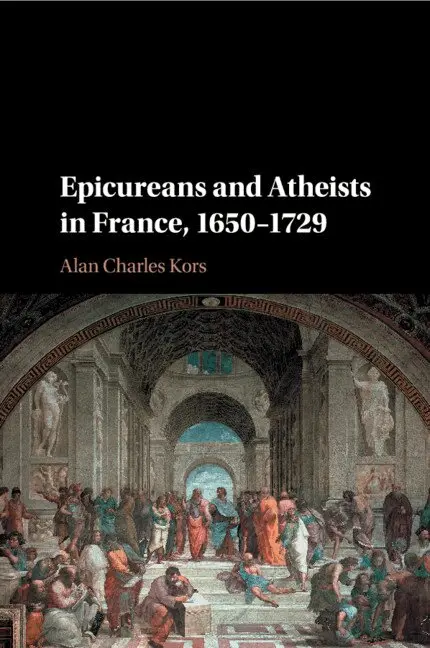
    Epicureans and Atheists in France, 1650-1729

    AvAlan Charles Kors

    Häftad, Engelska, 2018

    477 kr

    Beställningsvara. Skickas inom 10-15 vardagar. Fri frakt över 249 kr.

    Fler format och utgåvor

    Inbunden

    1 268 kr

    Beskrivning

    Atheism was the most foundational challenge to early-modern French certainties. Theologians and philosophers labelled such atheism as absurd, confident that neither the fact nor behaviour of nature was explicable without reference to God. The alternative was a categorical naturalism, whose most extreme form was Epicureanism. The dynamics of the Christian learned world, however, which this book explains, allowed the wide dissemination of the Epicurean argument. By the end of the seventeenth century, atheism achieved real voice and life. This book examines the Epicurean inheritance and explains what constituted actual atheistic thinking in early-modern France, distinguishing such categorical unbelief from other challenges to orthodox beliefs. Without understanding the actual context and convergence of the inheritance, scholarship, protocols, and polemical modes of orthodox culture, the early-modern generation and dissemination of atheism are inexplicable. This book brings to life both early-modern French Christian learned culture and the atheists who emerged from its intellectual vitality.

    Produktinformation

    • Utgivningsdatum:2018-11-22
    • Mått:150 x 230 x 15 mm
    • Vikt:350 g
    • Format:Häftad
    • Språk:Engelska
    • Antal sidor:254
    • Förlag:Cambridge University Press
    • ISBN:9781107584921

    Utforska kategorier

    • Historia inom Historia och arkeologi

    Mer om författaren

    Alan Charles Kors is the Henry Charles Lea Professor of History, University of Pennsylvania. He taught at the École Pratique des Hautes Études and the Folger Library. He is also co-founder of the Foundation for Individual Rights in Education. He has published the Encyclopaedia of the Enlightenment (2003), Atheism in France, 1650-1729 (1990) and D'Holbach's Coterie: An Enlightenment in Paris (1976).

    Recensioner i media

    '… indispensable … sure to fruitfully inspire many historians for years to come.' Jeffrey D. Burson, American Historical Review

    Innehållsförteckning

    • Introduction; 1. Reading Epicurus; 2. The Epicureans; 3. At the boundaries of unbelief; 4. Historians' atheists and historical atheists; Conclusion; Bibliography.