• Fri frakt över 249 kr
  • •
  • Snabba leveranser
  • •
  • Billiga böcker
Kundservice

Du är på sajten för privatpersoner.

Företag, bibliotek eller offentlig verksamhet?

Du handlar på classic.bokus.com, där alla dina funktioner finns intakta.
Till classic.bokus.com
Bokus logotyp. Gå till startsidan.
  • Erbjudanden
  • Nyheter
  • Student
  • Topplistor
  • Barn & ungdom
  • Bokus Play
  • E-böcker
  • Pocketböcker
  • Spel & pussel

10% rabatt på allt med kod: NYSTART10 →

Sidfot

Mina sidor

    Hjälp

    • Kundservice
    • Vanliga frågor och svar
    • Frakt och leverans
    • Retur vid ångerrätt
    • Reklamera vara
    • Betalning
    • Köpvillkor
    • Allmänna villkor
    • Information om webbplatsens tillgänglighet

    Om Bokus

    • Om oss
    • Pressrum
    • För studenter
    • För företag
    • För bibliotek och offentlig verksamhet
    • För leverantörer
    • Hållbarhet

    Populärt

    • Aktuella erbjudanden
    • Presentkort
    • Studentlitteratur
    • Nya böcker
    • Topplistor
    • Signerade böcker
    • Engelska böcker

    Inspiration

    • Boktips
    • BookTok
    • Populära bokserier
    • Barnbokskaraktärer
    • Populära författare
    Logotyp för Bokus
    Följ oss på Facebook (extern länk)Följ oss på Instagram (extern länk)Följ oss på YouTube (extern länk)Följ oss på TikTok (extern länk)
    bokus @ CookiesAnpassa cookiesIntegritetspolicyKöpvillkor
    Till Citymail hemsida (extern länk)Till Budbee hemsida (extern länk)Till Postnord hemsida (extern länk)Till Schenker hemsida (extern länk)Till Early Bird hemsida (extern länk)Till Walleys hemsida (extern länk)
    1. Samhälle och politik
    2. Politik och statsskick
    3. Internationella relationer

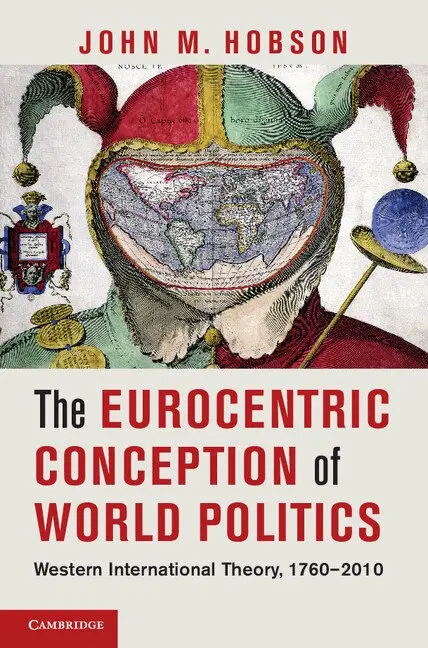
    The Eurocentric Conception of World Politics

    Western International Theory, 1760-2010

    AvJohn M. Hobson

    Häftad, Engelska, 2012

    443 kr

    Beställningsvara. Skickas inom 10-15 vardagar. Fri frakt över 249 kr.

    Fler format och utgåvor

    Inbunden

    1 187 kr

    Beskrivning

    John Hobson claims that throughout its history most international theory has been embedded within various forms of Eurocentrism. Rather than producing value-free and universalist theories of inter-state relations, international theory instead provides provincial analyses that celebrate and defend Western civilization as the subject of, and ideal normative referent in, world politics. Hobson also provides a sympathetic critique of Edward Said's conceptions of Eurocentrism and Orientalism, revealing how Eurocentrism takes different forms, which can be imperialist or anti-imperialist, and showing how these have played out in international theory since 1760. The book thus speaks to scholars of international relations and also to all those interested in understanding Eurocentrism in the disciplines of political science/political theory, political economy/international political economy, geography, cultural and literary studies, sociology and, not least, anthropology.

    Produktinformation

    • Utgivningsdatum:2012-03-29
    • Mått:155 x 228 x 19 mm
    • Vikt:640 g
    • Format:Häftad
    • Språk:Engelska
    • Antal sidor:406
    • Förlag:Cambridge University Press
    • ISBN:9781107604544
    • Utmärkelser:Short-listed for Francesco Guiccardini Prize, Historical International Relations Section (HIST), International Studies Association 2013

    Utforska kategorier

    • Internationella relationer inom Samhälle och politik

    Mer om författaren

    John M. Hobson is Professor of Politics and International Relations at the University of Sheffield. His publications include Everyday Politics of the World Economy (2007), co-edited with Leonard Seabrooke; The Eastern Origins of Western Civilisation (2004); Historical Sociology of International Relations (2002), co-edited with Steve Hobden and The State and International Relations (2000).

    Recensioner i media

    'Hobson's powerful indictment that international theory merely constructs a Eurocentric conception of world politics represents a significant challenge to theorists both of mainstream and critical persuasions. In light of the broad intellectual history that Hobson provides, this book will be of immense interest to a diverse audience of readers.' Brian C. Schmidt, Carleton University

    Innehållsförteckning

    • 1. Introduction: constructing Eurocentrism and international theory as Eurocentric construct; Part I. 1760–1914: Manifest Eurocentrism and Scientific Racism in International Theory: 2. Eurocentric imperialism: liberalism and Marxism, c.1830–1914; 3. Eurocentric anti-imperialism: liberalism, c.1760–1800; 4. Racist anti-imperialism: liberalism and cultural-realism, c.1850–1914; 5. Racist imperialism: 'racist-realism', liberalism, and socialism, c.1860–1914; Part II. 1914–1945: Manifest/Subliminal Eurocentrism and the High Tide of Scientific Racism in International Theory: 6. Anti-imperialism and the myths of 1919: Eurocentric Marxism and racist cultural-realism, 1914–1945; 7. Racist and Eurocentric imperialism: racist-realism, racist-liberalism, and 'progressive' Eurocentric liberalism/Fabianism, 1914–1945; Part III. 1945–1989: Subliminal Eurocentrism in International Theory: 8. Orthodox subliminal Eurocentrism: from classical realism to neorealism, 1945–1989; 9. Orthodox subliminal Eurocentrism: neo-liberal institutionalism and the English school, c.1966–1989; 10. Critical subliminal Eurocentrism: Gramscianism and world-systems theory, c.1967–1989; Part IV. 1989–2010: Back to the Future of Manifest Eurocentrism in Mainstream International Theory: 11. Imperialist and anti-imperialist Eurocentrism: post-1989 'Western-realism' and the spiritual return to post-1889 racist-realism; 12. Imperialist Eurocentrism: post-1989 'Western-liberalism' and the return to post-1830 liberal paternalist Eurocentrism; Part V. Conclusion: Mapping the Promiscuous Architecture of Eurocentrism in International Theory, 1760–2010: 13. Constructing civilization: global hierarchy, 'gradated sovereignty' and globalization in international theory, 1760–2010; Bibliography; Index.