• Fri frakt över 249 kr
  • •
  • Snabba leveranser
  • •
  • Billiga böcker
Kundservice

Du är på sajten för privatpersoner.

Företag, bibliotek eller offentlig verksamhet?

Du handlar på classic.bokus.com, där alla dina funktioner finns intakta.
Till classic.bokus.com
Bokus logotyp. Gå till startsidan.
  • Erbjudanden
  • Nyheter
  • Student
  • Topplistor
  • Barn & ungdom
  • Bokus Play
  • E-böcker
  • Pocketböcker
  • Spel & pussel

10% rabatt på allt med kod: NYSTART10 →

Sidfot

Mina sidor

    Hjälp

    • Kundservice
    • Vanliga frågor och svar
    • Frakt och leverans
    • Retur vid ångerrätt
    • Reklamera vara
    • Betalning
    • Köpvillkor
    • Allmänna villkor
    • Information om webbplatsens tillgänglighet

    Om Bokus

    • Om oss
    • Pressrum
    • För studenter
    • För företag
    • För bibliotek och offentlig verksamhet
    • För leverantörer
    • Hållbarhet

    Populärt

    • Aktuella erbjudanden
    • Presentkort
    • Studentlitteratur
    • Nya böcker
    • Topplistor
    • Signerade böcker
    • Engelska böcker

    Inspiration

    • Boktips
    • BookTok
    • Populära bokserier
    • Barnbokskaraktärer
    • Populära författare
    Logotyp för Bokus
    Följ oss på Facebook (extern länk)Följ oss på Instagram (extern länk)Följ oss på YouTube (extern länk)Följ oss på TikTok (extern länk)
    bokus @ CookiesAnpassa cookiesIntegritetspolicyKöpvillkor
    Till Citymail hemsida (extern länk)Till Budbee hemsida (extern länk)Till Postnord hemsida (extern länk)Till Schenker hemsida (extern länk)Till Early Bird hemsida (extern länk)Till Walleys hemsida (extern länk)
    1. Samhälle och politik
    2. Politik och statsskick
    3. Internationella relationer

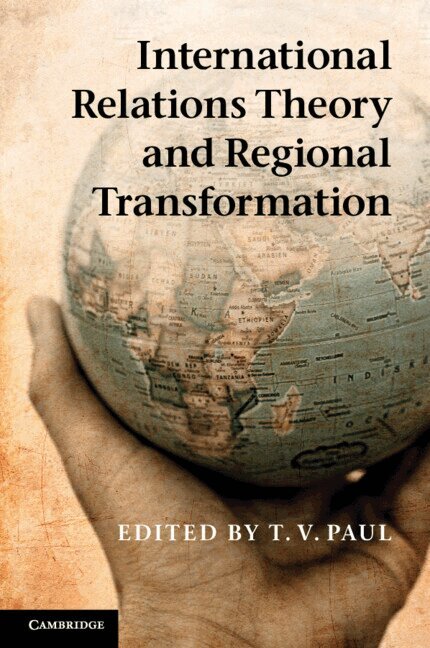
    International Relations Theory and Regional Transformation

    AvT. V. Paul

    Häftad, Engelska, 2012

    353 kr

    Beställningsvara. Skickas inom 10-15 vardagar. Fri frakt över 249 kr.

    Beskrivning

    Regional transformation has emerged as a major topic of research during the past few decades, much of it seeking to understand how a region changes into a zone of conflict or cooperation and how and why some regions remain in perpetual conflict. Although the leading theoretical paradigms of international relations have something to say about regional order, a comprehensive treatment of this subject is missing from the literature. This book suggests that cross-paradigmatic engagement on regional orders can be valuable if it can generate theoretically innovative, testable propositions and policy-relevant ideas. The book brings together scholars from the dominant IR perspectives aiming to explain the regional order issue through multidimensional and multi-causal pathways and seeking meeting points between them. Using insights from IR theory, the contributors offer policy-relevant ideas which may benefit conflict-ridden regions of the world.

    Produktinformation

    • Utgivningsdatum:2012-02-23
    • Mått:152 x 228 x 15 mm
    • Vikt:510 g
    • Format:Häftad
    • Språk:Engelska
    • Antal sidor:320
    • Förlag:Cambridge University Press
    • ISBN:9781107604551

    Utforska kategorier

    • Internationella relationer inom Samhälle och politik

    Mer om författaren

    T. V. Paul is Director of the McGill/University of Montreal Centre for International Peace and Security Studies (CIPSS) and James McGill Professor of International Relations in the Department of Political Science at McGill University. He specialises in International Relations, especially international security, regional security and South Asia.

    Recensioner i media

    'Can regions transform themselves from zones of conflict to zones of cooperation and if so how? In addressing this core question, this volume skilfully bridges theoretical divides and offers strong comparative analysis on different trajectories of regional transformation, with some thought-provoking conclusions.' Louise Fawcett, St Catherine's College, University of Oxford

    Innehållsförteckning

    • Part I. Introduction: 1. Regional transformation in international relations T. V. Paul; 2. How regions were made, and the legacies for world politics: an English school reconnaissance Barry Buzan; Part II. Realist Perspectives: 3. Realism and neorealism in the study of regional conflict Dale C. Copeland; 4. Neoclassical realism and the study of regional order Jeffrey W. Taliaferro; Part III. Liberal Perspectives: 5. Economic interdependence and regional peace John M. Owen, IV; 6. Regional organizations à la carte: the effects of institutional elasticity Stephanie C. Hofmann and Frédéric Mérand; 7. Transforming regional security through liberal reforms John R. Oneal; Part IV. Constructivist Perspectives: 8. Ideas, norms, and regional orders Amitav Acharya; 9. Regional security practices and Russian–Atlantic relations Vincent Pouliot; Part V. Eclectic Perspectives: 10. The transformation of modern Europe: banalities of success John A. Hall; 11. Top-down peacemaking: why peace begins with states and not societies Norrin M. Ripsman; Part VI. Conclusions: 12. Strategies and mechanisms of regional change Stéfanie von Hlatky.