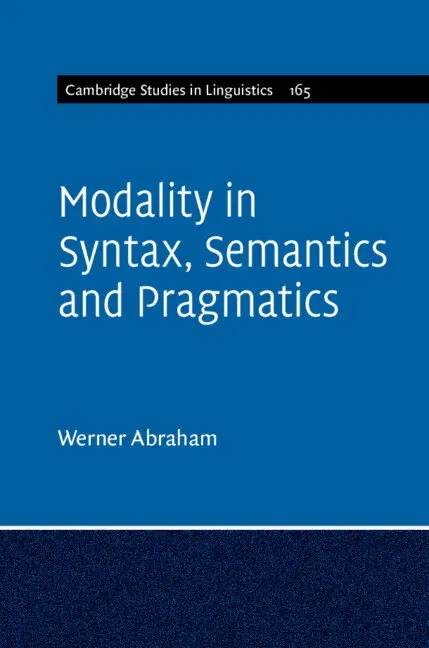
Häftad, Engelska, 2023
Modality in Syntax, Semantics and Pragmatics
442 kr
Beställningsvara. Skickas inom 5-8 vardagar. Fri frakt över 249 kr.
Beskrivning
What do we mean when we say things like 'If only we knew what he was up to!' Clearly this is more than just a message, or a question to our addressee. We are expressing simultaneously that we don't know, and also that we wish to know. Several modes of encoding contribute to such modalities of expression: word order, subordinating subjunctions, sentences that are subordinated but nevertheless occur autonomously, and attitudinal discourse adverbs which, far beyond lexical adverbials of modality, allow the speaker and the listener to presuppose full agreement, partial agreement under presupposed conditions, or negotiation of common ground. This state of the art survey proposes a new model of modality, drawing on data from a variety of Germanic and Slavic languages to find out what is cross-linguistically universal about modality, and to argue that it is a constitutive part of human cognition.
Produktinformation
- Utgivningsdatum: 2023-04-06
- Mått: 151 x 228 x 26 mm
- Vikt: 680 g
- Format: Häftad
- Språk: Engelska
- Serie: Cambridge Studies in Linguistics
- Antal sidor: 456
- Förlag: Cambridge University Press
- ISBN: 9781107605503
Utforska kategorier
Betyg & recensioner
0 recensioner
Inga recensioner tillgängliga.