• Fri frakt över 249 kr
  • •
  • Snabba leveranser
  • •
  • Billiga böcker
Kundservice

Du är på sajten för privatpersoner.

Företag, bibliotek eller offentlig verksamhet?

Du handlar på classic.bokus.com, där alla dina funktioner finns intakta.
Till classic.bokus.com
Bokus logotyp. Gå till startsidan.
  • Erbjudanden
  • Student
  • Topplistor
  • Barn & ungdom
  • Bokus Play
  • E-böcker
  • Ljudböcker
  • Pocketböcker
  • Spel och pussel

Pocketfynda! Hundratals böcker för 49 kr/st →

Sidfot

Mina sidor

    Hjälp

    • Kundservice
    • Vanliga frågor och svar
    • Frakt och leverans
    • Retur vid ångerrätt
    • Reklamera vara
    • Betalning
    • Köpvillkor
    • Allmänna villkor
    • Information om webbplatsens tillgänglighet

    Om Bokus

    • Om oss
    • Pressrum
    • För studenter
    • För företag
    • För bibliotek och offentlig verksamhet
    • För leverantörer
    • Hållbarhet

    Populärt

    • Aktuella erbjudanden
    • Presentkort
    • Studentlitteratur
    • Nya böcker
    • Topplistor
    • Signerade böcker
    • Engelska böcker

    Inspiration

    • Boktips
    • BookTok
    • Barnbokskaraktärer
    • Populära författare
    Logotyp för Bokus
    Följ oss på Facebook (extern länk)Följ oss på Instagram (extern länk)Följ oss på YouTube (extern länk)Följ oss på TikTok (extern länk)
    bokus @ CookiesAnpassa cookiesIntegritetspolicyKöpvillkor
    Till Citymail hemsida (extern länk)Till Budbee hemsida (extern länk)Till Postnord hemsida (extern länk)Till Schenker hemsida (extern länk)Till Early Bird hemsida (extern länk)Till Walleys hemsida (extern länk)
    1. Samhälle och politik
    2. Politik och statsskick
    3. Statsvetenskap och politisk teori

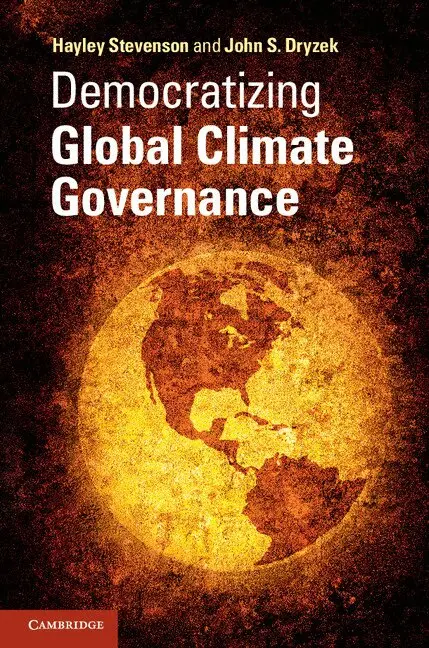
    Democratizing Global Climate Governance

    AvHayley Stevenson,John S. Dryzek

    Häftad, Engelska, 2014

    353 kr

    Beställningsvara. Skickas inom 7-10 vardagar. Fri frakt över 249 kr.

    Fler format och utgåvor

    Inbunden

    1 107 kr

    Beskrivning

    Climate change presents a large, complex and seemingly intractable set of problems that are unprecedented in their scope and severity. Given that climate governance is generated and experienced internationally, effective global governance is imperative; yet current modes of governance have failed to deliver. Hayley Stevenson and John Dryzek argue that effective collective action depends crucially on questions of democratic legitimacy. Spanning topics of multilateral diplomacy, networked governance, representation, accountability, protest and participation, this book charts the failures and successes of global climate governance to offer fresh proposals for a deliberative system which would enable meaningful communication, inclusion of all affected interests, accountability and effectiveness in dealing with climate change; one of the most vexing issues of our time.

    Produktinformation

    • Utgivningsdatum:2014-02-06
    • Mått:152 x 228 x 15 mm
    • Vikt:400 g
    • Format:Häftad
    • Språk:Engelska
    • Antal sidor:267
    • Förlag:Cambridge University Press
    • ISBN:9781107608535

    Utforska kategorier

    • Statsvetenskap och politisk teori inom Samhälle och politik

    Mer om författaren

    Hayley Stevenson is Lecturer in International Relations and Global Environmental Politics at the University of Sheffield. She is the author of Institutionalizing Unsustainability: The Paradox of Global Climate Governance (2013). John S. Dryzek is Australian Research Council Federation Fellow and Professor of Political Science in the Centre for Deliberative Democracy and Global Governance at the Australian National University. His recent books include The Oxford Handbook of Climate Change and Society (co-edited with Richard Norgaard and David Schlosberg, 2011) and The Politics of the Earth: Environmental Discourses, 3rd edition (2013).

    Innehållsförteckning

    • Preface; Acknowledgements; 1. The challenge of global climate governance; 2. Global climate governance as a deliberative system; 3. Governance with and without institutionalized authority: the importance of public space; 4. Authoritative global governance: the United Nations Framework Convention on Climate Change; 5. Emerging centers of networked authority; 6. Transmitting public concerns in the deliberative system; 7. Accountability; 8. Improving the global deliberative system; 9. Conclusion: looking for reflexivity.