• Fri frakt över 249 kr
  • •
  • Snabba leveranser
  • •
  • Billiga böcker
Kundservice

Du är på sajten för privatpersoner.

Företag, bibliotek eller offentlig verksamhet?

Du handlar på classic.bokus.com, där alla dina funktioner finns intakta.
Till classic.bokus.com
Bokus logotyp. Gå till startsidan.
  • Erbjudanden
  • Nyheter
  • Student
  • Topplistor
  • Barn & ungdom
  • Bokus Play
  • E-böcker
  • Pocketböcker
  • Spel & pussel

10% rabatt på allt med kod: NYSTART10 →

Sidfot

Mina sidor

    Hjälp

    • Kundservice
    • Vanliga frågor och svar
    • Frakt och leverans
    • Retur vid ångerrätt
    • Reklamera vara
    • Betalning
    • Köpvillkor
    • Allmänna villkor
    • Information om webbplatsens tillgänglighet

    Om Bokus

    • Om oss
    • Pressrum
    • För studenter
    • För företag
    • För bibliotek och offentlig verksamhet
    • För leverantörer
    • Hållbarhet

    Populärt

    • Aktuella erbjudanden
    • Presentkort
    • Studentlitteratur
    • Nya böcker
    • Topplistor
    • Signerade böcker
    • Engelska böcker

    Inspiration

    • Boktips
    • BookTok
    • Populära bokserier
    • Barnbokskaraktärer
    • Populära författare
    Logotyp för Bokus
    Följ oss på Facebook (extern länk)Följ oss på Instagram (extern länk)Följ oss på YouTube (extern länk)Följ oss på TikTok (extern länk)
    bokus @ CookiesAnpassa cookiesIntegritetspolicyKöpvillkor
    Till Citymail hemsida (extern länk)Till Budbee hemsida (extern länk)Till Postnord hemsida (extern länk)Till Schenker hemsida (extern länk)Till Early Bird hemsida (extern länk)Till Walleys hemsida (extern länk)
    1. Filosofi och religion
    2. Filosofi
    3. Filosofiska discipliner

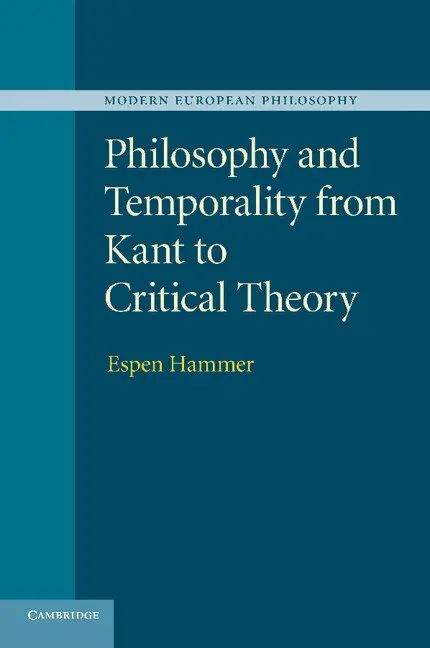
    Philosophy and Temporality from Kant to Critical Theory

    AvEspen Hammer

    Häftad, Engelska, 2013

    Del i serien Modern European Philosophy

    463 kr

    Beställningsvara. Skickas inom 10-15 vardagar. Fri frakt över 249 kr.

    Fler format och utgåvor

    Inbunden

    1 214 kr

    Beskrivning

    This book is a critical analysis of how key philosophers in the European tradition have responded to the emergence of a modern conception of temporality. Espen Hammer suggests that it is a feature of Western modernity that time has been forcibly separated from the natural cycles and processes with which it used to be associated. In a discussion that ranges over Kant, Hegel, Schopenhauer, Nietzsche, Heidegger and Adorno, he examines the forms of dissatisfaction which result from this, together with narrative modes of configuring time, the relationship between agency and temporality, and possible challenges to the modern world's linear and homogenous experience of time. His study is a rich exploration of an enduring philosophical theme: the role of temporality in shaping and reshaping modern human affairs.

    Produktinformation

    • Utgivningsdatum:2013-12-05
    • Mått:152 x 229 x 14 mm
    • Vikt:370 g
    • Format:Häftad
    • Språk:Engelska
    • Serie:Modern European Philosophy
    • Antal sidor:272
    • Förlag:Cambridge University Press
    • ISBN:9781107630291

    Utforska kategorier

    • Filosofiska discipliner inom Filosofi och religion

    Mer om författaren

    Espen Hammer is Professor of Philosophy at Temple University. He has lectured widely in the United States and Europe, and he is a former Alexander von Humboldt Fellow at the University of Frankfurt. He has also been a Visiting Professor at the New School for Social Research and the University of Pennsylvania. He is the author of Stanley Cavell: Skepticism, Subjectivity, and the Ordinary (2002) and Adorno and the Political (2005), and the editor of German Idealism: Contemporary Perspectives (2007).

    Innehållsförteckning

    • Introduction; 1. The historicity of time; 2. Modern temporality; 3. Two responses to the time of modernity; 4. Hegel's temporalization of the absolute; 5. Schopenhauer and transcendence; 6. Time and myth in early Nietzsche; 7. Recurrence and authenticity: the later Nietzsche; 8. Heidegger on boredom and modernity; 9. A modernist critique of postmodern temporality; Conclusion.