• Fri frakt över 249 kr
  • •
  • Snabba leveranser
  • •
  • Billiga böcker
Kundservice

Du är på sajten för privatpersoner.

Företag, bibliotek eller offentlig verksamhet?

Du handlar på classic.bokus.com, där alla dina funktioner finns intakta.
Till classic.bokus.com
Bokus logotyp. Gå till startsidan.
  • Erbjudanden
  • Nyheter
  • Student
  • Topplistor
  • Barn & ungdom
  • Bokus Play
  • E-böcker
  • Pocketböcker
  • Spel & pussel

10% rabatt på allt med kod: NYSTART10 →

Sidfot

Mina sidor

    Hjälp

    • Kundservice
    • Vanliga frågor och svar
    • Frakt och leverans
    • Retur vid ångerrätt
    • Reklamera vara
    • Betalning
    • Köpvillkor
    • Allmänna villkor
    • Information om webbplatsens tillgänglighet

    Om Bokus

    • Om oss
    • Pressrum
    • För studenter
    • För företag
    • För bibliotek och offentlig verksamhet
    • För leverantörer
    • Hållbarhet

    Populärt

    • Aktuella erbjudanden
    • Presentkort
    • Studentlitteratur
    • Nya böcker
    • Topplistor
    • Signerade böcker
    • Engelska böcker

    Inspiration

    • Boktips
    • BookTok
    • Populära bokserier
    • Barnbokskaraktärer
    • Populära författare
    Logotyp för Bokus
    Följ oss på Facebook (extern länk)Följ oss på Instagram (extern länk)Följ oss på YouTube (extern länk)Följ oss på TikTok (extern länk)
    bokus @ CookiesAnpassa cookiesIntegritetspolicyKöpvillkor
    Till Citymail hemsida (extern länk)Till Budbee hemsida (extern länk)Till Postnord hemsida (extern länk)Till Schenker hemsida (extern länk)Till Early Bird hemsida (extern länk)Till Walleys hemsida (extern länk)
    1. Psykologi och pedagogik
    2. Pedagogik
    3. Pedagogisk psykologi

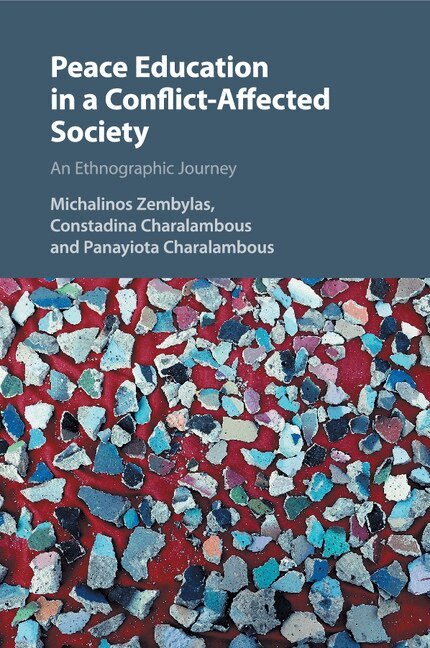
    Peace Education in a Conflict-Affected Society

    An Ethnographic Journey

    AvMichalinos Zembylas,Constadina Charalambous

    Häftad, Engelska, 2018

    450 kr

    Beställningsvara. Skickas inom 10-15 vardagar. Fri frakt över 249 kr.

    Fler format och utgåvor

    Inbunden

    1 310 kr

    Beskrivning

    Peace education initiatives have been subject to heated public debate and so far the complexities involved have not been fully understood. This multilayered analysis examines how teachers negotiate ideological, pedagogical and emotional challenges in their attempts to enact a peace education policy. Focusing primarily on the case study of conflict-affected Cyprus, Michalinos Zembylas, Constadina Charalambous and Panayiota Charalambous situate the Cypriot case within wider theoretical and methodological debates in the field and explore the implications of their findings for theory and practice. Building on current anthropological approaches, the authors use insights from policy studies and sociolinguistics to examine peace education agendas and the ways these are shaped by the dynamics of local politics and classroom practices. This study will be valuable reading for researchers of peace and policy studies as well as for practitioners and policy makers involved in introducing peace education initiatives that challenge teachers' long-held beliefs.

    Produktinformation

    • Utgivningsdatum:2018-04-26
    • Mått:230 x 150 x 15 mm
    • Vikt:430 g
    • Format:Häftad
    • Språk:Engelska
    • Antal sidor:286
    • Förlag:Cambridge University Press
    • ISBN:9781107652828

    Utforska kategorier

    • Pedagogisk psykologi inom Psykologi och pedagogik

    Mer om författaren

    Michalinos Zembylas is Associate Professor of Educational Theory and Curriculum Studies at the Open University of Cyprus. He is also Visiting Professor and Research Fellow at the Institute for Reconciliation and Social Justice, University of the Free State, South Africa. Constadina Charalambous is a Lecturer of Language Education and Literacy at the European University of Cyprus. Panayiota Charalambous is a Visiting Research Fellow at King's College London and a collaborating tutor at the European University of Cyprus.

    Innehållsförteckning

    • Introduction; Part I. Setting the Scene: Theory, Methodology and Context: 1. Conceptualizing 'peace education' in conflict-affected societies; 2. Designing a peace education research project; 3. The emergence of the new peace initiative in the context of Greek-Cypriot education policy; Part II. Teachers' Responses to a Peace Education Initiative: 4. Teachers' interpretations of the transition to the new policy initiative; 5. Teachers' stances and repertoires towards reconciliation; 6. Teachers' difficulties and emotions towards the new policy initiative; Part III. Mapping Teachers' Practices in a Changing Context: 7. The schooling of emotion and memory in classroom interaction; 8. Talking about peace and conflict in a (super)diverse classroom; Part IV. The Impact of Teacher Training Workshops: 9. Handling teachers' discomfort during peace education workshops; 10. Doing 'leftist propaganda' or working towards peace? Responding to teachers' resistance; 11. Moving towards critical ambivalence: enduring reservations and signs of change; Epilogue.