• Fri frakt över 249 kr
  • •
  • Snabba leveranser
  • •
  • Billiga böcker
Kundservice

Du är på sajten för privatpersoner.

Företag, bibliotek eller offentlig verksamhet?

Du handlar på classic.bokus.com, där alla dina funktioner finns intakta.
Till classic.bokus.com
Bokus logotyp. Gå till startsidan.
  • Erbjudanden
  • Nyheter
  • Student
  • Topplistor
  • Barn & ungdom
  • Bokus Play
  • E-böcker
  • Pocketböcker
  • Spel & pussel

10% rabatt på allt med kod NYSTART10 →

Sidfot

Mina sidor

    Hjälp

    • Kundservice
    • Vanliga frågor och svar
    • Frakt och leverans
    • Retur vid ångerrätt
    • Reklamera vara
    • Betalning
    • Köpvillkor
    • Allmänna villkor
    • Information om webbplatsens tillgänglighet

    Om Bokus

    • Om oss
    • Pressrum
    • För studenter
    • För företag
    • För bibliotek och offentlig verksamhet
    • För leverantörer
    • Hållbarhet

    Populärt

    • Aktuella erbjudanden
    • Presentkort
    • Studentlitteratur
    • Nya böcker
    • Topplistor
    • Signerade böcker
    • Engelska böcker

    Inspiration

    • Boktips
    • BookTok
    • Populära bokserier
    • Barnbokskaraktärer
    • Populära författare
    Logotyp för Bokus
    Följ oss på Facebook (extern länk)Följ oss på Instagram (extern länk)Följ oss på YouTube (extern länk)Följ oss på TikTok (extern länk)
    bokus @ CookiesAnpassa cookiesIntegritetspolicyKöpvillkor
    Till Citymail hemsida (extern länk)Till Budbee hemsida (extern länk)Till Postnord hemsida (extern länk)Till Schenker hemsida (extern länk)Till Early Bird hemsida (extern länk)Till Walleys hemsida (extern länk)
    1. Juridik
    2. Rättsvetenskap

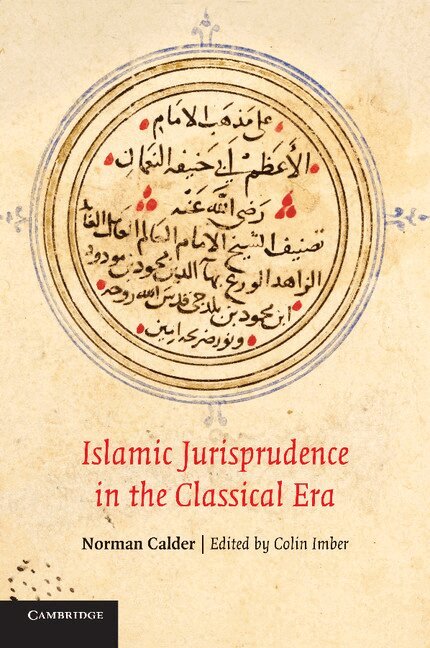
    Islamic Jurisprudence in the Classical Era

    AvNorman Calder,Colin Imber

    Häftad, Engelska, 2014

    426 kr

    Beställningsvara. Skickas inom 10-15 vardagar. Fri frakt över 249 kr.

    Fler format och utgåvor

    Inbunden

    1 351 kr

    Beskrivning

    Norman Calder is still considered a luminary in the field of Islamic law. He was one among a handful of Western scholars who were beginning to engage with the subject. In the intervening years, much has changed, and Islamic law is now understood as fundamental to any engagement with the study of Islam, its history, and its society. In this book, Colin Imber has put together and edited four essays by Norman Calder that have never been previously published. Typically incisive, they categorize and analyze the different genres of Islamic juristic literature that was produced between the tenth and fourteenth centuries, showing what function they served both in the preservation of Muslim legal and religious traditions and in the day-to-day lives of their communities. The essays also examine the status and role of the jurists themselves and give clear answers to the controversial questions of how far Islamic law and juristic thinking changed over the centuries, and how far it was able to adapt to new circumstances.

    Produktinformation

    • Utgivningsdatum:2014-03-20
    • Mått:153 x 230 x 14 mm
    • Vikt:380 g
    • Format:Häftad
    • Språk:Engelska
    • Antal sidor:242
    • Förlag:Cambridge University Press
    • ISBN:9781107654891

    Utforska kategorier

    • Rättsvetenskap inom Juridik

    Mer om författaren

    Colin Imber was formerly Reader in Turkish at the University of Manchester. His recent publications include Studies in Early Muslim Jurisprudence (1993) and Interpretation and Jurisprudence in Medieval Islam (2006).

    Recensioner i media

    '… a magnificent survey of jurisprudence, treating especially the problem of what scholastic writing was intended to accomplish: the guidance of Muslim laymen, the display of erudition, aesthetic pleasure, and reassurance and inspiration for the pious … stresses the literary pleasures of reading Islamic law books, normally unavailable except to those with advanced ability in reading Arabic.' Christopher Melchert, Journal of Islamic Studies

    Innehållsförteckning

    • Introduction Robert Gleave; 1. The Hanafi law on fornication; 2. Nawawi and the typologies of fiqh writing; 3. Scholars, muftis, judges, and secular power: the need for distinctions; 4. The social function of fatwas; Afterword: scholarly priorities and Islamic studies: the reviews of Norman Calder Robert Gleave.