• Fri frakt över 249 kr
  • •
  • Snabba leveranser
  • •
  • Billiga böcker
Kundservice

Du är på sajten för privatpersoner.

Företag, bibliotek eller offentlig verksamhet?

Du handlar på classic.bokus.com, där alla dina funktioner finns intakta.
Till classic.bokus.com
Bokus logotyp. Gå till startsidan.
  • Erbjudanden
  • Nyheter
  • Student
  • Topplistor
  • Barn & ungdom
  • Bokus Play
  • E-böcker
  • Pocketböcker
  • Spel & pussel

10% rabatt på allt med kod: NYSTART10 →

Sidfot

Mina sidor

    Hjälp

    • Kundservice
    • Vanliga frågor och svar
    • Frakt och leverans
    • Retur vid ångerrätt
    • Reklamera vara
    • Betalning
    • Köpvillkor
    • Allmänna villkor
    • Information om webbplatsens tillgänglighet

    Om Bokus

    • Om oss
    • Pressrum
    • För studenter
    • För företag
    • För bibliotek och offentlig verksamhet
    • För leverantörer
    • Hållbarhet

    Populärt

    • Aktuella erbjudanden
    • Presentkort
    • Studentlitteratur
    • Nya böcker
    • Topplistor
    • Signerade böcker
    • Engelska böcker

    Inspiration

    • Boktips
    • BookTok
    • Populära bokserier
    • Barnbokskaraktärer
    • Populära författare
    Logotyp för Bokus
    Följ oss på Facebook (extern länk)Följ oss på Instagram (extern länk)Följ oss på YouTube (extern länk)Följ oss på TikTok (extern länk)
    bokus @ CookiesAnpassa cookiesIntegritetspolicyKöpvillkor
    Till Citymail hemsida (extern länk)Till Budbee hemsida (extern länk)Till Postnord hemsida (extern länk)Till Schenker hemsida (extern länk)Till Early Bird hemsida (extern länk)Till Walleys hemsida (extern länk)
    1. Kultur
    2. Scenkonst och film
    3. Skådespelare och artister

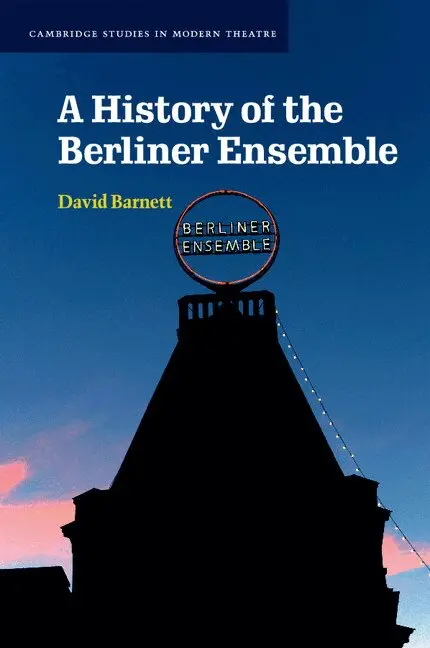
    A History of the Berliner Ensemble

    AvDavid Barnett

    Häftad, Engelska, 2018

    Del i serien Cambridge Studies in Modern Theatre

    662 kr

    Beställningsvara. Skickas inom 10-15 vardagar. Fri frakt över 249 kr.

    Fler format och utgåvor

    Inbunden

    1 873 kr

    Beskrivning

    The Berliner Ensemble was founded by Bertolt Brecht and his wife Helene Weigel in 1949. The company soon gained international prominence, and its productions and philosophy influenced the work of theatre-makers around the world. David Barnett's book is the first study of the company in any language. Based on extensive archival research, it uncovers Brecht's working methods and those of the company's most important directors after his death. The book considers the boon and burden of Brecht's legacy, and provides new insights into battles waged behind the scenes for the preservation of the Brechtian tradition. The Berliner Ensemble was also the German Democratic Republic's most prestigious cultural export, attracting attention from the highest circles of government, and from the Stasi, before it privatised itself after German reunification in 1990. Barnett pieces together a complex history that sheds light on both the company's groundbreaking productions and their turbulent times.

    Produktinformation

    • Utgivningsdatum:2018-02-08
    • Mått:153 x 226 x 27 mm
    • Vikt:770 g
    • Format:Häftad
    • Språk:Engelska
    • Serie:Cambridge Studies in Modern Theatre
    • Antal sidor:507
    • Förlag:Cambridge University Press
    • ISBN:9781107663763

    Utforska kategorier

    • Skådespelare och artister inom Kultur

    Mer om författaren

    David Barnett is Reader in Drama, Theatre and Performance at the University of Sussex. He is the author of Brecht in Practice: Theatre, Theory and Performance (2014), Rainer Werner Fassbinder and the German Theatre (Cambridge, 2005) and Literature versus Theatre: Textual Problems and Theatrical Realization in the Later Plays of Heiner Müller (1998). He has also edited the ninth volume of Brecht's collected plays in English, the Berliner Ensemble Adaptations (2014). He writes extensively on political and post-dramatic theatre in Europe and has published articles in Modern Drama and Contemporary Theatre Review on Brechtian and post-Brechtian theatre.

    Recensioner i media

    'Barnett's history of the company is a major achievement and a fascinating read.' Laura Bradley, University of Edinburgh

    Innehållsförteckning

    • Introduction; 1. The Berliner Ensemble as an opportunity to establish a new type of theatre; 2. The founding and the first season of the Berliner Ensemble; 3. The Berliner Ensemble's years at the Deutsches Theater: 1949–53; 4. Brecht's last seasons at the Theater am Schiffbauerdamm: 1954–6; 5. Developing the Brechtian legacy: 1956–61; 6. Making theatre politically after the Berlin Wall: 1961–5; 7. Years of crisis: 1966–71; 8. A new beginning: 1971–4; 9. A new crisis: 1974–7; 10. A safe pair of hands: 1977–81; 11. Crisis and stagnation: 1981–9; 12. Wekwerth's last stand: 1989–91; 13. From gang of five to power of one: 1992–5; 14. The last hurrahs: 1996–9; Conclusion.