• Fri frakt över 249 kr
  • •
  • Snabba leveranser
  • •
  • Billiga böcker
Kundservice

Du är på sajten för privatpersoner.

Företag, bibliotek eller offentlig verksamhet?

Du handlar på classic.bokus.com, där alla dina funktioner finns intakta.
Till classic.bokus.com
Bokus logotyp. Gå till startsidan.
  • Erbjudanden
  • Student
  • Topplistor
  • Barn & ungdom
  • Bokus Play
  • E-böcker
  • Ljudböcker
  • Pocketböcker
  • Spel och pussel

5% studentrabatt – använd koden KURSBOK27 →

Sidfot

Mina sidor

    Hjälp

    • Kundservice
    • Vanliga frågor och svar
    • Frakt och leverans
    • Retur vid ångerrätt
    • Reklamera vara
    • Betalning
    • Köpvillkor
    • Allmänna villkor
    • Information om webbplatsens tillgänglighet

    Om Bokus

    • Om oss
    • Pressrum
    • För studenter
    • För företag
    • För bibliotek och offentlig verksamhet
    • För leverantörer
    • Hållbarhet

    Populärt

    • Aktuella erbjudanden
    • Presentkort
    • Studentlitteratur
    • Nya böcker
    • Topplistor
    • Signerade böcker
    • Engelska böcker

    Inspiration

    • Boktips
    • BookTok
    • Barnbokskaraktärer
    • Populära författare
    Logotyp för Bokus
    Följ oss på Facebook (extern länk)Följ oss på Instagram (extern länk)Följ oss på YouTube (extern länk)Följ oss på TikTok (extern länk)
    bokus @ CookiesAnpassa cookiesIntegritetspolicyKöpvillkor
    Till Citymail hemsida (extern länk)Till Budbee hemsida (extern länk)Till Postnord hemsida (extern länk)Till Schenker hemsida (extern länk)Till Early Bird hemsida (extern länk)Till Walleys hemsida (extern länk)
    1. Kultur
    2. Musikböcker

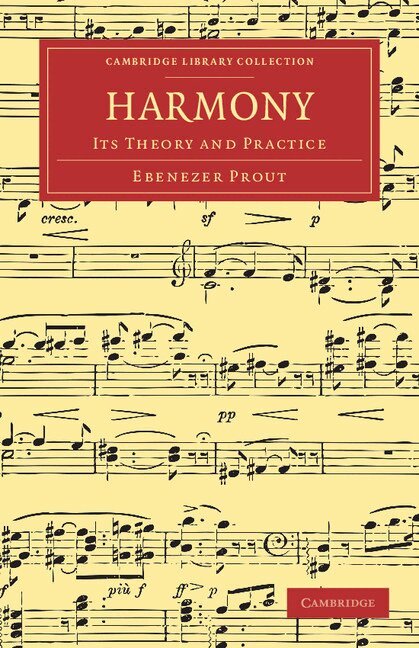
    Harmony

    Its Theory and Practice

    AvEbenezer Prout

    Häftad, Engelska, 2011

    Del i serien Cambridge Library Collection - Music

    619 kr

    Beställningsvara. Skickas inom 7-10 vardagar. Fri frakt över 249 kr.

    Fler format och utgåvor

    Inbunden

    342 kr

    Häftad

    171 kr

    Häftad

    335 kr

    Beskrivning

    The music scholar, composer and editor Ebenezer Prout (1835-1909) is best known for his edition of Handel's Messiah and as the man who put words to the fugue subjects in Bach's Well-tempered Klavier. He taught at the Royal Academy of Music (numbering Henry Wood amongst his pupils) and the reputation he established through his works on music theory gained him the post of Professor of Music at Trinity College, Dublin. This is the sixteenth (1903) edition, of his 1889 treatise on harmony which ran through over twenty editions, such was its popularity. This edition marks a significant change in Prout's approach to the theory of harmony, moving from a scientific exposition using the harmonic series to a more aesthetic style, which resulted in extensive re-casting of the work and an entirely new key to the exercises. This reprint includes the analytical key to the exercises.

    Produktinformation

    • Utgivningsdatum:2011-11-08
    • Mått:140 x 216 x 29 mm
    • Vikt:650 g
    • Format:Häftad
    • Språk:Engelska
    • Serie:Cambridge Library Collection - Music
    • Antal sidor:514
    • Förlag:Cambridge University Press
    • ISBN:9781108038799

    Utforska kategorier

    • Musikböcker inom Kultur

    Innehållsförteckning

    • Preface to the first edition; Preface to the sixteenth edition; 1. Introduction; 2. Key, or tonality; 3. The general laws of part-writing; 4. The diatonic triads of the major key; 5. The diatonic triads of the major key (continued); 6. The inversions of the triads of a major key; 7. The minor key: its diatonic triads and their inversions; 8. The chord of the dominant seventh; 9. Key relationships - modulation to nearly related keys - false relations; 10. Unessential discords (I) - auxiliary notes, passing notes, and anticipation; 11. Unessential discords (II) - suspensions; 12. The chord of the dominant ninth; 13. The chord of the dominant eleventh; 14. The chord of the dominant thirteenth; 15. Chromatic triads - the chromatic scale; 16. Chromatic chords of the seventh; 17. Chromatic chords of the ninth - false notation - enharmonic modulation; 18. Chromatic chords of the eleventh and thirteenth; 19. The chord of the augmented sixth; 20. Pedals; 21. Harmony in fewer and more than four parts; Appendix A. The ecclesiastical modes; Appendix B. The harmonic series; Analytical key to the exercises in the sixteenth and subsequent editions of Harmony: Its Theory and Practice.