• Fri frakt över 249 kr
  • •
  • Snabba leveranser
  • •
  • Billiga böcker
Kundservice

Du är på sajten för privatpersoner.

Företag, bibliotek eller offentlig verksamhet?

Du handlar på classic.bokus.com, där alla dina funktioner finns intakta.
Till classic.bokus.com
Bokus logotyp. Gå till startsidan.
  • Erbjudanden
  • Nyheter
  • Student
  • Topplistor
  • Barn & ungdom
  • Bokus Play
  • E-böcker
  • Pocketböcker
  • Spel & pussel

10% studentrabatt med kod TERM26

Sidfot

Mina sidor

    Hjälp

    • Kundservice
    • Vanliga frågor och svar
    • Frakt och leverans
    • Retur vid ångerrätt
    • Reklamera vara
    • Betalning
    • Köpvillkor
    • Allmänna villkor
    • Information om webbplatsens tillgänglighet

    Om Bokus

    • Om oss
    • Pressrum
    • För studenter
    • För företag
    • För bibliotek och offentlig verksamhet
    • För leverantörer
    • Hållbarhet

    Populärt

    • Aktuella erbjudanden
    • Presentkort
    • Studentlitteratur
    • Nya böcker
    • Topplistor
    • Signerade böcker
    • Engelska böcker

    Inspiration

    • Boktips
    • BookTok
    • Populära bokserier
    • Barnbokskaraktärer
    • Populära författare
    Logotyp för Bokus
    Följ oss på Facebook (extern länk)Följ oss på Instagram (extern länk)Följ oss på YouTube (extern länk)Följ oss på TikTok (extern länk)
    bokus @ CookiesAnpassa cookiesIntegritetspolicyKöpvillkor
    Till Citymail hemsida (extern länk)Till Budbee hemsida (extern länk)Till Postnord hemsida (extern länk)Till Schenker hemsida (extern länk)Till Early Bird hemsida (extern länk)Till Walleys hemsida (extern länk)
    1. Juridik
    2. Särskilda rättsområden
    3. Bolags-, handels- och konkurrensrätt
    4. Handelsrätt

    The Cambridge Handbook of the Law of the Sharing Economy

    AvNestor M. Davidson,Michèle Finck

    Inbunden, Engelska, 2018

    Del i serien Cambridge Law Handbooks

    2 598 kr

    Beställningsvara. Skickas inom 10-15 vardagar. Fri frakt över 249 kr.

    Beskrivning

    This Handbook grapples conceptually and practically with what the sharing economy - which includes entities ranging from large for-profit firms like Airbnb, Uber, Lyft, Taskrabbit, and Upwork to smaller, non-profit collaborative initiatives - means for law, and how law, in turn, is shaping critical aspects of the sharing economy. Featuring a diverse set of contributors from many academic disciplines and countries, the book compiles the most important, up-to-date research on the regulation of the sharing economy. The first part surveys the nature of the sharing economy, explores the central challenge of balancing innovation and regulatory concerns, and examines the institutions confronting these regulatory challenges, and the second part turns to a series of specific regulatory domains, including labor and employment law, consumer protection, tax, and civil rights. This groundbreaking work should be read by anyone interested in the dynamic relationship between law and the sharing economy.

    Produktinformation

    • Utgivningsdatum:2018-11-22
    • Mått:186 x 262 x 29 mm
    • Vikt:1 260 g
    • Format:Inbunden
    • Språk:Engelska
    • Serie:Cambridge Law Handbooks
    • Antal sidor:516
    • Förlag:Cambridge University Press
    • ISBN:9781108416955

    Utforska kategorier

    • Handelsrätt inom Juridik

    Mer om författaren

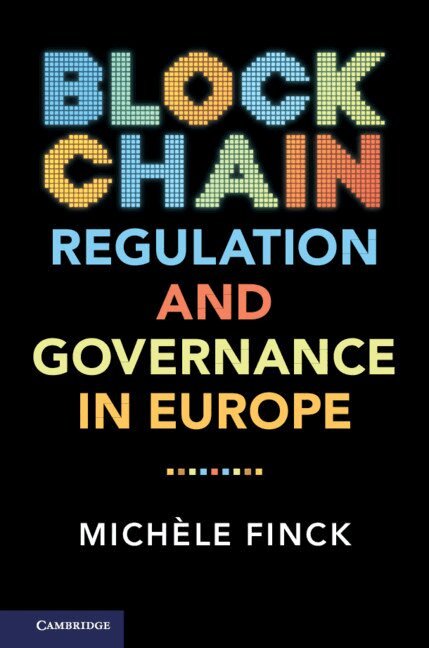
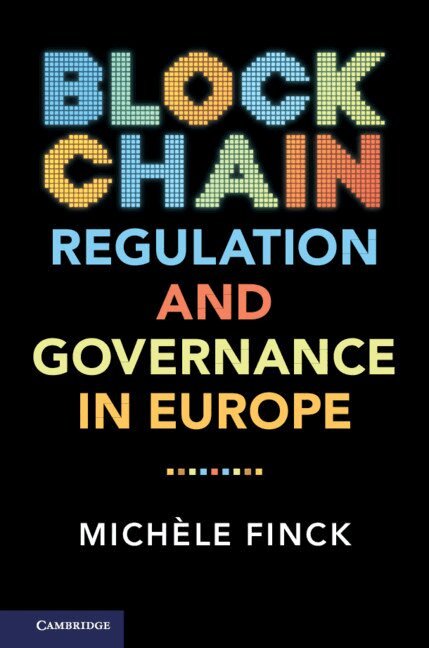
    Nestor M. Davidson joined the Fordham University School of Law in 2011 and was named the Albert A. Walsh Professor of Real Estate, Land Use, and Property Law in 2017. Professor Davidson is an expert in property, urban law, and affordable housing law and policy, and serves as the faculty director of the law school's Urban Law Center. Professor Davidson practiced with the firm of Latham and Watkins, focusing on commercial real estate and affordable housing, and served as Deputy General Counsel at the US Department of Housing and Urban Development. Michèle Finck is a Senior Research Fellow at the Max Planck Institute for Innovation and Competition and a Lecturer in European Union law at the University of Oxford. She previously worked at the London School of Economics and holds a doctorate in law from the University of Oxford. Dr Finck researches the interaction between regulation and technology and has particular expertise on the sharing economy, distributed ledger technology and (big) data. She is currently writing a monograph on Blockchain Regulation and Governance in Europe (Cambridge, forthcoming). John J. Infranca is an associate professor of Law at Suffolk University Law School. Infranca previously worked as a legal fellow at the Furman Center for Real Estate and Urban Policy, where he focused on land use regulation and affordable housing policy. Professor Infranca's scholarship focuses on land use regulation, affordable housing policy, property theory, and law and religion. His current research projects examine land use and other regulatory barriers to the development of new forms of housing, the implications of the sharing economy for urban law and policy, and how autonomous vehicles will change land use policy and urban planning.

    Recensioner i media

    'This book compiles the work of highly prominent thinkers on the sharing economy. It leaves no stone unturned and includes a comprehensive discussion of the most relevant theoretical and empirical debates on a phenomenon that has reshaped social, economic, and labor relationships. This is not only The Cambridge Handbook of the Law of the Sharing Economy, it is 'the' book on the sharing economy.' Sofia Ranchordás, Chair of European and Comparative Public Law, University of Groningen, The Netherlands

    Innehållsförteckning

    • Introduction; Part I. Understanding the Sharing Economy and Its Regulatory Landscape: Section 1. What is the Sharing Economy and Why is it Important?: 1. Uberization meets organizational theory: platform capitalism and the rebirth of the putting-out system Aurélien Acquier; 2. Trust in the sharing economy: platform-mediated peer trust Mareike Möhlmann and Andrea Geissinger; 3. Scale and the sharing economy Kellen Zale; 4. Sharing economy and social innovation Aurélien Acquier and Valentina Carbone; Section 2. Balancing Regulation and Innovation: 5. Coase and the platform economy Orly Lobel; 6. Taxis, taxis and governance in the vehicle-for-hire industry Matthew D. Mitchell and Christopher Koopman; 7. Competition law (and its limits) in the sharing economy Niamh Dunne; 8. Airbnb usage across New York City neighborhoods: geographic patterns and regulatory implications Peter Coles, Michael Egesdal, Ingrid Gould Ellen, Xiaodi Li and Arun Sundararajani; 9. The novelty of TNC regulation Katrina M. Wyman; Section 3. Framing the Regulatory Response: 10. Pluralism and regulatory responses Erez Aloni; 11. Finding the right 'fit': matching regulations to the shape of the sharing economy Raymond Brescia; 12. Licensing regimes and platform-based businesses Derek McKee; 13. Who decides?: A framework for fitting the co-regulation of sharing economies to the contours of the market Bryant Cannon and Hanna Chung; 14. Urban data and the platform city Stephen R. Miller; Section 4. Who Should Regulate the Sharing Economy, and How?: 15. The place of the sharing economy Nestor M. Davidson and John J. Infranca; 16. The role of the federal government in regulating the sharing economy Sarah Light; 17. Role of state governments in the sharing economy Janice C. Griffith; 18. Local regulation of the sharing economy Daniel E. Rauch; 19. The sharing economy and the EU Michèle Finck; 20. The multi-scalar regulatory challenge of the sharing economy from the perspective of platform cooperativism and the social and solidarity economy Bronwen Morgan; Part II. Addressing Specific Regulatory Concerns: Section 5. Employment and Labor Law: 21. Employee classification in the United States Elizabeth Tippet; 22. Fissuring, data-driven governance, and platform economy labor standards Brishen Rogers; 23. A critical examination of a third employment category for on-demand work (in comparative perspective) Miriam A. Cherry and Antonio Aloisi; 24. Two models for a fairer sharing economy Mark Graham and Mohammad Amir Anwar; Section 6. Tax Law: 25. Tax issues in the sharing economy: implications for workers Shu-Yi Oei and Diane M. Ring; 26. Tax compliance and the sharing economy Manoj Viswanathan; 27. Taxation of the sharing economy in the European Union Katerini Pantazatou; 28. Taxation and innovation: the sharing economy as a case study Jordan Barry; Section 7. Consumer Protection and Privacy Law: 29. Implications for cyber law Rebecca Tushnet; 30. Platform architecture and the brand: an opportunity for trademark modernization Leah Chan Grinvald and Sonia K. Katayal; 31. The 'matching' platform and mandatory agency law R. Koolhoven; 32. Protecting the weaker party in the platform economy Guido Smorto; Section 8. Anti-Discrimination Law: 33. The platform identity crisis: responsibility, discrimination, and a functional approach to intermediaries Charlotte Garden and Nancy Leong; 34. Intimacy and equality in the sharing economy Naomi Schoenbaum; 35. Discrimination and short-term rentals Jamila Jefferson-Jones; 36. The sharing economy and EU anti-discrimination law Nicola Countouris and Luca Ratti.