• Fri frakt över 249 kr
  • •
  • Snabba leveranser
  • •
  • Billiga böcker
Kundservice

Du är på sajten för privatpersoner.

Företag, bibliotek eller offentlig verksamhet?

Du handlar på classic.bokus.com, där alla dina funktioner finns intakta.
Till classic.bokus.com
Bokus logotyp. Gå till startsidan.
  • Erbjudanden
  • Nyheter
  • Student
  • Topplistor
  • Barn & ungdom
  • Bokus Play
  • E-böcker
  • Pocketböcker
  • Spel & pussel

Må bättre, för mindre! Upp till 50% rabatt på hälsoböcker

Sidfot

Mina sidor

    Hjälp

    • Kundservice
    • Vanliga frågor och svar
    • Frakt och leverans
    • Retur vid ångerrätt
    • Reklamera vara
    • Betalning
    • Köpvillkor
    • Allmänna villkor
    • Information om webbplatsens tillgänglighet

    Om Bokus

    • Om oss
    • Pressrum
    • För studenter
    • För företag
    • För bibliotek och offentlig verksamhet
    • För leverantörer
    • Hållbarhet

    Populärt

    • Aktuella erbjudanden
    • Presentkort
    • Studentlitteratur
    • Nya böcker
    • Topplistor
    • Signerade böcker
    • Engelska böcker

    Inspiration

    • Boktips
    • BookTok
    • Populära bokserier
    • Barnbokskaraktärer
    • Populära författare
    Logotyp för Bokus
    Följ oss på Facebook (extern länk)Följ oss på Instagram (extern länk)Följ oss på YouTube (extern länk)Följ oss på TikTok (extern länk)
    bokus @ CookiesAnpassa cookiesIntegritetspolicyKöpvillkor
    Till Citymail hemsida (extern länk)Till Budbee hemsida (extern länk)Till Postnord hemsida (extern länk)Till Schenker hemsida (extern länk)Till Early Bird hemsida (extern länk)Till Walleys hemsida (extern länk)
    1. Skönlitteratur
    2. Litteraturvetenskap

    Rhetoric, Medicine, and the Woman Writer, 1600-1700

    AvLyn Bennett

    Inbunden, Engelska, 2018

    1 535 kr

    Beställningsvara. Skickas inom 10-15 vardagar. Fri frakt över 249 kr.

    Fler format och utgåvor

    Häftad

    533 kr

    Beskrivning

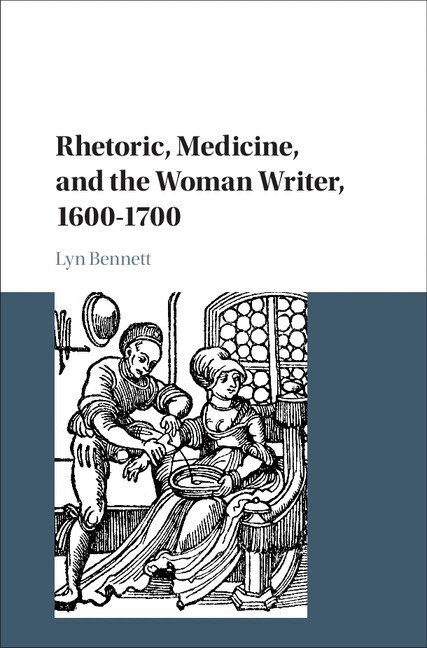
    How did physicians come to dominate the medical profession? Lyn Bennett challenges the seemingly self-evident belief that scientific competence accounts for physicians' dominance. Instead, she argues that the whole enterprise of learned medicine was, in large measure, facilitated by an intensely classical education that included extensive training in rhetoric, and that this rhetorical training is ultimately responsible for the achievement of professional dominance. Bennett examines previously unexplored connections among writers and genres as well as competing livelihoods and classes. Engaging the histories of rhetoric, medicine, literature, and culture throughout, she goes on to focus specifically on the work of women who professed as well as practiced medicine. Pointing to some of the ways women's writing shapes realities of body, mind, and spirit as it negotiates social, cultural, and professional ideologies of gender, this book offers an important corrective to some long-held beliefs about women's role in early modern discourse.

    Produktinformation

    • Utgivningsdatum:2018-02-08
    • Mått:157 x 235 x 16 mm
    • Vikt:440 g
    • Format:Inbunden
    • Språk:Engelska
    • Antal sidor:208
    • Förlag:Cambridge University Press
    • ISBN:9781108425193

    Utforska kategorier

    • Litteraturvetenskap inom Skönlitteratur

    Mer om författaren

    Lyn Bennett is an associate professor of English at Dalhousie University, Nova Scotia. Her interest in rhetoric, writing, and medicine informs her teaching as well as her research. She is the author of Women Writing of Divinest Things: Rhetoric in the Poetry of Pembroke, Wroth, and Lanyer (2004) and her work also appears in publications as diverse as Christianity and Literature, Genre, and the Journal of Medical Humanities.

    Recensioner i media

    'Lyn Bennett's … detailed new book offers an original perspective on the development of the medical profession in the seventeenth century.' Aurélie Griffin, Modern Language Review

    Innehållsförteckning

    • Introduction. 'Their plausible rhetoric'; Part I. Rhetoric and Medicine: 1. 'Another mans profession': physicians and clerics; 2. 'Onely the learned': physicians, empirics, and women; 3. 'An eloquent tongue': physicians and patients; Part II. The Woman Writer: 4. 'Publishing those truthes': women and affliction; 5. 'Hard words and rhetoricall phrases': women and learned medicine; 6. 'A bare physician stuft with words': women and domestic healing.