• Fri frakt över 249 kr
  • •
  • Snabba leveranser
  • •
  • Billiga böcker
Kundservice

Du är på sajten för privatpersoner.

Företag, bibliotek eller offentlig verksamhet?

Du handlar på classic.bokus.com, där alla dina funktioner finns intakta.
Till classic.bokus.com
Bokus logotyp. Gå till startsidan.
  • Erbjudanden
  • Student
  • Topplistor
  • Barn & ungdom
  • Bokus Play
  • E-böcker
  • Ljudböcker
  • Pocketböcker
  • Spel och pussel

5% studentrabatt – använd koden KURSBOK27 →

Sidfot

Mina sidor

    Hjälp

    • Kundservice
    • Vanliga frågor och svar
    • Frakt och leverans
    • Retur vid ångerrätt
    • Reklamera vara
    • Betalning
    • Köpvillkor
    • Allmänna villkor
    • Information om webbplatsens tillgänglighet

    Om Bokus

    • Om oss
    • Pressrum
    • För studenter
    • För företag
    • För bibliotek och offentlig verksamhet
    • För leverantörer
    • Hållbarhet

    Populärt

    • Aktuella erbjudanden
    • Presentkort
    • Studentlitteratur
    • Nya böcker
    • Topplistor
    • Signerade böcker
    • Engelska böcker

    Inspiration

    • Boktips
    • BookTok
    • Barnbokskaraktärer
    • Populära författare
    Logotyp för Bokus
    Följ oss på Facebook (extern länk)Följ oss på Instagram (extern länk)Följ oss på YouTube (extern länk)Följ oss på TikTok (extern länk)
    bokus @ CookiesAnpassa cookiesIntegritetspolicyKöpvillkor
    Till Citymail hemsida (extern länk)Till Budbee hemsida (extern länk)Till Postnord hemsida (extern länk)Till Schenker hemsida (extern länk)Till Early Bird hemsida (extern länk)Till Walleys hemsida (extern länk)
    1. Språk och ordböcker
    2. Språkvetenskap och lingvistik

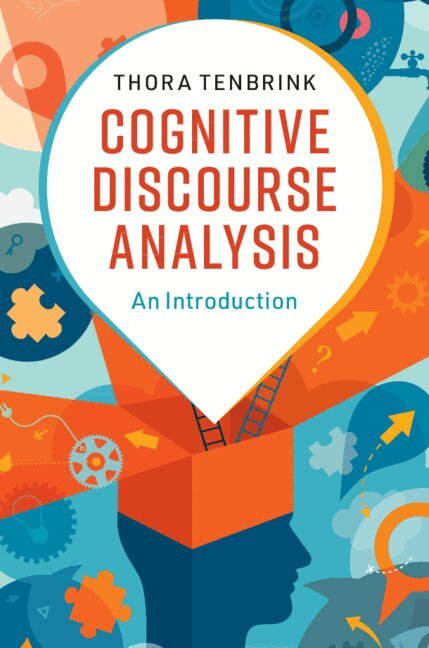
    Cognitive Discourse Analysis

    An Introduction

    AvThora Tenbrink

    Häftad, Engelska, 2020

    391 kr

    Beställningsvara. Skickas inom 7-10 vardagar. Fri frakt över 249 kr.

    Fler format och utgåvor

    Inbunden

    1 444 kr

    E-bok

    472 kr

    E-bok

    472 kr

    Beskrivning

    Analysing language data systematically and looking closely at how people formulate their thoughts can reveal astonishing insights about the human mind. Without presupposing specific subject knowledge, this book gently introduces its readers to theoretical insights as well as practical principles for systematic linguistic analysis from a cognitive perspective. Drawing on Thora Tenbrink's twenty years' experience in both linguistics and cognitive science, this book offers theoretical guidance and practical advice for doing cognitive discourse analysis. It covers areas of analysis as diverse as attention, perspective, granularity, certainty, inference, transformation, communication, and cognitive strategies, using inspiring examples from many different projects. Simple techniques and tools are used to allow readers new to the subject easy ways to apply the methods, without the need for complex technologies, whilst the cross-disciplinary approach can be applied to a diverse range of research purposes and contexts in which language and thought play a role.

    Produktinformation

    • Utgivningsdatum:2020-02-13
    • Mått:152 x 228 x 15 mm
    • Vikt:420 g
    • Format:Häftad
    • Språk:Engelska
    • Antal sidor:280
    • Förlag:Cambridge University Press
    • ISBN:9781108436847

    Utforska kategorier

    • Språkvetenskap och lingvistik inom Språk och ordböcker

    Mer om författaren

    Thora Tenbrink is a Reader in Cognitive Linguistics at Bangor University. Her previous books include Space, Time, and the Use of Language (2007) and three co-edited books on spatial language and cognition.

    Recensioner i media

    'This well-presented, well-organized research treatise on the delicate relationship between language and thought zeros in on how linguistic markers in discourse, both oral and written, offer a credible insight into the pathways of cognition … The book is excellent …' K. Liu, Choice

    Innehållsförteckning

    • Introduction; 1. Background and scope; 2. Language as a representation of thought; 3. Analysis resources; 4. Identifying cognitive orientation; 5. Identifying cognitive depth; 6. Identifying cognitive constructiveness; 7. Using language to convey thoughts; 8. CODA procedures; 9. Beyond CODA.