• Fri frakt över 249 kr
  • •
  • Snabba leveranser
  • •
  • Billiga böcker
Kundservice

Du är på sajten för privatpersoner.

Företag, bibliotek eller offentlig verksamhet?

Du handlar på classic.bokus.com, där alla dina funktioner finns intakta.
Till classic.bokus.com
Bokus logotyp. Gå till startsidan.
  • Erbjudanden
  • Nyheter
  • Student
  • Topplistor
  • Barn & ungdom
  • Bokus Play
  • E-böcker
  • Pocketböcker
  • Spel & pussel

Må bättre, för mindre! Upp till 50% rabatt på hälsoböcker

Sidfot

Mina sidor

    Hjälp

    • Kundservice
    • Vanliga frågor och svar
    • Frakt och leverans
    • Retur vid ångerrätt
    • Reklamera vara
    • Betalning
    • Köpvillkor
    • Allmänna villkor
    • Information om webbplatsens tillgänglighet

    Om Bokus

    • Om oss
    • Pressrum
    • För studenter
    • För företag
    • För bibliotek och offentlig verksamhet
    • För leverantörer
    • Hållbarhet

    Populärt

    • Aktuella erbjudanden
    • Presentkort
    • Studentlitteratur
    • Nya böcker
    • Topplistor
    • Signerade böcker
    • Engelska böcker

    Inspiration

    • Boktips
    • BookTok
    • Populära bokserier
    • Barnbokskaraktärer
    • Populära författare
    Logotyp för Bokus
    Följ oss på Facebook (extern länk)Följ oss på Instagram (extern länk)Följ oss på YouTube (extern länk)Följ oss på TikTok (extern länk)
    bokus @ CookiesAnpassa cookiesIntegritetspolicyKöpvillkor
    Till Citymail hemsida (extern länk)Till Budbee hemsida (extern länk)Till Postnord hemsida (extern länk)Till Schenker hemsida (extern länk)Till Early Bird hemsida (extern länk)Till Walleys hemsida (extern länk)
    1. Historia och arkeologi
    2. Historia

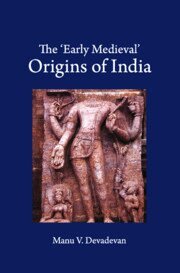
    The 'Early Medieval' Origins of India

    AvManu V. Devadevan

    Inbunden, Engelska, 2020

    1 098 kr

    Beställningsvara. Skickas inom 10-15 vardagar. Fri frakt över 249 kr.

    Fler format och utgåvor

    Häftad

    510 kr

    Beskrivning

    India is generally regarded as a civilization with a set of intrinsic attributes that emerged in the age of the Vedas or, better still, in the Harappan times. In recent decades, historical studies have moved away from rigid perspectives of singularity in origin and expansion; the emphasis now is on pluralities and long-term processes spanning centuries and millennia. There is also an influential school of thought which rejects antiquity claims such as these and holds that India is a construct of the colonial and nationalist imagination. In his radical reinterpretation of India's past, Manu V. Devadevan moves away from these reifying assessments to examine the evolution of institutions, ideas and identities that are characterized, typically, as Indian. In lieu of endorsing their Indianness, he traces their emergence to specific conditions that developed in India between 600 and 1200 CE, a period which historians now call the 'early medieval'.

    Produktinformation

    • Utgivningsdatum:2020-12-03
    • Mått:161 x 236 x 39 mm
    • Vikt:820 g
    • Format:Inbunden
    • Språk:Engelska
    • Antal sidor:524
    • Förlag:Cambridge University Press
    • ISBN:9781108494571

    Utforska kategorier

    • Historia inom Historia och arkeologi

    Mer om författaren

    Manu V. Devadevan is Assistant Professor of History at the School of Humanities and Social Sciences at the Indian Institute of Technology, Mandi. He specializes in religion and literary practices in South Asia, politics and economic processes of South Asia, and South Asian epigraphy. His most recent publication is an edited volume titled, Clio and Her Descendants: Essays for Kesavan Veluthat (2018).

    Recensioner i media

    '… Devadevan uses a truly impressive range of examples from politics, religion, philosophy, architecture, literature, and economy to support his thesis. … With an approach indebted to the work of the Keralan historian and epigraphist Kesavan Veluthat and a sweeping command of his material, Devadevan has produced a work that deserves to be read and discussed…' Brian Collins, Religon

    Innehållsförteckning

    • List of tables; List of maps and figures; Acknowledgements; Introduction; Part I. Institutions: 1. State formation and its structural foundations; 2. From the cult of chivalry to the cult of personality: the seventh-century transformation in Pallava statecraft; 3. Changes in land relations and the changing fortunes of the Cēra state; 4. Temple and territory in the Puri Jagannātha imaginaire; Part II. Ideas: 5. Svayamòbuddha's predilections: the epistemologies of time and knowledge; 6. Bhāravi and the creation of a literary paradigm; 7. Knowing and being: the semantic universe of the Kūdòiyātòtòamò theatre; 8. The invention of zero and its intellectual legacy; Part III. Identities: 9. The evolution of vernacular languages: a case study of Kannada; 10. Religious identities in times of Indumaulòi's grief; 11. Caste, gender and the landed patriarchy; 12. The making of territorial self consciousness (with particular reference to Kaliṅga); Bibliography; Index.