• Fri frakt över 249 kr
  • •
  • Snabba leveranser
  • •
  • Billiga böcker
Kundservice

Du är på sajten för privatpersoner.

Företag, bibliotek eller offentlig verksamhet?

Du handlar på classic.bokus.com, där alla dina funktioner finns intakta.
Till classic.bokus.com
Bokus logotyp. Gå till startsidan.
  • Erbjudanden
  • Nyheter
  • Student
  • Topplistor
  • Barn & ungdom
  • Bokus Play
  • E-böcker
  • Pocketböcker
  • Spel & pussel

10% rabatt på allt med kod: NYSTART10 →

Sidfot

Mina sidor

    Hjälp

    • Kundservice
    • Vanliga frågor och svar
    • Frakt och leverans
    • Retur vid ångerrätt
    • Reklamera vara
    • Betalning
    • Köpvillkor
    • Allmänna villkor
    • Information om webbplatsens tillgänglighet

    Om Bokus

    • Om oss
    • Pressrum
    • För studenter
    • För företag
    • För bibliotek och offentlig verksamhet
    • För leverantörer
    • Hållbarhet

    Populärt

    • Aktuella erbjudanden
    • Presentkort
    • Studentlitteratur
    • Nya böcker
    • Topplistor
    • Signerade böcker
    • Engelska böcker

    Inspiration

    • Boktips
    • BookTok
    • Populära bokserier
    • Barnbokskaraktärer
    • Populära författare
    Logotyp för Bokus
    Följ oss på Facebook (extern länk)Följ oss på Instagram (extern länk)Följ oss på YouTube (extern länk)Följ oss på TikTok (extern länk)
    bokus @ CookiesAnpassa cookiesIntegritetspolicyKöpvillkor
    Till Citymail hemsida (extern länk)Till Budbee hemsida (extern länk)Till Postnord hemsida (extern länk)Till Schenker hemsida (extern länk)Till Early Bird hemsida (extern länk)Till Walleys hemsida (extern länk)
    1. Historia och arkeologi
    2. Arkeologi

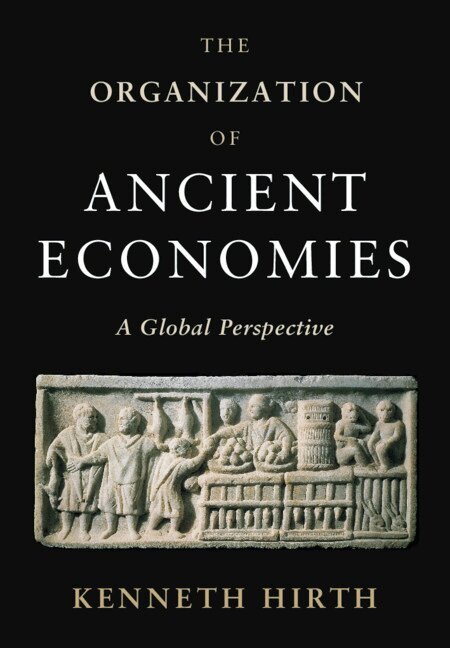
    The Organization of Ancient Economies

    A Global Perspective

    AvKenneth Hirth

    Inbunden, Engelska, 2020

    494 kr

    Beställningsvara. Skickas inom 10-15 vardagar. Fri frakt över 249 kr.

    Beskrivning

    In this book, Kenneth Hirth provides a comparative view of the organization of ancient and premodern society and economy. Hirth establishes that humans adapted to their environments, not as individuals but in the social groups where they lived and worked out the details of their livelihoods. He explores the variation in economic organization used by simple and complex societies to procure, produce, and distribute resources required by both individual households and the social and political institutions that they supported. Drawing on a wealth of archaeological, historic, and ethnographic information, he develops and applies an analytical framework for studying ancient societies that range from the hunting and gathering groups of native North America, to the large state societies of both the New and Old Worlds. Hirth demonstrates that despite differences in transportation and communication technologies, the economic organization of ancient and modern societies are not as different as we sometimes think.

    Produktinformation

    • Utgivningsdatum:2020-09-17
    • Mått:185 x 260 x 26 mm
    • Vikt:1 150 g
    • Format:Inbunden
    • Språk:Engelska
    • Antal sidor:462
    • Förlag:Cambridge University Press
    • ISBN:9781108494700

    Utforska kategorier

    • Arkeologi inom Historia och arkeologi

    Mer om författaren

    Kenneth Hirth is Professor of Anthropology at Pennsylvania State University. An economic anthropologist who has conducted archaeological research in Mexico, Honduras, Peru, and Turkey that has spanned 12,000 years of human development, he has authored, edited, and co-authored nineteen books on different aspects of Mesoamerican society and economy. Hirth is currently a Senior Fellow at Dumbarton Oaks Library and Research Collections in Washington, DC. He has received National Geographic Society's Career Achievement Award in Archaeology (2000) and the Excellence in Lithic Studies Award from the Society of American Archaeology (1998).

    Innehållsförteckning

    • 1. The structure of ancient economy; 2. The domestic economy; 3. The community of households: informal; 4. From households to palaces: leaders, chiefs, and their households; 5. Financing formal institutions: systems of direct production; 6. Taxation, rent, and patronage: mobilization of institutional resources; 7. The role of merchants and trade in ancient society; 8. The nature and origin of independent craft production; 9. On markets and marketplaces; 10. On first principles of the ancient economy: a concluding discussion.