• Fri frakt över 249 kr
  • •
  • Snabba leveranser
  • •
  • Billiga böcker
Kundservice

Du är på sajten för privatpersoner.

Företag, bibliotek eller offentlig verksamhet?

Du handlar på classic.bokus.com, där alla dina funktioner finns intakta.
Till classic.bokus.com
Bokus logotyp. Gå till startsidan.
  • Erbjudanden
  • Nyheter
  • Student
  • Topplistor
  • Barn & ungdom
  • Bokus Play
  • E-böcker
  • Pocketböcker
  • Spel & pussel

10% rabatt på allt med kod: NYSTART10 →

Sidfot

Mina sidor

    Hjälp

    • Kundservice
    • Vanliga frågor och svar
    • Frakt och leverans
    • Retur vid ångerrätt
    • Reklamera vara
    • Betalning
    • Köpvillkor
    • Allmänna villkor
    • Information om webbplatsens tillgänglighet

    Om Bokus

    • Om oss
    • Pressrum
    • För studenter
    • För företag
    • För bibliotek och offentlig verksamhet
    • För leverantörer
    • Hållbarhet

    Populärt

    • Aktuella erbjudanden
    • Presentkort
    • Studentlitteratur
    • Nya böcker
    • Topplistor
    • Signerade böcker
    • Engelska böcker

    Inspiration

    • Boktips
    • BookTok
    • Populära bokserier
    • Barnbokskaraktärer
    • Populära författare
    Logotyp för Bokus
    Följ oss på Facebook (extern länk)Följ oss på Instagram (extern länk)Följ oss på YouTube (extern länk)Följ oss på TikTok (extern länk)
    bokus @ CookiesAnpassa cookiesIntegritetspolicyKöpvillkor
    Till Citymail hemsida (extern länk)Till Budbee hemsida (extern länk)Till Postnord hemsida (extern länk)Till Schenker hemsida (extern länk)Till Early Bird hemsida (extern länk)Till Walleys hemsida (extern länk)
    1. Historia och arkeologi
    2. Historia
    3. Mellanösterns historia

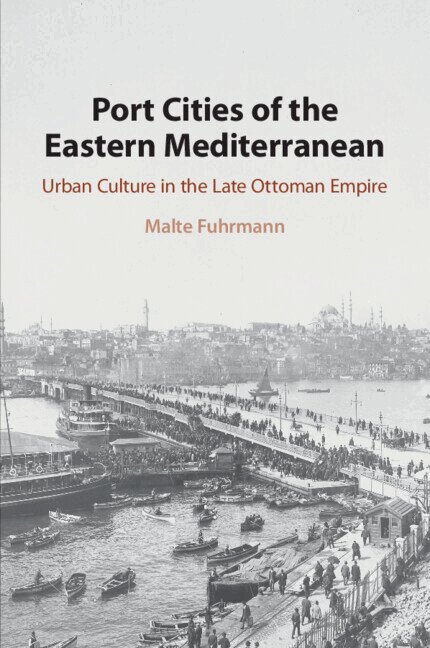
    Port Cities of the Eastern Mediterranean

    Urban Culture in the Late Ottoman Empire

    AvMalte Fuhrmann

    Häftad, Engelska, 2022

    463 kr

    Beställningsvara. Skickas inom 10-15 vardagar. Fri frakt över 249 kr.

    Fler format och utgåvor

    Inbunden

    1 209 kr

    E-bok

    537 kr

    E-bok

    537 kr

    Beskrivning

    Eastern Mediterranean port cities, such as Constantinople, Smyrna, and Salonica, have long been sites of fascination. Known for their vibrant and diverse populations, the dynamism of their economic and cultural exchanges, and their form of relatively peaceful co-existence in a turbulent age, many would label them as models of cosmopolitanism. In this study, Malte Fuhrmann examines changes in the histories of space, consumption, and identities in the nineteenth and early twentieth century while the Mediterranean became a zone of influence for European powers. Giving voice to the port cities' forgotten inhabitants, Fuhrmann explores how their urban populations adapted to European practices, how entertainment became a marker of a Europeanized way of life, and consuming beer celebrated innovation, cosmopolitanism and mixed gender sociability. At the same time, these adaptations to a European way of life were modified according to local needs, as was the case for the new quays, streets, and buildings. Revisiting leisure practises as well as the formation of class, gender, and national identities, Fuhrmann offers an alternative view on the relationship between the Islamic World and Europe.

    Produktinformation

    • Utgivningsdatum:2022-06-30
    • Mått:152 x 229 x 25 mm
    • Vikt:649 g
    • Format:Häftad
    • Språk:Engelska
    • Antal sidor:490
    • Förlag:Cambridge University Press
    • ISBN:9781108708623

    Utforska kategorier

    • Mellanösterns historia inom Historia och arkeologi

    Mer om författaren

    Malte Fuhrmann is a research fellow at the Leibniz-Zentrum Moderner Orient (ZMO). Having spent many years doing research and teaching in Istanbul, he is the author of Imagining a German Orient: Two German Colonies in the Ottoman Empire 1851–1918 (2006, in German) and co-editor of The City in the Ottoman Empire: Migration and the Making of Urban Modernity (2011) with Ulrike Freitag, Nora Lafi, and Florian Riedler.

    Recensioner i media

    'Malte Fuhrmann's richly nuanced and elegantly theorized study explores the late-Ottoman port-cities' sites of cultural exchange and adaptation, ranging from balls and opera to beer halls, cafés and brothels. The complex and fluid interactions revealed force us to rethink the dominant narrative of Westernization and identity-formation in the Eastern Mediterranean.' Benjamin C. Fortna, University of Arizona

    Innehållsförteckning

    • 1. Introduction; 2. Constructing Europe: spatial relations of power in Eastern Mediterranean cities; 3. The city's new pleasures; 4. Identities on the Mediterranean shore: between experiment and restriction; 5. The end of the European dream; 6. Europe and the Eastern Mediterranean revisited.