• Fri frakt över 249 kr
  • •
  • Snabba leveranser
  • •
  • Billiga böcker
Kundservice

Du är på sajten för privatpersoner.

Företag, bibliotek eller offentlig verksamhet?

Du handlar på classic.bokus.com, där alla dina funktioner finns intakta.
Till classic.bokus.com
Bokus logotyp. Gå till startsidan.
  • Erbjudanden
  • Nyheter
  • Student
  • Topplistor
  • Barn & ungdom
  • Bokus Play
  • E-böcker
  • Pocketböcker
  • Spel & pussel

10% rabatt på allt med kod NYSTART10 →

Sidfot

Mina sidor

    Hjälp

    • Kundservice
    • Vanliga frågor och svar
    • Frakt och leverans
    • Retur vid ångerrätt
    • Reklamera vara
    • Betalning
    • Köpvillkor
    • Allmänna villkor
    • Information om webbplatsens tillgänglighet

    Om Bokus

    • Om oss
    • Pressrum
    • För studenter
    • För företag
    • För bibliotek och offentlig verksamhet
    • För leverantörer
    • Hållbarhet

    Populärt

    • Aktuella erbjudanden
    • Presentkort
    • Studentlitteratur
    • Nya böcker
    • Topplistor
    • Signerade böcker
    • Engelska böcker

    Inspiration

    • Boktips
    • BookTok
    • Populära bokserier
    • Barnbokskaraktärer
    • Populära författare
    Logotyp för Bokus
    Följ oss på Facebook (extern länk)Följ oss på Instagram (extern länk)Följ oss på YouTube (extern länk)Följ oss på TikTok (extern länk)
    bokus @ CookiesAnpassa cookiesIntegritetspolicyKöpvillkor
    Till Citymail hemsida (extern länk)Till Budbee hemsida (extern länk)Till Postnord hemsida (extern länk)Till Schenker hemsida (extern länk)Till Early Bird hemsida (extern länk)Till Walleys hemsida (extern länk)
    1. Språk och ordböcker
    2. Språkvetenskap och lingvistik

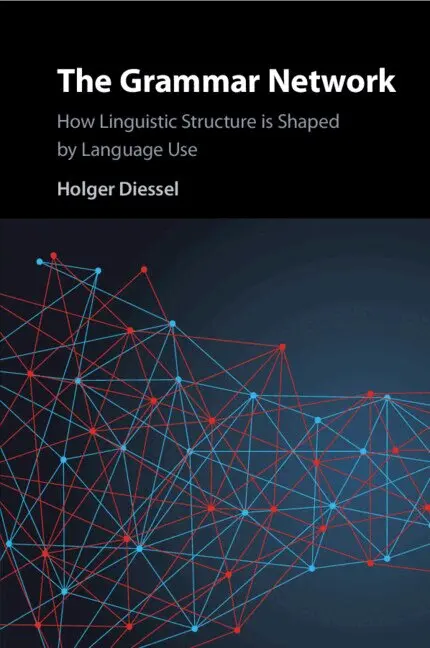
    The Grammar Network

    How Linguistic Structure Is Shaped by Language Use

    AvHolger Diessel

    Häftad, Engelska, 2022

    394 kr

    Beställningsvara. Skickas inom 10-15 vardagar. Fri frakt över 249 kr.

    Fler format och utgåvor

    Inbunden

    1 513 kr

    Beskrivning

    Cognitive linguists and psychologists have often argued that language is best understood as an association network; however while the network view of language has had a significant impact on the study of morphology and lexical semantics, it is only recently that researchers have taken an explicit network approach to the study of syntax. This innovative study presents a dynamic network model of grammar in which all aspects of linguistic structure, including core concepts of syntax (e.g. phrase structure, word classes, grammatical relations), are analyzed in terms of associative connections between different types of linguistic elements. These associations are shaped by domain-general learning processes that are operative in language use and sensitive to frequency of occurrence. Drawing on research from usage-based linguistics and cognitive psychology, the book provides an overview of frequency effects in grammar and analyzes these effects within the framework of a dynamic network model.

    Produktinformation

    • Utgivningsdatum:2022-06-09
    • Mått:152 x 229 x 17 mm
    • Vikt:413 g
    • Format:Häftad
    • Språk:Engelska
    • Antal sidor:308
    • Förlag:Cambridge University Press
    • ISBN:9781108712767

    Utforska kategorier

    • Språkvetenskap och lingvistik inom Språk och ordböcker

    Mer om författaren

    Holger Diessel is Professor of English Linguistics at the Friedrich-Schiller-Universität, Jena, Germany. His publications include two monographs, Demonstrastives: Form, Function and Grammaticalization (1999) and The Acquisition of Complex Sentences (Cambridge, 2004), and more than fifty articles in journals and edited volumes.

    Recensioner i media

    '… well worth reading.' Tore Nesset, Linguistics Issues

    Innehållsförteckning

    • 1. Introduction; Part I. Foundations: 2. Grammar as a network; 3. Cognitive processes and language use; Part II. Signs as Networks: 4. The taxonomic network; 5. Sequential relations; 6. Symbolic relations; Part III. Filler-Slot Relations: 7. Argument structure and linguistic productivity; 8. A dynamic network model of parts of speech; 9. Phrase structure; Part IV. Constructional Relations: 10. Construction families; 11. Encoding asymmetries of grammatical categories; 12. Conclusion.