• Fri frakt över 249 kr
  • •
  • Snabba leveranser
  • •
  • Billiga böcker
Kundservice

Du är på sajten för privatpersoner.

Företag, bibliotek eller offentlig verksamhet?

Du handlar på classic.bokus.com, där alla dina funktioner finns intakta.
Till classic.bokus.com
Bokus logotyp. Gå till startsidan.
  • Erbjudanden
  • Nyheter
  • Student
  • Topplistor
  • Barn & ungdom
  • Bokus Play
  • E-böcker
  • Pocketböcker
  • Spel & pussel

10% rabatt på allt med kod: NYSTART10 →

Sidfot

Mina sidor

    Hjälp

    • Kundservice
    • Vanliga frågor och svar
    • Frakt och leverans
    • Retur vid ångerrätt
    • Reklamera vara
    • Betalning
    • Köpvillkor
    • Allmänna villkor
    • Information om webbplatsens tillgänglighet

    Om Bokus

    • Om oss
    • Pressrum
    • För studenter
    • För företag
    • För bibliotek och offentlig verksamhet
    • För leverantörer
    • Hållbarhet

    Populärt

    • Aktuella erbjudanden
    • Presentkort
    • Studentlitteratur
    • Nya böcker
    • Topplistor
    • Signerade böcker
    • Engelska böcker

    Inspiration

    • Boktips
    • BookTok
    • Populära bokserier
    • Barnbokskaraktärer
    • Populära författare
    Logotyp för Bokus
    Följ oss på Facebook (extern länk)Följ oss på Instagram (extern länk)Följ oss på YouTube (extern länk)Följ oss på TikTok (extern länk)
    bokus @ CookiesAnpassa cookiesIntegritetspolicyKöpvillkor
    Till Citymail hemsida (extern länk)Till Budbee hemsida (extern länk)Till Postnord hemsida (extern länk)Till Schenker hemsida (extern länk)Till Early Bird hemsida (extern länk)Till Walleys hemsida (extern länk)
    1. Psykologi och pedagogik
    2. Psykologi
    3. Personlig utveckling

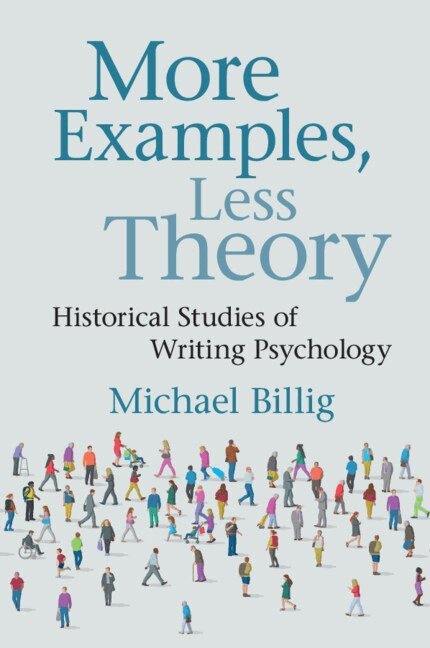
    More Examples, Less Theory

    Historical Studies of Writing Psychology

    AvMichael Billig

    Häftad, Engelska, 2019

    368 kr

    Beställningsvara. Skickas inom 10-15 vardagar. Fri frakt över 249 kr.

    Fler format och utgåvor

    Inbunden

    1 594 kr

    E-bok

    445 kr

    Beskrivning

    In his new book, Michael Billig uses psychology's past to argue that nowadays, when we write about the mind, we should use more examples and less theory. He provides a series of historical studies, analysing how key psychological writers used examples. Billig offers new insights about famous analysts of the mind, such as Locke, James, Freud, Tajfel and Lewin. He also champions unfairly forgotten figures, like the Earl of Shaftesbury and the eccentric Abraham Tucker. There is a cautionary chapter on Lacan, warning what can happen when examples are ignored. Marie Jahoda is praised as the ultimate example: a psychologist from the twentieth century with a social and rhetorical imagination fit for the twenty-first. More Examples, Less Theory is an easy-to-read book that will inform and entertain academics and their students. It will particularly appeal to those who enjoy the details of examples rather than the simplifications of big theory.

    Produktinformation

    • Utgivningsdatum:2019-10-03
    • Mått:152 x 228 x 16 mm
    • Vikt:430 g
    • Format:Häftad
    • Språk:Engelska
    • Antal sidor:292
    • Förlag:Cambridge University Press
    • ISBN:9781108736022

    Utforska kategorier

    • Personlig utveckling inom Psykologi och pedagogik

    Mer om författaren

    Michael Billig is Emeritus Professor of Social Sciences at Loughborough University. His previous books include Arguing and Thinking (Cambridge, 1987), Freudian Repression (Cambridge, 1999) and Learn to Write Badly (Cambridge, 2013). He received the Distinguished Contribution to Social Psychology Award from the British Psychological Society in 2010.

    Recensioner i media

    'In this highly readable work, Michael Billig makes a compelling argument that good examples do far more to advance and enliven theory than fancy jargon ever could. Students and seasoned writers of psychology will find inspiration in his engaging investigation into some of the most effective communicators in psychology's past.' Alexandra Rutherford, York University, Toronto

    Innehållsförteckning

    • 1. Introduction; 2. Locke and Shaftesbury: foster father and foster son; 3. Tucker and James: in the same stream of thought; 4. Freud: writing to reveal and conceal himself; 5. Lacan: an ego in pursuit of the ego; 6. Lewin: is there nothing as practical as a good example?; 7. Tajfel and Bernstein: the limits of theory; 8. Jahoda: the ultimate example; 9. Concluding remarks.