• Fri frakt över 249 kr
  • •
  • Snabba leveranser
  • •
  • Billiga böcker
Kundservice

Du är på sajten för privatpersoner.

Företag, bibliotek eller offentlig verksamhet?

Du handlar på classic.bokus.com, där alla dina funktioner finns intakta.
Till classic.bokus.com
Bokus logotyp. Gå till startsidan.
  • Erbjudanden
  • Nyheter
  • Student
  • Topplistor
  • Barn & ungdom
  • Bokus Play
  • E-böcker
  • Pocketböcker
  • Spel & pussel

Må bättre, för mindre! Upp till 50% rabatt på hälsoböcker

Sidfot

Mina sidor

    Hjälp

    • Kundservice
    • Vanliga frågor och svar
    • Frakt och leverans
    • Retur vid ångerrätt
    • Reklamera vara
    • Betalning
    • Köpvillkor
    • Allmänna villkor
    • Information om webbplatsens tillgänglighet

    Om Bokus

    • Om oss
    • Pressrum
    • För studenter
    • För företag
    • För bibliotek och offentlig verksamhet
    • För leverantörer
    • Hållbarhet

    Populärt

    • Aktuella erbjudanden
    • Presentkort
    • Studentlitteratur
    • Nya böcker
    • Topplistor
    • Signerade böcker
    • Engelska böcker

    Inspiration

    • Boktips
    • BookTok
    • Populära bokserier
    • Barnbokskaraktärer
    • Populära författare
    Logotyp för Bokus
    Följ oss på Facebook (extern länk)Följ oss på Instagram (extern länk)Följ oss på YouTube (extern länk)Följ oss på TikTok (extern länk)
    bokus @ CookiesAnpassa cookiesIntegritetspolicyKöpvillkor
    Till Citymail hemsida (extern länk)Till Budbee hemsida (extern länk)Till Postnord hemsida (extern länk)Till Schenker hemsida (extern länk)Till Early Bird hemsida (extern länk)Till Walleys hemsida (extern länk)
    1. Skönlitteratur
    2. Litteraturvetenskap
    3. Litteraturvetenskap

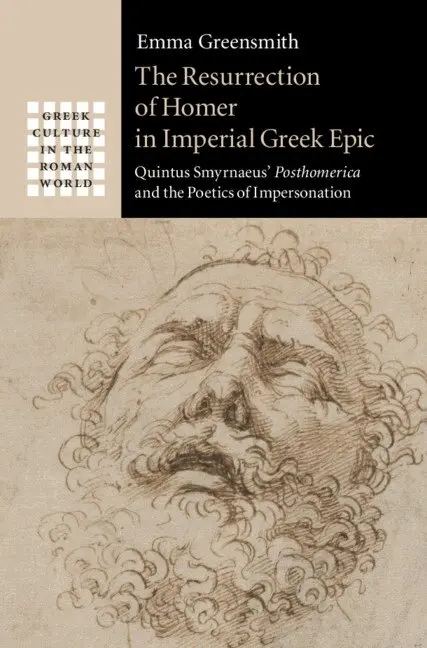
    The Resurrection of Homer in Imperial Greek Epic

    Quintus Smyrnaeus' Posthomerica and the Poetics of Impersonation

    AvEmma Greensmith

    Inbunden, Engelska, 2020

    Del i serien Greek Culture in the Roman World

    2 121 kr

    Beställningsvara. Skickas inom 10-15 vardagar. Fri frakt över 249 kr.

    Fler format och utgåvor

    Häftad

    625 kr

    Beskrivning

    This book offers a radically new reading of Quintus' Posthomerica, the first account to combine a literary and cultural-historical understanding of what is the most important Greek epic written at the height of the Roman Empire. In Emma Greensmith's ground-breaking analysis, Quintus emerges as a key poet in the history of epic and of Homeric reception. Writing as if he is Homer himself, and occupying the space between the Iliad and the Odyssey, Quintus constructs a new 'poetics of the interval'. At all levels, from its philology to its plotting, the Posthomerica manipulates the language of affiliation, succession and repetition not just to articulate its own position within the inherited epic tradition but also to contribute to the literary and identity politics of imperial society. This book changes how we understand the role of epic and Homer in Greco-Roman culture - and completely re-evaluates Quintus' status as a poet.

    Produktinformation

    • Utgivningsdatum:2020-10-01
    • Mått:235 x 160 x 30 mm
    • Vikt:730 g
    • Format:Inbunden
    • Språk:Engelska
    • Serie:Greek Culture in the Roman World
    • Antal sidor:402
    • Förlag:Cambridge University Press
    • ISBN:9781108830331

    Utforska kategorier

    • Litteraturvetenskap inom Skönlitteratur

    Mer om författaren

    Emma Greensmith is Associate Professor of Classical Languages and Literature at St John's College, Oxford. She specialises in imperial Greek literature. She previously held a Research Fellowship at Jesus College, Cambridge, and a Visiting Assistant Professorship at Colgate University, New York. She was a member of the AHRC-funded collaborative project 'Imperial Greek Epic: A Cultural History'.

    Innehållsförteckning

    • Preface; List of illustrations; Acknowledgements; Beginning again (introduction): the poetics of impersonation; Part I. Quintus as Homer: Illusion and Imitation: 1. Enlarging the space: imperial doubleness, fixity, expansion; 2. Writing homer: language, composition and style; Part II. Quintus as Quintus: Antagonism and Assimilation: 3. When homer quotes callimachus: the proem (not) in the middle; 4. Selective memory and iliadic revision; 5. Prodigal poetics: filiation and succession; 6. Temporality and the homeric not yet; Bibliography.