• Fri frakt över 249 kr
  • •
  • Snabba leveranser
  • •
  • Billiga böcker
Kundservice

Du är på sajten för privatpersoner.

Företag, bibliotek eller offentlig verksamhet?

Du handlar på classic.bokus.com, där alla dina funktioner finns intakta.
Till classic.bokus.com
Bokus logotyp. Gå till startsidan.
  • Erbjudanden
  • Nyheter
  • Student
  • Topplistor
  • Barn & ungdom
  • Bokus Play
  • E-böcker
  • Pocketböcker
  • Spel & pussel

10% rabatt på allt med kod: NYSTART10 →

Sidfot

Mina sidor

    Hjälp

    • Kundservice
    • Vanliga frågor och svar
    • Frakt och leverans
    • Retur vid ångerrätt
    • Reklamera vara
    • Betalning
    • Köpvillkor
    • Allmänna villkor
    • Information om webbplatsens tillgänglighet

    Om Bokus

    • Om oss
    • Pressrum
    • För studenter
    • För företag
    • För bibliotek och offentlig verksamhet
    • För leverantörer
    • Hållbarhet

    Populärt

    • Aktuella erbjudanden
    • Presentkort
    • Studentlitteratur
    • Nya böcker
    • Topplistor
    • Signerade böcker
    • Engelska böcker

    Inspiration

    • Boktips
    • BookTok
    • Populära bokserier
    • Barnbokskaraktärer
    • Populära författare
    Logotyp för Bokus
    Följ oss på Facebook (extern länk)Följ oss på Instagram (extern länk)Följ oss på YouTube (extern länk)Följ oss på TikTok (extern länk)
    bokus @ CookiesAnpassa cookiesIntegritetspolicyKöpvillkor
    Till Citymail hemsida (extern länk)Till Budbee hemsida (extern länk)Till Postnord hemsida (extern länk)Till Schenker hemsida (extern länk)Till Early Bird hemsida (extern länk)Till Walleys hemsida (extern länk)
    1. Samhälle och politik
    2. Politik och statsskick
    3. Internationella relationer

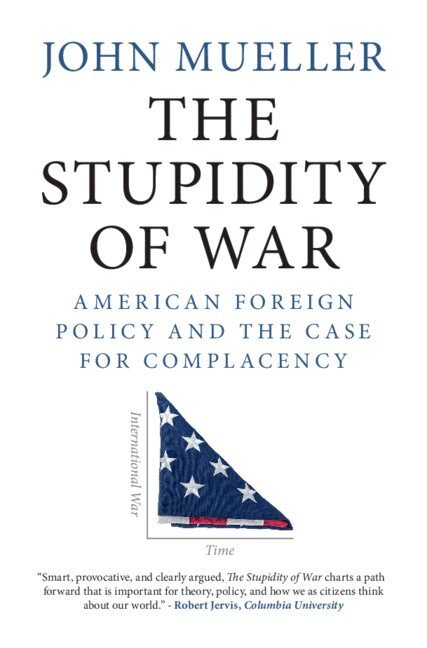
    The Stupidity of War

    American Foreign Policy and the Case for Complacency

    AvJohn Mueller

    Inbunden, Engelska, 2021

    315 kr

    Beställningsvara. Skickas inom 10-15 vardagar. Fri frakt över 249 kr.

    Beskrivning

    It could be said that American foreign policy since 1945 has been one long miscue; most international threats - including during the Cold War - have been substantially exaggerated. The result has been agony and bloviation, unnecessary and costly military interventions that have mostly failed. A policy of complacency and appeasement likely would have worked better. In this highly readable book, John Mueller argues with wisdom and wit rather than ideology and hyperbole that aversion to international war has had considerable consequences. There has seldom been significant danger of major war. Nuclear weapons, international institutions, and America's super power role have been substantially irrelevant; post-Cold War policy has been animated more by vast proclamation and half-vast execution than by the appeals of liberal hegemony; and post-9/11 concerns about international terrorism and nuclear proliferation have been overwrought and often destructive. Meanwhile, threats from Russia, China, Iran, and North Korea, or from cyber technology are limited and manageable. Unlikely to charm Washington, Mueller explains how, when international war is in decline, complacency and appeasement become viable diplomatic devices and a large military is scarcely required.

    Produktinformation

    • Utgivningsdatum:2021-03-04
    • Mått:161 x 235 x 22 mm
    • Vikt:630 g
    • Format:Inbunden
    • Språk:Engelska
    • Antal sidor:342
    • Förlag:Cambridge University Press
    • ISBN:9781108843836

    Utforska kategorier

    • Internationella relationer inom Samhälle och politik

    Mer om författaren

    John Mueller is a political scientist at Ohio State University, Senior Fellow at the Cato Institute, and member of the American Academy of Arts and Sciences.

    Recensioner i media

    'Smart, provocative, and clearly argued, The Stupidity of War charts a path forward that is important for theory, policy, and how we as citizens think about our world.' Robert Jervis, Columbia University

    Innehållsförteckning

    • Part I. Assessing the Threat Record: 1. Korea, massive extrapolation, deterrence, and the crisis circus; 2. Vietnam, containment, and the curious end of the cold war; 3. Military intervention and the continued quest for threat after the cold war; 4. Al-Qaeda and the 9/11 wars in Afghanistan, Iraq, Pakistan; 5. Chasing terrorists around the globe and other post-9/11 ventures; Part II. Evaluating Present Threats: 6. The rise of China, the assertiveness of Russia, and the antics of Iran; 7. Proliferation, terrorism, humanitarian intervention, and other problems; 8. Hedging, risk, arrogance, and the Iraq syndrome.