• Fri frakt över 249 kr
  • •
  • Snabba leveranser
  • •
  • Billiga böcker
Kundservice

Du är på sajten för privatpersoner.

Företag, bibliotek eller offentlig verksamhet?

Du handlar på classic.bokus.com, där alla dina funktioner finns intakta.
Till classic.bokus.com
Bokus logotyp. Gå till startsidan.
  • Erbjudanden
  • Student
  • Topplistor
  • Barn & ungdom
  • Bokus Play
  • E-böcker
  • Ljudböcker
  • Pocketböcker
  • Spel & pussel

10% rabatt på allt med kod NYSTART10 →

Sidfot

Mina sidor

    Hjälp

    • Kundservice
    • Vanliga frågor och svar
    • Frakt och leverans
    • Retur vid ångerrätt
    • Reklamera vara
    • Betalning
    • Köpvillkor
    • Allmänna villkor
    • Information om webbplatsens tillgänglighet

    Om Bokus

    • Om oss
    • Pressrum
    • För studenter
    • För företag
    • För bibliotek och offentlig verksamhet
    • För leverantörer
    • Hållbarhet

    Populärt

    • Aktuella erbjudanden
    • Presentkort
    • Studentlitteratur
    • Nya böcker
    • Topplistor
    • Signerade böcker
    • Engelska böcker

    Inspiration

    • Boktips
    • BookTok
    • Populära bokserier
    • Barnbokskaraktärer
    • Populära författare
    Logotyp för Bokus
    Följ oss på Facebook (extern länk)Följ oss på Instagram (extern länk)Följ oss på YouTube (extern länk)Följ oss på TikTok (extern länk)
    bokus @ CookiesAnpassa cookiesIntegritetspolicyKöpvillkor
    Till Citymail hemsida (extern länk)Till Budbee hemsida (extern länk)Till Postnord hemsida (extern länk)Till Schenker hemsida (extern länk)Till Early Bird hemsida (extern länk)Till Walleys hemsida (extern länk)
    1. Ekonomi och Ledarskap
    2. Ledarskapsböcker

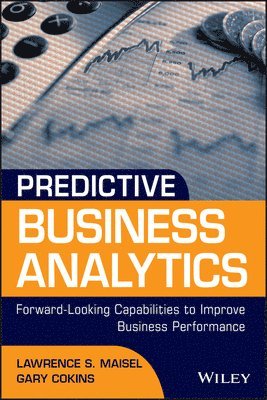
    Predictive Business Analytics

    Forward Looking Capabilities to Improve Business Performance

    AvLawrence Maisel,Gary Cokins

    Inbunden, Engelska, 2013

    Del i serien Wiley and SAS Business Series

    365 kr

    Beställningsvara. Skickas inom 5-8 vardagar. Fri frakt över 249 kr.

    Beskrivning

    Discover the breakthrough tool your company can use to make winning decisions This forward-thinking book addresses the emergence of predictive business analytics, how it can help redefine the way your organization operates, and many of the misconceptions that impede the adoption of this new management capability. Filled with case examples, Predictive Business Analytics defines ways in which specific industries have applied these techniques and tools and how predictive business analytics can complement other financial applications such as budgeting, forecasting, and performance reporting. Examines how predictive business analytics can help your organization understand its various drivers of performance, their relationship to future outcomes, and improve managerial decision-makingLooks at how to develop new insights and understand business performance based on extensive use of data, statistical and quantitative analysis, and explanatory and predictive modelingWritten for senior financial professionals, as well as general and divisional senior managementVisionary and effective, Predictive Business Analytics reveals how you can use your business's skills, technologies, tools, and processes for continuous analysis of past business performance to gain forward-looking insight and drive business decisions and actions.

    Produktinformation

    • Utgivningsdatum:2013-11-19
    • Mått:160 x 231 x 25 mm
    • Vikt:476 g
    • Format:Inbunden
    • Språk:Engelska
    • Serie:Wiley and SAS Business Series
    • Antal sidor:272
    • Förlag:John Wiley & Sons Inc
    • ISBN:9781118175569

    Utforska kategorier

    • Ledarskapsböcker inom Ekonomi och Ledarskap

    Mer om författaren

    LAWRENCE S. MAISEL, President of DecisionVu, specializes in corporate performance management, financial management, and IT value management. He has extensive industry experiences with numerous Global 1000 companies including MetLife, TIAA-CREF, Citigroup, GE, Bristol-Myers, Pfizer, and News Corp/Fox Entertainment. Larry co-created with Drs. Kaplan and Norton the Balanced Scorecard Approach, and co-authored with Drs. Kaplan and Cooper Implementing Activity-Based Cost Management. He is a CPA, holds a BA from NYU and an MBA from Pace University, and was an adjunct professor at Columbia University's Graduate Business School. Contact him at LMaisel@DecisionVu.com. GARY COKINS is the founder of Analytics-Based Performance Management, LLC. He is an internationally recognized expert, speaker, and author in advanced cost management and performance improvement systems. He served fifteen years as a consultant with Deloitte Consulting, KPMG, and Electronic Data Systems (EDS, now part of HP). From 1997 until recently, Gary was in business development with SAS, a leading provider of enterprise performance management and business analytics and intelligence software. He has a degree in operations research from Cornell University and an MBA from Northwestern University Kellogg School of Management. Contact him at gcokins@garycokins.com.

    Innehållsförteckning

    • Preface xvPart One “Why” 1Chapter 1 Why Analytics Will Be the Next Competitive Edge 3Analytics: Just a Skill, or a Profession? 4Business Intelligence versus Analytics versus Decisions 5How Do Executives and Managers Mature in Applying Accepted Methods? 6Fill in the Blanks: Which X Is Most Likely to Y? 6Predictive Business Analytics and Decision Management 7Predictive Business Analytics: The Next “New” Wave 9Game-Changer Wave: Automated Decision-Based Management 10Preconception Bias 11Analysts’ Imagination Sparks Creativity and Produces Confidence 12Being Wrong versus Being Confused 12Ambiguity and Uncertainty Are Your Friends 14Do the Important Stuff First—Predictive Business Analytics 16What If . . . You Can 17Notes 19Chapter 2 The Predictive Business Analytics Model 21Building the Business Case for Predictive Business Analytics 27Business Partner Role and Contributions 28Summary 29Notes 29Part Two Principles and Practices 31Chapter 3 Guiding Principles in Developing Predictive Business Analytics 33Defining a Relevant Set of Principles 34Principle 1: Demonstrate a Strong Cause-and-Effect Relationship 34Principle 2: Incorporate a Balanced Set of Financial and Nonfinancial, Internal and External Measures 36Principle 3: Be Relevant, Reliable, and Timely for Decision Makers 37Principle 4: Ensure Data Integrity 38Principle 5: Be Accessible, Understandable, and Well Organized 39Principle 6: Integrate into the Management Process 39Principle 7: Drive Behaviors and Results 40Summary 41Chapter 4 Developing a Predictive Business Analytics Function 43Getting Started 44Selecting a Desired Target State 46Adopting a PBA Framework 49Developing the Framework 49Summary 60Notes 60Chapter 5 Deploying the Predictive Business Analytics Function 61Integrating Performance Management with Analytics 63Performance Management System 64Implementing a Performance Scorecard 67Management Review Process 76Implementation Approaches 78Change Management 80Summary 81Notes 82Part Three Case Studies 83Chapter 6 MetLife Case Study in Predictive Business Analytics 85The Performance Management Program 88Implementing the MOR Program 93Benefits and Lessons Learned 108Summary 108Notes 108Chapter 7 Predictive Performance Analytics in the Biopharmaceutical Industry 109Case Studies 113Summary 127Note 127Part Four Integrating Business Methods and Techniques 129Chapter 8 Why Do Companies Fail (Because of Irrational Decisions)? 131Irrational Decision Making 131Why Do Large, Successful Companies Fail? 132From Data to Insights 134Increasing the Return on Investment from Information Assets 135Emerging Need for Analytics 136Summary 137Notes 138Chapter 9 Integration of Business Intelligence, Business Analytics, and Enterprise Performance Management 139Relationship among Business Intelligence, Business Analytics, and Enterprise Performance Management 140Overcoming Barriers 143Summary 144Notes 145Chapter 10 Predictive Accounting and Marginal Expense Analytics 147Logic Diagrams Distinguish Business from Cost Drivers 148Confusion about Accounting Methods 150Historical Evolution of Managerial Accounting 152An Accounting Framework and Taxonomy 153What? So What? Then What? 156Coexisting Cost Accounting Methods 159Predictive Accounting with Marginal Expense Analysis 160What Is the Purpose of Management Accounting? 160What Types of Decisions Are Made with Managerial Accounting Information? 161Activity-Based Cost/Management as a Foundation for Predictive Business Accounting 164Major Clue: Capacity Exists Only as a Resource 165Predictive Accounting Involves Marginal Expense Calculations 166Decomposing the Information Flows Figure 169Framework to Compare and Contrast Expense Estimating Methods 172Predictive Costing Is Modeling 173Debates about Costing Methods 174Summary 175Notes 175Chapter 11 Driver-Based Budget and Rolling Forecasts 177Evolutionary History of Budgets 180A Sea Change in Accounting and Finance 182Financial Management Integrated Information Delivery Portal 183Put Your Money Where Your Strategy Is 185Problem with Budgeting 185Value Is Created from Projects and Initiatives, Not the Strategic Objectives 187Driver-Based Resource Capacity and Spending Planning 189Including Risk Mitigation with a Risk Assessment Grid 190Four Types of Budget Spending: Operational, Capital, Strategic, and Risk 192From a Static Annual Budget to Rolling Financial Forecasts 194Managing Strategy Is Learnable 195Summary 195Notes 196Part Five Trends and Organizational Challenges 197Chapter 12 CFO Trends 199Resistance to Change and Presumptions of Existing Capabilities 199Evidence of Deficient Use of Business Analytics in Finance and Accounting 201Sobering Indication of the Advances Yet Needed by the CFO Function 202Moving from Aspirations to Practice with Analytics 203Approaching Nirvana 210CFO Function Needs to Push the Envelope 210Summary 215Notes 216Chapter 13 Organizational Challenges 217What Is the Primary Barrier Slowing the Adoption Rate of Analytics? 219A Blissful Romance with Analytics 220Why Does Shaken Confidence Reinforce One’s Advocacy? 221Early Adopters and Laggards 222How Can One Overcome Resistance to Change? 224The Time to Create a Culture for Analytics Is Now 226Predictive Business Analytics: Nonsense or Prudence? 227Two Types of Employees 227Inequality of Decision Rights 228What Factors Contribute to Organizational Improvement? 229Analytics: The Skeptics versus the Enthusiasts 229Maximizing Predictive Business Analytics: Top-Down or Bottom-Up Leadership? 234Analysts Pursue Perceived Unachievable Accomplishments 235Analysts Can Be Leaders 236Summary 237Notes 237About the Authors 239Index 243