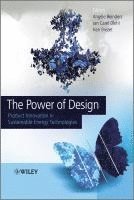
Power of Design
Product Innovation in Sustainable Energy Technologies
AvAngèle H. Reinders,Jan Carel Diehl
1 048 kr
Beställningsvara. Skickas inom 11-20 vardagar. Fri frakt över 249 kr.
Beskrivning
Produktinformation
- Utgivningsdatum:2012-10-30
- Mått:175 x 252 x 23 mm
- Vikt:735 g
- Format:Inbunden
- Språk:Engelska
- Antal sidor:368
- Förlag:John Wiley & Sons Inc
- ISBN:9781118308677
Utforska kategorier
Mer om författaren
Professor Dr Angèle H.M.E. Reinders, TU Delft University of Technology, The NetherlandsAngèle Reinders has been Professor of Energy-Efficient Design in the Design for Sustainability section of the Faculty of Industrial Design Engineering at Delft University of Technology since 2010. Previous to this she taught and conducted research in the Department of Design, Production and Management at the University of Twente. In 2001 Professor Reinders was a scientific advisor in the Asia Alternative Energy Program of the World Bank in Washington D.C. She has also been a guest researcher at Fraunhofer Institute, the Ministry of Technology in Jakarta, and ENEA in Naples. She has written many papers and developed educational materials for over seven courses, co-founded the editorship of IEEE Journal of Photovoltaics, and participated in the technical program committee of the IEEE PVSC conference. Dr Jan Carel Diehl, TU Delft University of Technology, The NetherlandsBefore becoming Assistant Professor of Sustainable Product Innovation for the Design for Sustainability (DfS) program at the faculty of Industrial Design Engineering at the Delft University of Technology, Dr Diehl worked for several years as a consultant in Ecodesign. Next to his position at Delft he is also a consultant for UNIDO and UNEP, and an invited lecturer at several international universities. He is co-author of the UNEP Design for Sustainability (D4S) manual for Developing Economies (D4S EE). Professor Dr Ir. Han Brezet, TU Delft University of Technology, The NetherlandsProfessor Han Brezt is currently Research Director of the IDE Faculty and has been Professor of Sustainable Product Design since 1992. He is also a member of the Management Team in the Faculty. Over several years he combined his job in Delft with a visiting professor's position at the Lund University and a senior fellowship at the University of Melbourne. Professor Brezet is also a member of the Jury for the Gasterra Energy Environmental Awards in the Hague and the Jury for the Gasterra Energy Transitions Award.
Recensioner i media
“This book, although it focuses on Sustainable Energy Technologies, brings forth a good step-by-step analysis of the design process methodology that can be applied to any area of design . . . The Power of Design is an introduction to product innovation and contains key topics necessary for the design of sustainable and energy-efficient products using sustainable energy technologies . . . Although targeted towards university undergraduates and postgrads, I find this a practical guide for designers in the field as well.” (EDN.com, 5 May 2013)“The Power of Design should have wide acceptance as the authors present images of an alternative future that is both achievable and desirable. The future maybe is already here will be a valuable addition to the libraries of medical schools that have added evolutionary biology to their curricula.” (Energy Technology, 17 July 2013)
Innehållsförteckning
- Preface xiiiForeword xvAcknowledgements xviiAbout the Editors xixAbout the Contributors xxi1 Introduction: Challenges at the Crossroads of Energy and Design 1Ange`le Reinders and Jan Carel Diehl1.1 Introduction 11.2 Energy Issues: A Brief Explanation 21.3 Sustainable Energy and Product Design 61.4 Industrial Design Engineering 101.5 Design for Sustainability (DfS) 131.6 Energy Challenges at the Base of the Economic Pyramid 171.7 Reading This Book 18References 192 Innovation Methods 212.1 Introduction to Innovation Methods in Design Processes 21Ange`le Reinders 2.1.1 Introduction 212.1.2 Platform-Driven Product Development 242.1.3 Delft Innovation Model 252.1.4 TRIZ 272.1.5 Technology Roadmapping 292.1.6 Design and Styling of Future Products 312.1.7 Constructive Technology Assessment 322.1.8 Innovation Journey 332.1.9 Risk-Diagnosing Methodology 34References 362.2 Platform-Driven Product Development 37Johannes Halman2.2.1 Introduction 372.2.2 Definitions 372.2.3 The Creation of Platform-Based Product Families 392.2.4 The Platform-Planning Process 422.2.5 Modular versus Integral Product Architectures 442.2.6 Measuring the Performance of Product Families 472.2.7 Managing Risk in Platform-Based Development 492.2.8 Application of Platform-Driven Product Development 49References 512.3 Delft Innovation Model in Use 51Jan Buijs2.3.1 Introduction 512.3.2 Stages of the Delft Innovation Model 532.3.3 Concluding Remarks on the Delft Innovation Model 572.3.4 Applying the Delft Innovation Model in Real Life 592.3.5 Reflections on the Delft Innovation Model in Practice 62References 642.4 TRIZ: ATheory of Solving Inventive Problems 64Valeri Souchkov2.4.1 Introduction 642.4.2 Components of TRIZ 652.4.3 Contradiction as a Driving Force of Invention 652.4.4 Five Levels of Solutions 682.4.5 Evolution of Technical Systems 692.4.6 Ideality 702.4.7 Trends of Technical Systems Evolution 712.4.8 Science for Inventors 722.4.9 Analytical Techniques 742.4.10 Psychological Inertia and Creativity 762.4.11 Practical Value of TRIZ 762.4.12 Application of TRIZ 78References 79Further Reading 792.5 Technology Roadmapping 80Valeri Souchkov2.5.1 Introduction 802.5.2 Technology Roadmaps 812.5.3 Technology Readiness Levels 842.5.4 TRM Process 852.5.5 Benefits from TRM 872.5.6 Application of TRM 87References 89Further Reading 892.6 The Design and Styling of Future Things 89Wouter Eggink2.6.1 Introduction 892.6.2 Communication 912.6.3 Acceptance 932.6.4 Method 952.6.5 Examples 962.6.6 Conclusions 98References 99Further Reading 992.7 Constructive Technology Assessment 100Stefan Kuhlmann2.7.1 Introduction 1002.7.2 New Attention for the Design and Governance of Science, Technology, and Innovation 1012.7.3 Constructive Technology Assessment 1022.7.4 Governance: CTA and Design in an Institutional Context 1042.7.5 CTA as a Dance: Strategic Intelligence 1062.7.6 Limits to CTA and Reflexive Governance of Technology Design 1072.7.7 Application of CTA 108References 1102.8 Innovation Journey: Navigating Unknown Waters 112Stefan Kuhlmann2.8.1 Introduction 1122.8.2 Method 1132.8.3 Discussion about Innovation Journeys 1142.8.4 Example from Practice 115References 1172.9 Risk-Diagnosing Methodology 117Johannes Halman2.9.1 Introduction 1172.9.2 Requirements for an Effective Risk Assessment 1182.9.3 The Risk-Diagnosing Methodology (RDM) 1192.9.4 Added Value of RDM 125Appendix 2.9 Reference List with Potential Risk Issues in the Innovation Process 126References 1292.10 A Multilevel Design Model Clarifying the Mutual Relationship between New Products and Societal Change Processes 130Peter Joore2.10.1 Introduction 1302.10.2 A Multilevel Design Model 1302.10.3 Example Based on the Development of an Electrical Transport System 1332.10.4 Benefits for the Design Process 1362.10.5 Conclusions 137References 1383 Energy Technologies 1393.1 Introduction 1393.2 Rechargeable Batteries for Energy Storage 140Joop Schoonman3.2.1 Introduction 1403.2.2 Rechargeable Batteries 1413.2.3 Lithium Batteries 1433.2.4 Electric Vehicles 147References 1483.3 Photovoltaics and Product Integration 149Ange`le Reinders and Wilfried van Sark3.3.1 Introduction 1493.3.2 PV Cells 1503.3.3 Irradiance and PV Cell Performance 1533.3.4 Rechargeable Batteries 1563.3.5 System Design and Energy Balance 1563.3.6 Design and Manufacturing of Product-Integrated PV 1593.3.7 Conclusions 159References 163Further Reading 1643.4 Fuel Cells 164Frank de Bruijn3.4.1 Fuel Cell Principles and Characteristics 1643.4.2 Comparison of Fuel Cell Types 1653.4.3 Key Characteristics of Fuel Cells 1673.4.4 Cost 1713.4.5 Fuel Cell Applications and Basic Requirements 1733.4.6 Passenger Vehicles 1733.4.7 City Buses 1733.4.8 Materials Handling 1753.4.9 Portable Applications 1753.4.10 Stationary Fuel Cells: Backup Power 1763.4.11 Stationary Fuel Cells: Base Load Power 1763.4.12 Stationary Fuel Cells for Combined Heat and Power Generation 1763.4.13 Conclusions 177References 1773.5 Small Wind Turbines 178Paul K€uhn3.5.1 Introduction 1783.5.2 Turbine Size and Applications 1783.5.3 Turbine Design and Technology 1803.5.4 Performance 182References 1863.6 Human-Powered Energy Systems 186Arjen Jansen3.6.1 Introduction 1863.6.2 The Human Body as a Power Source 1883.6.3 Kinetic Energy Formulas: From General Models to Specific Models 1903.6.4 The Design of Human-Powered Energy Systems 1923.6.5 Environmental Aspects of Human-Powered Energy Systems 194References 196Further Reading 1963.7 Energy-Saving Lighting 197Arjan de Winter3.7.1 Energy-Saving Lighting 1973.7.2 Lighting Applications 1983.7.3 Light Source Design: Efficacy 2013.7.4 Luminaire Design: Optical and Electrical Efficiency 2033.7.5 Application Design: Effectiveness 2043.7.6 Conclusions and Looking Forward 206Further Reading 2063.8 Energy-Saving Technologies in the Built Environment 206Bram Entrop3.8.1 Design and Energy Use in the Built Environment 2063.8.2 Construction Technologies 2073.8.3 System Technologies 2113.8.4 Transcendental Technologies 215References 217Further Reading 2173.9 Piezoelectric Energy Conversions 218Alexandre Paternoster, Pieter de Jong, Andre´ de Boer3.9.1 Introduction 2183.9.2 Piezoelectric Material 2183.9.3 Power Harvesting 2223.9.4 Conclusions 227References 2274 Using Energy: Beyond Individual Approaches to Influencing Energy Behavior 229Daphne Geelen and David Keyson4.1 Introduction 2294.2 The Changing Roles of End Users and Residents in the Energy Provision System 2304.3 Stimulating Energy Behavior Change in Current Design Practice 2314.3.1 Design Strategies to Stimulate Behavior 2314.3.2 Interaction Design 2324.3.3 Collaborating on Energy Management 2324.4 Toward Including Social Interaction and Community-Based Approaches 2344.5 Approaches to Using Social Interaction in Relation to Energy-Related Behavior 2354.5.1 Interventions Using Interactions between Participants 2354.5.2 Games as Means for Social Interaction in a Community 2374.5.3 Social Interaction in Interaction Design 2384.6 Conclusions 240References 240Case A SolarBear: Refrigeration for the Base of the Pyramid through Adsorptive Cooling 243Leonard Sch€urg, Jonas Martens, Roos van Genuchten and Marcel CrulA.1 Introduction 243A.1.1 The Need for Off-Grid Refrigeration in BoP Small-Scale Businesses 243A.1.2 Existing Cooling Solutions 244A.2 The SolarBear Approach 244A.2.1 Market Opportunities Research 244A.2.2 Technical Opportunities Research and Prototyping 244A.2.3 Market Development in India 244A.3 Results of the First Cycle of Product Development: Proof of Concept and Market 245A.3.1 First Prototype 246A.3.2 Second Prototype 247A.3.3 Product-Service System Development for SolarBear in Lakshmikantapur, India 247A.4 Future Work: AWorking Prototype and Further Development by Enviu 250References 252Case B Environmental Impact of Photovoltaic Lighting 253Bart DurlingerB.1 Introduction 253B.2 The Lighting Systems 256B.2.1 System 1: Angkor Light 256B.2.2 System 2: Moonlight 256B.2.3 System 3: Solar Home System 256B.2.4 System 4: Light Delivered by Battery (Charged at Charging Station, Using Diesel) 257B.2.5 System 5: CFLs and Electricity from the Grid 259B.2.6 System 6: Kerosene Lamp 259B.3 Environmental Impacts and Discussion 261B.4 Conclusion 262B.5 Acknowledgments 262References 262Case C Restyling Photovoltaic Modules 263Michael ThungC.1 Introduction 263C.2 Analysis Phase 265C.3 Design Phase 267C.4 The “Flower Cell” 269C.5 Prototyping 270C.6 Test Results 272C.6.1 H Cell versus Flower Cell 272C.6.2 Redesigned PV Modules 274C.6.3 Expected Costs 274C.7 Conclusions 274Reference 275Case D Selection of Power Sources for Portable Applications 277Bas FlipsenD.1 Introduction 277D.2 An Overview of Selection Strategies 278D.2.1 Power Source Selection Tools 278D.2.2 Application Selection Tools 280D.2.3 Designing Alternative Power Sources 280D.2.4 Optimizing Tools 282D.2.5 Discussion 283D.3 Power Source Selection Tool Method 283D.3.1 First Approach 283D.3.2 Analytical Model for Sizing an FC (Hybrid) System 285D.3.3 Design of a DMFC Power System for an MP3 Player 286D.3.4 Evaluation of the Model 288D.3.5 Modification of the Model 291D.4 Conclusion and Discussion 292References 292Case E Design of a Solar-PoweredWireless Computer Mouse 295Wilfried van Sark and Nils ReichE.1 Introduction 295E.2 Product Design Process 296E.2.1 Focus Group Research 296E.2.2 Energy Balance Scenarios 297E.2.3 Design Criteria 299E.3 Component Selection 300E.3.1 Battery Unit 300E.3.2 PV Cell 300E.3.3 Encasing 301E.3.4 Charge Controller 301E.4 Final SPM Product 302E.4.1 SPM Specifications 302E.4.2 SPM User Tests 303E.5 Conclusion 304E.6 Acknowledgments 305References 305Case F Light Urban Mobility 307Satish Kumar Beella, Sacha Silvester and Han BrezetF.1 Introduction 307F.2 Background 308F.3 Mobility and Design 309F.4 Role and Importance of Energy 310F.5 Light Urban Mobility 310F.5.1 Urban Mobility Concept 311F.5.2 MeeneemFiets 312F.5.3 Bull 312F.6 Conclusions 314References 315Case G From Participatory Design to Market Introduction of a Solar Light for the BoP Market 317Jan Carel Diehl and Jeroen VerschellingG.1 Introduction 317G.2 Methods 318G.2.1 Project Setup 318G.2.2 Participatory Market and Context Research 318G.2.3 Participatory Field Research: User Needs 319G.2.4 Technological Challenges 320G.2.5 Co-Development 321G.3 Results 322G.4 Feedback from the Field 322G.5 Market and Business Considerations 323G.5.1 Costs 323G.5.2 Challenges with Market Implementation 323G.5.3 A “Rent-to-Own” Business Model 324G.6 Discussion 325References 326Index 327
Du kanske också är intresserad av
Designing Sustainable Energy for All
Carlo Vezzoli, Fabrizio Ceschin, Lilac Osanjo, Mugendi K. M’Rithaa, Richie Moalosi, Venny Nakazibwe, Jan Carel Diehl
Häftad, 2019
550 kr
Designing Sustainable Energy for All
Carlo Vezzoli, Fabrizio Ceschin, Lilac Osanjo, Mugendi K. M’Rithaa, Richie Moalosi, Venny Nakazibwe, Jan Carel Diehl
Inbunden, 2018
550 kr
- -19%
- -23%
Den långa bluffen : myter om Sverige, arbete och invandring
Christian Lindell, Alex Voronov
Häftad, 2026
239 kr309 kr
- -30%
- 4 för 3
Brevbäraren i Lizzanello
Francesca Giannone
Pocket, 2026
99 kr
- -17%
- -23%