• Fri frakt över 249 kr
  • •
  • Snabba leveranser
  • •
  • Billiga böcker
Kundservice

Du är på sajten för privatpersoner.

Företag, bibliotek eller offentlig verksamhet?

Du handlar på classic.bokus.com, där alla dina funktioner finns intakta.
Till classic.bokus.com
Bokus logotyp. Gå till startsidan.
  • Erbjudanden
  • Nyheter
  • Student
  • Topplistor
  • Barn & ungdom
  • Bokus Play
  • E-böcker
  • Pocketböcker
  • Spel & pussel

10% rabatt på allt med kod: NYSTART10 →

Sidfot

Mina sidor

    Hjälp

    • Kundservice
    • Vanliga frågor och svar
    • Frakt och leverans
    • Retur vid ångerrätt
    • Reklamera vara
    • Betalning
    • Köpvillkor
    • Allmänna villkor
    • Information om webbplatsens tillgänglighet

    Om Bokus

    • Om oss
    • Pressrum
    • För studenter
    • För företag
    • För bibliotek och offentlig verksamhet
    • För leverantörer
    • Hållbarhet

    Populärt

    • Aktuella erbjudanden
    • Presentkort
    • Studentlitteratur
    • Nya böcker
    • Topplistor
    • Signerade böcker
    • Engelska böcker

    Inspiration

    • Boktips
    • BookTok
    • Populära bokserier
    • Barnbokskaraktärer
    • Populära författare
    Logotyp för Bokus
    Följ oss på Facebook (extern länk)Följ oss på Instagram (extern länk)Följ oss på YouTube (extern länk)Följ oss på TikTok (extern länk)
    bokus @ CookiesAnpassa cookiesIntegritetspolicyKöpvillkor
    Till Citymail hemsida (extern länk)Till Budbee hemsida (extern länk)Till Postnord hemsida (extern länk)Till Schenker hemsida (extern länk)Till Early Bird hemsida (extern länk)Till Walleys hemsida (extern länk)
    1. Ekonomi och Ledarskap
    2. Företagsekonomi
    3. Redovisning och finansiering
    4. Finansiering

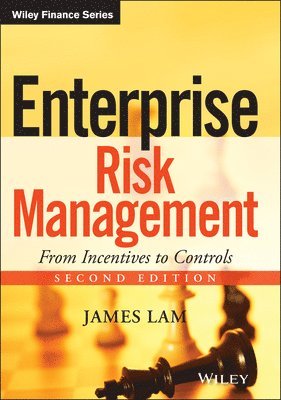
    Enterprise Risk Management

    From Incentives to Controls

    AvJames Lam

    Inbunden, Engelska, 2014

    Del i serien Wiley Finance

    958 kr

    Beställningsvara. Skickas inom 5-8 vardagar. Fri frakt över 249 kr.

    Fler format och utgåvor

    E-bok

    1 219 kr

    E-bok

    1 219 kr

    Beskrivning

    A fully revised second edition focused on the best practices of enterprise risk management Since the first edition of Enterprise Risk Management: From Incentives to Controls was published a decade ago, much has changed in the worlds of business and finance. That's why James Lam has returned with a new edition of this essential guide. Written to reflect today's dynamic market conditions, the Second Edition of Enterprise Risk Management: From Incentives to Controls clearly puts this discipline in perspective.Engaging and informative, it skillfully examines both the art as well as the science of effective enterprise risk management practices. Along the way, it addresses the key concepts, processes, and tools underlying risk management, and lays out clear strategies to manage what is often a highly complex issue. Offers in-depth insights, practical advice, and real-world case studies that explore the various aspects of ERMBased on risk management expert James Lam's thirty years of experience in this fieldDiscusses how a company should strive for balance between risk and returnFailure to properly manage risk continues to plague corporations around the world. Don't let it hurt your organization. Pick up the Second Edition of Enterprise Risk Management: From Incentives to Controls and learn how to meet the enterprise-wide risk management challenge head on, and succeed.

    Produktinformation

    • Utgivningsdatum:2014-03-25
    • Mått:158 x 231 x 38 mm
    • Vikt:703 g
    • Format:Inbunden
    • Språk:Engelska
    • Serie:Wiley Finance
    • Antal sidor:496
    • Upplaga:2
    • Förlag:John Wiley & Sons Inc
    • ISBN:9781118413616

    Utforska kategorier

    • Finansiering inom Ekonomi och Ledarskap
    • Projektledning inom Ekonomi och Ledarskap

    Mer om författaren

    JAMES LAM is widely recognized as the first ever Chief Risk Officer and a pioneer in the field of enterprise risk management. In a Euromoney survey, Mr. Lam was nominated by clients and peers as one of the world’s leading risk consultants. He currently serves as President of James Lam & Associates and Director and Chairman, Risk Oversight Committee of E*TRADE Financial. Previously, he held positions including Partner of Oliver Wyman, Founder and President of ERisk, Chief Risk Officer of Fidelity Investments, and Chief Risk Officer of GE Capital Markets Services, Inc. In 1997, Mr. Lam received the inaugural Risk Manager of the Year Award from the Global Association of Risk Professionals. Treasury & Risk magazine named him one of the “100 Most Influential People in Finance” in 2005, 2006, and 2008.

    Innehållsförteckning

    • Preface xiiiAcknowledgments xviiSection One Risk Mangement in Context 1Chapter 1 Introduction 3The Benefits of Risk Management 6Integration Adds Value 9Cautionary Tales 12Chapter 2 Lessons Learned 21Lesson #1: Know Your Business 23Lesson #2: Establish Checks and Balances 24Lesson #3: Set Limits and Boundaries 25Lesson #4: Keep Your Eye on the Cash 26Lesson #5: Use the Right Yardstick 27Lesson #6: Pay for the Performance You Want 27Lesson #7: Balance the Yin and the Yang 28Chapter 3 Concepts and Processes 31Risk Concepts 32Risk Processes 36Risk Awareness 38Risk Measurement 40Risk Control 42Risk is a Bell Curve 48Chapter 4 What is ERM? 51ERM Definitions 53The Benefits of ERM 53The Chief Risk Officer 57Components of ERM 61Section Two The Enterprise Risk Management Framework 67Chapter 5 Corporate Governance 69Codes of Conduct 71Best Practices 72Linking Corporate Governance and ERM 77Chapter 6 Line Management 83The Relationship Between Line and Risk Functions 84Key Challenges 89Best Practices 92Chapter 7 Portfolio Management 99The Theory of Active Portfolio Management 100Benefits of Active Portfolio Management 102Practical Applications of Portfolio Management 105Chapter 8 Risk Transfer 111A Brief History of ART 112Advantages of ART 116Pitfalls of ART 119A Look to the Future 122Case Study: Honeywell 124Case Study: Barclays 124Chapter 9 Risk Analytics 127Risk Control Analytics 128Risk Optimization Analytics 133Market Risk Analytics 135Credit Risk Analytics 138Credit Portfolio Models 141Operational Risk Analytics 142GRC Systems 143Chapter 10 Data and Technology 147Early Systems 147Data Management 149Interface Building 151Middleware 152Distributed Architectures 153Key Factors for a Successful Implementation 154Chapter 11 Stakeholder Management 157Employees 158Customers 161Regulators 164Rating Agencies 166Shareholder Service Providers 167Business Partners 169Section Three Risk Management Applications 173Chapter 12 Credit Risk Management 175Key Credit Risk Concepts 176The Credit Risk Management Process 184Basel Requirements 192Best Practices in Credit Risk Management 196Case Study: Export Development Corporation (EDC) 200Chapter 13 Market Risk Management 209Types of Market Risk 210Market Risk Measurement 211Market Risk Management 224Best Practices in Market Risk Management 227Case Study: Market Risk Management at Chase 230Chapter 14 Operational Risk Management 237Operational Risk—Definition and Scope 240The Operational Risk Management Process 246Best Practice in Operational Risk Management 257Emerging IT Risks 259Case Study: Heller Financial 264Chapter 15 Business Applications 271Stage I: Minimizing the Downside 271Stage II: Managing Uncertainty 272Stage III: Performance Optimization 274The Further Evolution of Risk Management 275Chapter 16 Financial Institutions 277Industry Trends 278Risk Management Requirements 283Systemic Risk 287A Look to the Future 289Case Study: CIBC 292Chapter 17 Energy Firms 297Industry Trends 298Risk Management Requirements 301A Look to the Future 310Lessons Learned from Enron 313Lessons Learned from the BP Oil Spill 314Chapter 18 Non-Financial Corporations 317Risk Management Requirements 317Best Practices in Corporate Risk Management 326Case Study: Microsoft 333Case Study: Ford 335Case Study: Airbus and Boeing 336Section Four A Look to the Future 339Chapter 19 Predictions 341The Profession of Risk Management 342Technology and the Convergence of Risk Management 345Ten Predictions 3482013 Looking Back 353Chapter 20 Everlast Financial 357Section Five ERM Implementation 361Chapter 21 ERM Implementation 363Benefits of Corporate Governance and ERM Practices 364ERM Implementation Requirements 366ERM Maturity Model 373Other ERM Maturity Models 377Risk Culture 378Chapter 22 Role of the Board 381Board Oversight Requirements 381Current Board Practices 383Case Study: JP Morgan Chase 386The Last Line of Defense 388Chapter 23 Risk Assessment 399Risk Assessment Methodology 401Best Practice Case Studies in Risk Assessment 414Appendix: Risk Assessment Self-Evaluation Checklist 415Chapter 24 Risk-Based Decision Making 423ERM Decisions and Actions 423Creating Value through ERM 427Case Study: Duke Energy 437Chapter 25 Dashboard Reporting 439Traditional versus Dashboard Reporting 441General Dashboard Applications 442ERM Dashboard Implementation 444Evolving Best Practices 450Notes 451Index 465